




Direkt zum Inhalt

Warenkorb

  • Jörg Dünne, Stephan Günzel (Hg.)

    Raumtheorie. Grundlagentexte aus Philosophie und…

  • An Architektur

    An Architektur 16-17

  • Vera Beyer, Jutta Voorhoeve, Anselm…

    Das Bild ist der König. Repräsentation nach Louis Marin

  • An Architektur

    An Architektur 15 / FFM 11: Europäische…

  • Orhan Esen, Stephan Lanz (Hg)

    Self Service City. Istanbul (metrozones 4)

  • An Architektur

    An Architektur 14: Camp for Oppositional Architecture

  • Stephan Lanz (Hg.)

    City of COOP. Ersatzökonomiern und städtische Bewegungen in…

  • An Architektur

    An Architektur 11-13: Theorie und Praxis der Kartografie

  • An Architektur

    An Architektur 10: Gemeinschaftsräume

  • Jochen Becker, Stephan Lanz (Hg.)

    Space//Troubles. Jenseits des Guten Regierens:…

  • Sarai media lab

    Sarai Reader 03: shaping technologies

  • An Architektur

    An Architektur 04-09: Krieg und die Produktion von Raum

  • IDEA Magazine

    IDEA 296. Books <preposition> graphic design

  • IDEA Magazine

    IDEA 293. Stanley Donwood / Vacances. DD-DDD / Dimensions…

  • gerade nicht auf Lager
    An Architektur

    An Architektur 01-03

  • Martina Löw

    Raumsoziologie

  • Pro qm

    Gutschein / Voucher

  • Brian O'Doherty

    In der weissen Zelle. Inside the White Cube

  • gerade nicht auf Lager
    Siegfried Kracauer

    Das Ornament der Masse. Essays

Cover Sachs

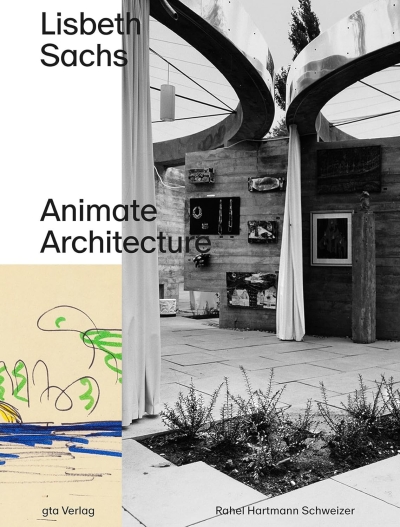
Lisbeth Sachs. Animate Architecture

Lisbeth Sachs (1914–2002) caused a sensation at the very beginning of her professional career: freshly graduated, she won the 1939 competition for the Kurtheater Baden. With the building, opened in 1952, she expressed her lucid architectural position and experienced what it meant to be one of the first independent Swiss female architects in a male-dominated profession. For Sachs, construction was a procedural act that extended from craftsmanship to the suitability of materials and finally to people’s appropriation of spaces. She sought to achieve architecture that floated, emerging organically from the topography and following environmentally and socially compatible principles. Her interdisciplinary understanding of architecture as applied ecology makes her work and thinking more relevant now than ever. 
Rahel Hartmann Schweizer’s book about this unconventional architect, researcher and critical writer is part of Switzerland’s contribution to the 2025 Architecture Biennale in Venice involving the revival by Annexe of Lisbeth Sachs’ temporary Saffa 1958 art gallery.


Rahel Hartmann Schweizer
Lisbeth Sachs. Animate Architecture
gta Verlag, 2025, 978-3-85676-493-7
45,00 €