
















Direkt zum Inhalt

Warenkorb

  • Sven Spieker

    The Big Archive. Art From Bureaucracy

  • Thomas Meinecke

    Jungfrau

  • Grada Kilomba

    Plantation Memories. Episodes of Everyday Racism

  • An Architektur

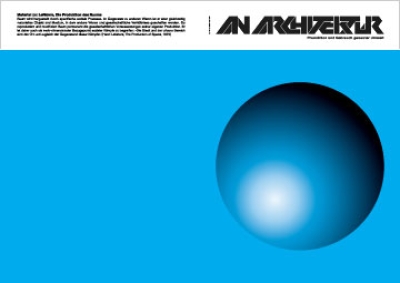
    An Architektur 22: GAMMA Grid, 1953. Das Ende des CIAM und…

  • An Architektur

    An Architektur 19-21: Community Design. Involvement and…

  • Antonio Negri

    The Porcelain Workshop. For a New Grammar of Politics

  • Christoph Schaub, Michael Schindhelm

    Bird's Nest (DVD, 87 min.). Jacques Herzog und Pierre…

  • Laurence A. Rickels

    Ulrike Ottinger. Eine Autobiografie

  • N. John Habraken, Arnulf Lüchinger

    Die Träger und die Menschen. Das Ende des Massenwohnungsbau…

  • gerade nicht auf Lager
    Guy Debord

    Comments on the Society of the Spectacle

  • Michel de Certeau

    Kunst des Handelns

  • Alain Badiou

    Wofür steht der Name Sarkozy?

  • gerade nicht auf Lager
    Donna Haraway

    Die Neuerfindung der Natur. Primaten, Cyborgs und Frauen.

  • gerade nicht auf Lager
    Stefanie Schulte Strathaus, Florian…

    Wer sagt denn, dass Beton nicht brennt, hast Du’s probiert?

  • gerade nicht auf Lager
    Henri Lefebvre

    Writings on Cities

  • Loretta Napoleoni

    Rogue Economics. Capitalism's New Reality

  • AD

    AD 174. Vol. 75. Nr. 2. Samantha Hardingham. The 1970…

  • An Architektur

    An Architektur 18: Camp for Oppositional Architecture:…

  • Johan Frederik Hartle

    Der geöffnete Raum. Zur Politik der ästhetischen Form

  • An Architektur

    An Architektur 16-17

  • Vera Beyer, Jutta Voorhoeve, Anselm…

    Das Bild ist der König. Repräsentation nach Louis Marin

  • An Architektur

    An Architektur 15 / FFM 11: Europäische…

  • An Architektur

    An Architektur 14: Camp for Oppositional Architecture

  • An Architektur

    An Architektur 11-13: Theorie und Praxis der Kartografie

  • An Architektur

    An Architektur 10: Gemeinschaftsräume

  • An Architektur

    An Architektur 04-09: Krieg und die Produktion von Raum

  • IDEA Magazine

    IDEA 296. Books <preposition> graphic design

  • IDEA Magazine

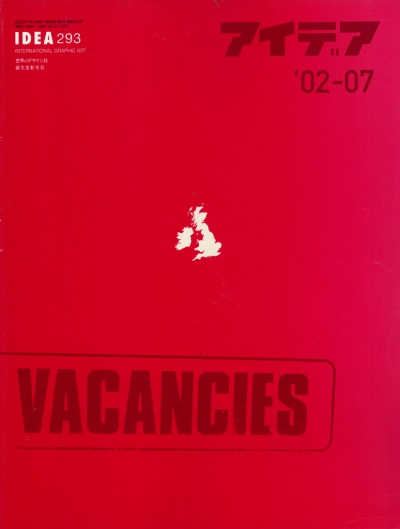
    IDEA 293. Stanley Donwood / Vacances. DD-DDD / Dimensions…

  • gerade nicht auf Lager
    An Architektur

    An Architektur 01-03

  • Pro qm

    Gutschein / Voucher

  • Siegfried Kracauer

    Das Ornament der Masse. Essays

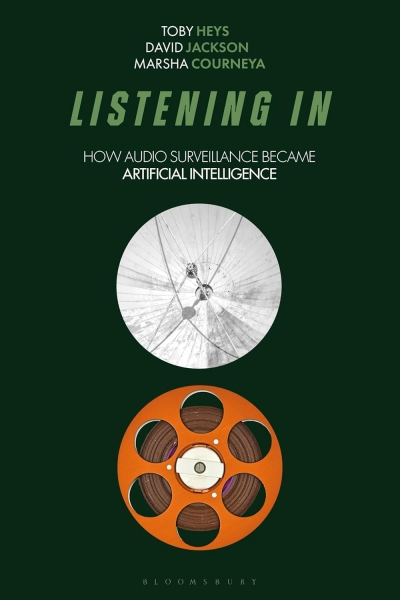
Listening In. How Audio Surveillance Became Artificial Intelligence

In 1945, W. Averell Harriman, US Ambassador to the Soviet Union, was presented with a carved wooden plaque of the Great Seal of the United States as a 'gesture of friendship' by a delegation from the Soviet's Young Pioneer Organization. Unbeknownst to him, one of the first covert listening devices, invented by Leon Theremin was hidden within it and was subsequently used to listen in on the ambassador's conversations for six years before being discovered. This book uses remarkable tales like this to tell the story of how modern audio surveillance developed and its important role in the evolution of today's artificial intelligence.

Beginning with post-WW2 monitoring devices, Listening In traces an arc through the Cold War era into the present day in which state and commercial spyware can record our calls, copy messages and secretly film us. It subsequently moves into the near future where AI-assisted technologies can listen to things we have not yet said as well as digitally simulate and record our voices after we have died. Exploring how mass audio surveillance is carried out through devices such as smart phones, speakers and baby monitors and used to inform and train AI algorithms, the book provides fresh insights into how we are allowing our personal privacies to be traded for enhanced social connectivity and technological convenience. Ultimately Listening In reveals how the urge to listen and record everything that has ever been uttered is scored deeply into the technological operating systems of cultures from around the world.


David Jackson, Marsha Courneya, Toby Heys
Listening In. How Audio Surveillance Became Artificial Intelligence
Bloomsbury, 2026, 978-1-350-34039-8
24,00 €