
















Direkt zum Inhalt

Warenkorb

  • Johan Frederik Hartle

    Der geöffnete Raum. Zur Politik der ästhetischen Form

  • Jörg Dünne, Stephan Günzel (Hg.)

    Raumtheorie. Grundlagentexte aus Philosophie und…

  • An Architektur

    An Architektur 16-17

  • Vera Beyer, Jutta Voorhoeve, Anselm…

    Das Bild ist der König. Repräsentation nach Louis Marin

  • An Architektur

    An Architektur 15 / FFM 11: Europäische…

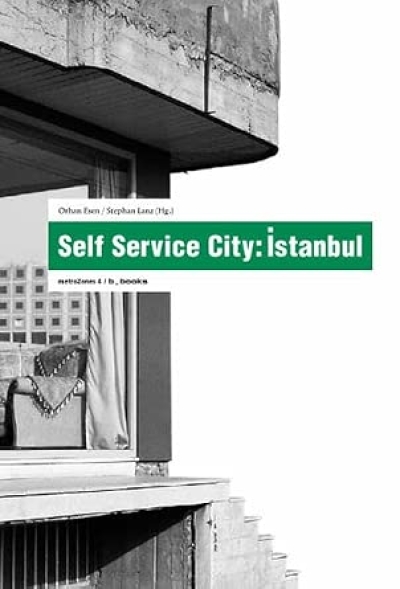
  • Orhan Esen, Stephan Lanz (Hg)

    Self Service City. Istanbul (metrozones 4)

  • An Architektur

    An Architektur 14: Camp for Oppositional Architecture

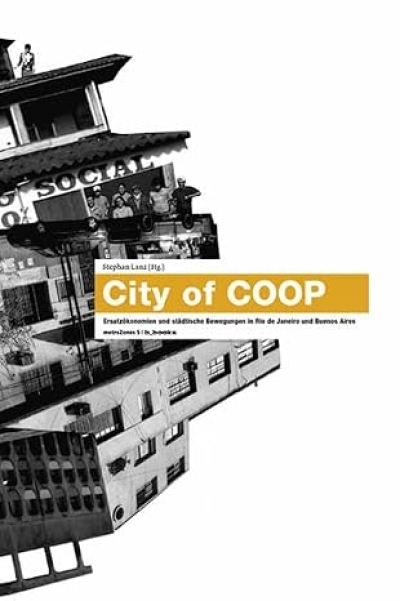
  • Stephan Lanz (Hg.)

    City of COOP. Ersatzökonomiern und städtische Bewegungen in…

  • An Architektur

    An Architektur 11-13: Theorie und Praxis der Kartografie

  • An Architektur

    An Architektur 10: Gemeinschaftsräume

  • Jochen Becker, Stephan Lanz (Hg.)

    Space//Troubles. Jenseits des Guten Regierens:…

  • Sarai media lab

    Sarai Reader 03: shaping technologies

  • An Architektur

    An Architektur 04-09: Krieg und die Produktion von Raum

  • IDEA Magazine

    IDEA 296. Books <preposition> graphic design

  • IDEA Magazine

    IDEA 293. Stanley Donwood / Vacances. DD-DDD / Dimensions…

  • gerade nicht auf Lager
    An Architektur

    An Architektur 01-03

  • Martina Löw

    Raumsoziologie

  • Pro qm

    Gutschein / Voucher

  • Brian O'Doherty

    In der weissen Zelle. Inside the White Cube

  • gerade nicht auf Lager
    Siegfried Kracauer

    Das Ornament der Masse. Essays

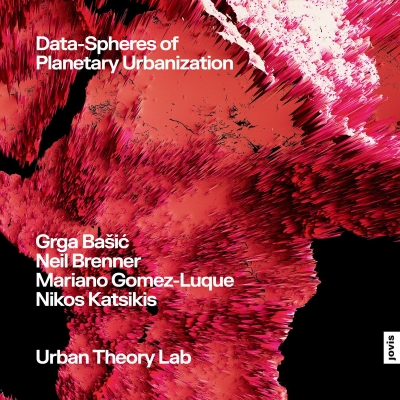
Data-Spheres of Planetary Urbanization

Data-Spheres of Planetary Urbanization

How can we map the urbanization of the planet in an era of climate breakdown? The Urban Theory Lab’s Data-Spheres of Planetary Urbanization confronts this question by assembling a series of experimental visualizations of the worldwide urban fabric. This book reverses the mainstream, city-centric perspective on urbanization, showing, instead, that the world of contemporary urbanization encompasses much of the planet, including apparently remote areas, wildlands, and oceans. Cities are not only producers of value, but also entropic black holes that consume surpluses produced elsewhere and project waste back into the planetary biosphere. Non-city spaces are, correspondingly, the metabolic bases of planetary urbanization.

With a foreword by Jason W. Moore, an afterword by Alexander Arroyo, and contributions by Martín Arboleda, Danika Cooper, Kian Goh, Julie Michelle Klinger, Roi Salgueiro Barrio, and Hashim Sarkis


Grga Bašić, Neil Brenner, Mariano Gomez-Luque, Nikos Katsikis
Data-Spheres of Planetary Urbanization
Jovis, 2025, 978-3-98612-270-6
42,00 €