


Direkt zum Inhalt

Warenkorb

  • Johan Frederik Hartle

    Der geöffnete Raum. Zur Politik der ästhetischen Form

  • Jörg Dünne, Stephan Günzel (Hg.)

    Raumtheorie. Grundlagentexte aus Philosophie und…

  • An Architektur

    An Architektur 16-17

  • Vera Beyer, Jutta Voorhoeve, Anselm…

    Das Bild ist der König. Repräsentation nach Louis Marin

  • An Architektur

    An Architektur 15 / FFM 11: Europäische…

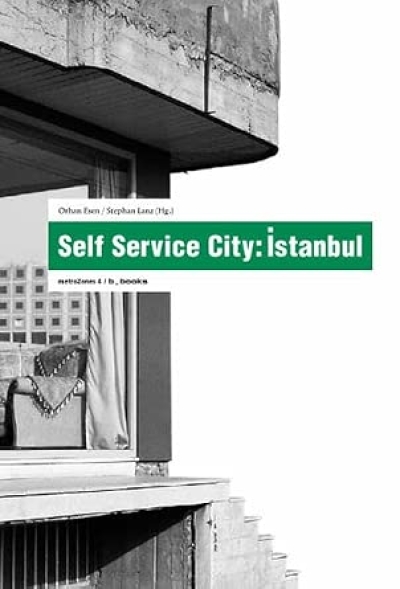
  • Orhan Esen, Stephan Lanz (Hg)

    Self Service City. Istanbul (metrozones 4)

  • An Architektur

    An Architektur 14: Camp for Oppositional Architecture

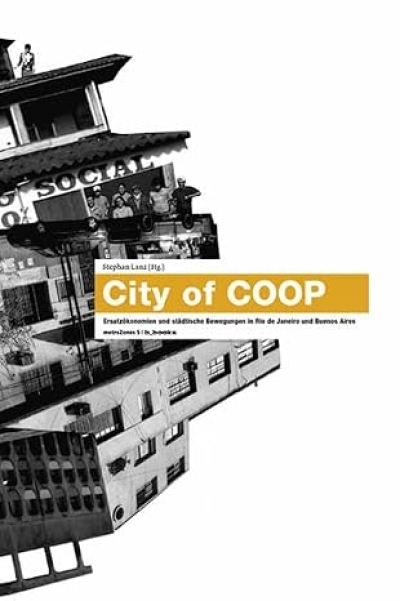
  • Stephan Lanz (Hg.)

    City of COOP. Ersatzökonomiern und städtische Bewegungen in…

  • An Architektur

    An Architektur 11-13: Theorie und Praxis der Kartografie

  • An Architektur

    An Architektur 10: Gemeinschaftsräume

  • Jochen Becker, Stephan Lanz (Hg.)

    Space//Troubles. Jenseits des Guten Regierens:…

  • Sarai media lab

    Sarai Reader 03: shaping technologies

  • An Architektur

    An Architektur 04-09: Krieg und die Produktion von Raum

  • IDEA Magazine

    IDEA 296. Books <preposition> graphic design

  • IDEA Magazine

    IDEA 293. Stanley Donwood / Vacances. DD-DDD / Dimensions…

  • gerade nicht auf Lager
    An Architektur

    An Architektur 01-03

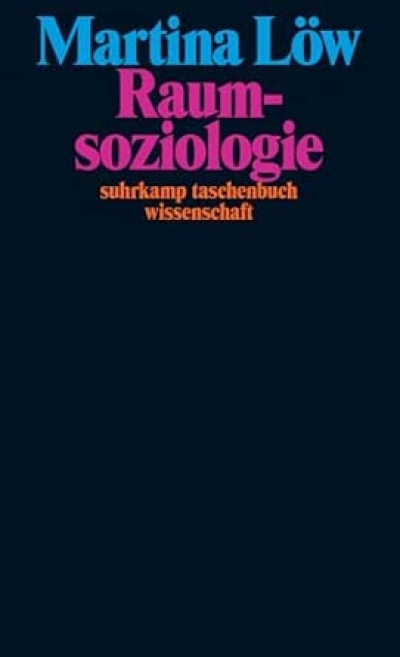
  • Martina Löw

    Raumsoziologie

  • Pro qm

    Gutschein / Voucher

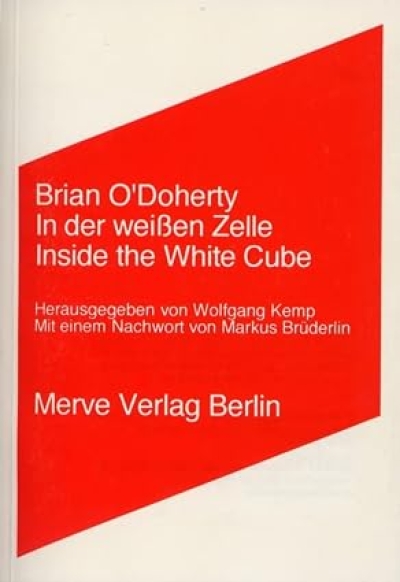
  • Brian O'Doherty

    In der weissen Zelle. Inside the White Cube

  • gerade nicht auf Lager
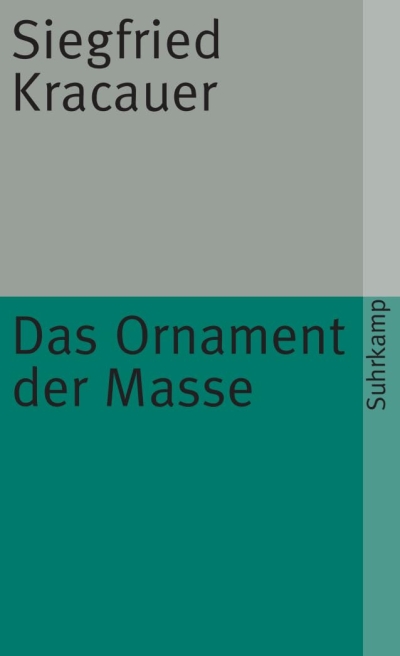
    Siegfried Kracauer

    Das Ornament der Masse. Essays

The Love of Painting: Genealogy of a Success Medium

Painting seems to have lost its dominant position in the field of the arts. However, looking more closely at exhibited photographs, assemblages, installations, or performances, it is evident how the rhetorics of painting still remain omnipresent. Following the tradition of classical theories of painting based on exchanges with artists, Isabelle Graw's ''The Love of Painting'' considers the art form not as something fixed, but as a visual and discursive material formation with the potential to fascinate owing to its ability to produce the fantasy of liveliness. Thus, painting is not restricted to the limits of its own frame, but possesses a specific potential that is located in its material and physical signs. Its value is grounded in its capacity to both reveal and mystify its conditions of production. Alongside in-depth analyses of the work of artists like Édouard Manet, Jutta Koether, Martin Kippenberger, Jana Euler, and Marcel Broodthaers, the book includes conversations with artists in which Graw's insights are further discussed and put to the test.


Isabelle Graw
The Love of Painting: Genealogy of a Success Medium
Sternberg Press, 2018, 978-3-95679-251-9
gerade nicht auf Lager