







Direkt zum Inhalt

Warenkorb

  • Jörg Dünne, Stephan Günzel (Hg.)

    Raumtheorie. Grundlagentexte aus Philosophie und…

  • An Architektur

    An Architektur 16-17

  • Vera Beyer, Jutta Voorhoeve, Anselm…

    Das Bild ist der König. Repräsentation nach Louis Marin

  • An Architektur

    An Architektur 15 / FFM 11: Europäische…

  • Orhan Esen, Stephan Lanz (Hg)

    Self Service City. Istanbul (metrozones 4)

  • An Architektur

    An Architektur 14: Camp for Oppositional Architecture

  • Stephan Lanz (Hg.)

    City of COOP. Ersatzökonomiern und städtische Bewegungen in…

  • An Architektur

    An Architektur 11-13: Theorie und Praxis der Kartografie

  • An Architektur

    An Architektur 10: Gemeinschaftsräume

  • Jochen Becker, Stephan Lanz (Hg.)

    Space//Troubles. Jenseits des Guten Regierens:…

  • Sarai media lab

    Sarai Reader 03: shaping technologies

  • An Architektur

    An Architektur 04-09: Krieg und die Produktion von Raum

  • IDEA Magazine

    IDEA 296. Books <preposition> graphic design

  • IDEA Magazine

    IDEA 293. Stanley Donwood / Vacances. DD-DDD / Dimensions…

  • gerade nicht auf Lager
    An Architektur

    An Architektur 01-03

  • Martina Löw

    Raumsoziologie

  • Pro qm

    Gutschein / Voucher

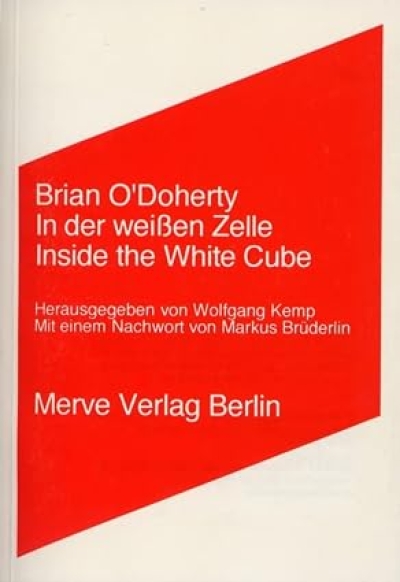
  • Brian O'Doherty

    In der weissen Zelle. Inside the White Cube

  • gerade nicht auf Lager
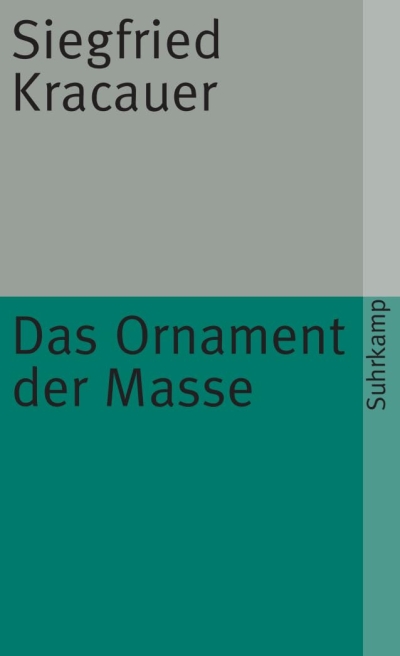
    Siegfried Kracauer

    Das Ornament der Masse. Essays

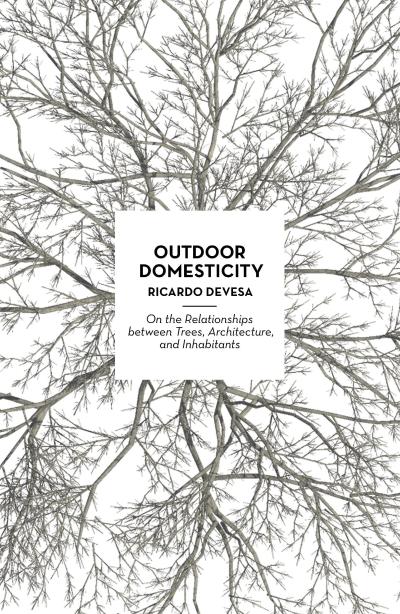
Outdoor Domesticity. On the Relationships between Trees, Architecture, and Inhabitants

The first part of this publication is to present a collection of exemplary five houses that evinced explicit relationships with preexisting trees. The five twentieth century projects are: La Casa (B. Rudofsky, 1969), Cottage Caesar (M. Breuer, 1951), Ville La Roche (Le Corbusier & P. Jeanneret, 1923), Villa Pepa (J. Navarro Baldeweg, 1994) and Hexenhaus (A. & P. Smithson, 1984-2002). The second part of the book is to contribute with three theoretical concerns for the contemporary project, those ones which are established in the process, with respect to time, place and outdoor domesticity in modern western housing.
One of these theoretical contributions establishes that any house located on a site finds a significant place in conjunction with the preexisting trees. The second contribution describes the effects in terms of time, in addition to spatial considerations, which trees can contribute to the architectural project. Finally, the establishment of these connections between architecture and trees enlarges the idea of the house: the tree serves to draw the surrounding environment into the house and, as a result, becomes an intrinsic part of the house itself.


Ricardo Devesa
Outdoor Domesticity. On the Relationships between Trees, Architecture, and Inhabitants
Actar, 2021, 9781948765718
32,00 €