

















Direkt zum Inhalt

Warenkorb

  • Johan Frederik Hartle

    Der geöffnete Raum. Zur Politik der ästhetischen Form

  • Jörg Dünne, Stephan Günzel (Hg.)

    Raumtheorie. Grundlagentexte aus Philosophie und…

  • An Architektur

    An Architektur 16-17

  • Vera Beyer, Jutta Voorhoeve, Anselm…

    Das Bild ist der König. Repräsentation nach Louis Marin

  • An Architektur

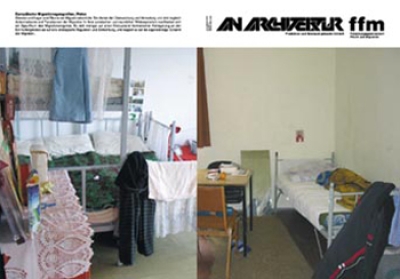
    An Architektur 15 / FFM 11: Europäische…

  • Orhan Esen, Stephan Lanz (Hg)

    Self Service City. Istanbul (metrozones 4)

  • An Architektur

    An Architektur 14: Camp for Oppositional Architecture

  • Stephan Lanz (Hg.)

    City of COOP. Ersatzökonomiern und städtische Bewegungen in…

  • An Architektur

    An Architektur 11-13: Theorie und Praxis der Kartografie

  • An Architektur

    An Architektur 10: Gemeinschaftsräume

  • Jochen Becker, Stephan Lanz (Hg.)

    Space//Troubles. Jenseits des Guten Regierens:…

  • Sarai media lab

    Sarai Reader 03: shaping technologies

  • An Architektur

    An Architektur 04-09: Krieg und die Produktion von Raum

  • IDEA Magazine

    IDEA 296. Books <preposition> graphic design

  • IDEA Magazine

    IDEA 293. Stanley Donwood / Vacances. DD-DDD / Dimensions…

  • gerade nicht auf Lager
    An Architektur

    An Architektur 01-03

  • Martina Löw

    Raumsoziologie

  • Pro qm

    Gutschein / Voucher

  • Brian O'Doherty

    In der weissen Zelle. Inside the White Cube

  • gerade nicht auf Lager
    Siegfried Kracauer

    Das Ornament der Masse. Essays

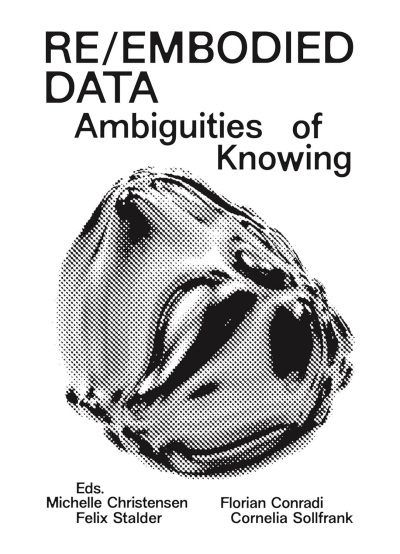
Cover Re/Embodied Data. Ambiguities of Knowing

Re/Embodied Data. Ambiguities of Knowing

We live in times of comprehensive datafication. Digital technologies allow ever more aspects of our lives and the planet to be measured and analyzed. This creates new ways of knowing and doing. All too often however, this development leads to a systematic devaluation of forms of knowing that cannot be quantified and processed digitally.
Digital data and lived worlds, technical measurements and embodied experiences are based on fundamentally different ways of perceiving the world. This publication addresses the relationship between quantifiable and experiential knowledge and uses three transdisciplinary dialogues between the arts and sciences to ask how these differences can be articulated and made productive.


Michelle Christensen, Florian Conradi, Cornelia Sollfrank, Felix Stalder (Hg)
Re/Embodied Data. Ambiguities of Knowing
Adocs, 2026, 978-3-943253-88-7
18,00 €