





Direkt zum Inhalt

Warenkorb

  • Johan Frederik Hartle

    Der geöffnete Raum. Zur Politik der ästhetischen Form

  • Jörg Dünne, Stephan Günzel (Hg.)

    Raumtheorie. Grundlagentexte aus Philosophie und…

  • An Architektur

    An Architektur 16-17

  • Vera Beyer, Jutta Voorhoeve, Anselm…

    Das Bild ist der König. Repräsentation nach Louis Marin

  • An Architektur

    An Architektur 15 / FFM 11: Europäische…

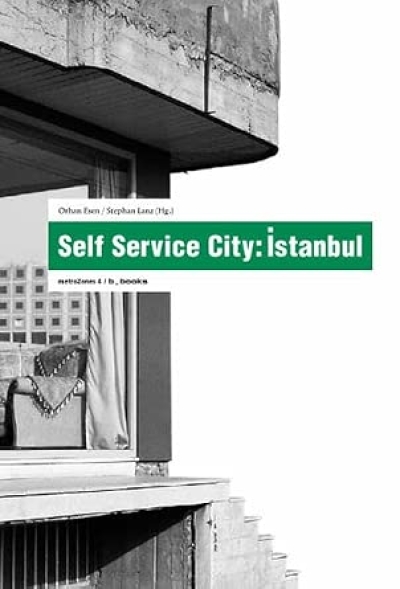
  • Orhan Esen, Stephan Lanz (Hg)

    Self Service City. Istanbul (metrozones 4)

  • An Architektur

    An Architektur 14: Camp for Oppositional Architecture

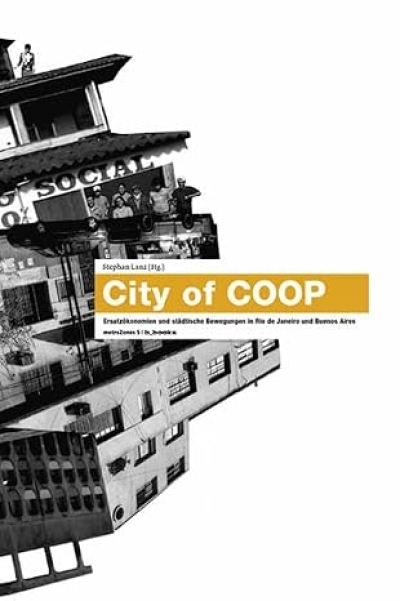
  • Stephan Lanz (Hg.)

    City of COOP. Ersatzökonomiern und städtische Bewegungen in…

  • An Architektur

    An Architektur 11-13: Theorie und Praxis der Kartografie

  • An Architektur

    An Architektur 10: Gemeinschaftsräume

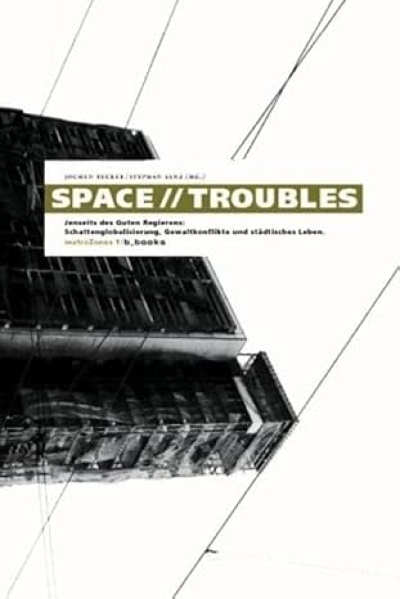
  • Jochen Becker, Stephan Lanz (Hg.)

    Space//Troubles. Jenseits des Guten Regierens:…

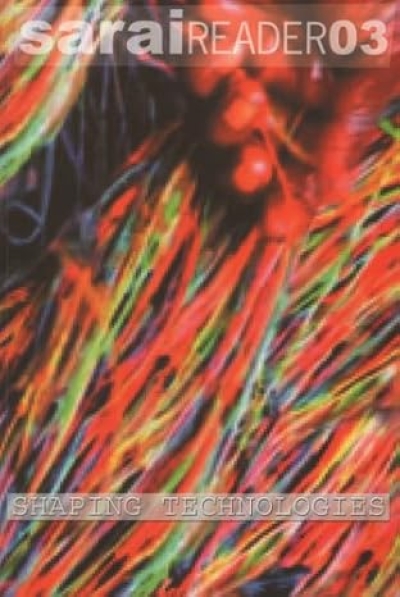
  • Sarai media lab

    Sarai Reader 03: shaping technologies

  • An Architektur

    An Architektur 04-09: Krieg und die Produktion von Raum

  • IDEA Magazine

    IDEA 296. Books <preposition> graphic design

  • IDEA Magazine

    IDEA 293. Stanley Donwood / Vacances. DD-DDD / Dimensions…

  • gerade nicht auf Lager
    An Architektur

    An Architektur 01-03

  • Martina Löw

    Raumsoziologie

  • Pro qm

    Gutschein / Voucher

  • Brian O'Doherty

    In der weissen Zelle. Inside the White Cube

  • gerade nicht auf Lager
    Siegfried Kracauer

    Das Ornament der Masse. Essays

What Is Intelligence? Lessons from AI About Evolution, Computing, and Minds.

It has come as a shock to some AI researchers that a large neural net that predicts next words seems to produce a system with general intelligence. Yet this is consistent with a long-held view among some neuroscientists that the brain evolved precisely to predict the future—the “predictive brain” hypothesis.

In What Is Intelligence?, Blaise Agüera y Arcas takes up this idea—that prediction is fundamental not only to intelligence and the brain but to life itself—and explores the wide-ranging implications. These include radical new perspectives on the computational properties of living systems, the evolutionary and social origins of intelligence, the relationship between models and reality, entropy and the nature of time, the meaning of free will, the problem of consciousness, and the ethics of machine intelligence.

The book offers a unified picture of intelligence from molecules to organisms, societies, and AI, drawing from a wide array of literature in many fields, including computer science and machine learning, biology, physics, and neuroscience. It also adds recent and novel findings from the author, his research team, and colleagues. Combining technical rigor and deep up-to-the-minute knowledge about AI development, the natural sciences (especially neuroscience), and philosophical literacy, What Is Intelligence? argues—quite against the grain—that certain modern AI systems do indeed have a claim to intelligence, consciousness, and free will.


Blaise Agüera y Arcas
What Is Intelligence? Lessons from AI About Evolution, Computing, and Minds.
MIT Press, 2025, 9780262049955
35,00 €