








Direkt zum Inhalt

Warenkorb

  • AD

    AD 174. Vol. 75. Nr. 2. Samantha Hardingham. The 1970…

  • An Architektur

    An Architektur 18: Camp for Oppositional Architecture:…

  • Johan Frederik Hartle

    Der geöffnete Raum. Zur Politik der ästhetischen Form

  • Jörg Dünne, Stephan Günzel (Hg.)

    Raumtheorie. Grundlagentexte aus Philosophie und…

  • An Architektur

    An Architektur 16-17

  • Vera Beyer, Jutta Voorhoeve, Anselm…

    Das Bild ist der König. Repräsentation nach Louis Marin

  • An Architektur

    An Architektur 15 / FFM 11: Europäische…

  • Orhan Esen, Stephan Lanz (Hg)

    Self Service City. Istanbul (metrozones 4)

  • An Architektur

    An Architektur 14: Camp for Oppositional Architecture

  • Stephan Lanz (Hg.)

    City of COOP. Ersatzökonomiern und städtische Bewegungen in…

  • An Architektur

    An Architektur 11-13: Theorie und Praxis der Kartografie

  • An Architektur

    An Architektur 10: Gemeinschaftsräume

  • Jochen Becker, Stephan Lanz (Hg.)

    Space//Troubles. Jenseits des Guten Regierens:…

  • Sarai media lab

    Sarai Reader 03: shaping technologies

  • An Architektur

    An Architektur 04-09: Krieg und die Produktion von Raum

  • IDEA Magazine

    IDEA 296. Books <preposition> graphic design

  • IDEA Magazine

    IDEA 293. Stanley Donwood / Vacances. DD-DDD / Dimensions…

  • gerade nicht auf Lager
    An Architektur

    An Architektur 01-03

  • Martina Löw

    Raumsoziologie

  • Pro qm

    Gutschein / Voucher

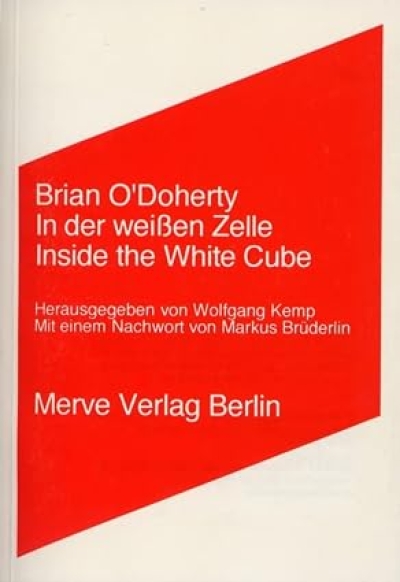
  • Brian O'Doherty

    In der weissen Zelle. Inside the White Cube

  • gerade nicht auf Lager
    Siegfried Kracauer

    Das Ornament der Masse. Essays

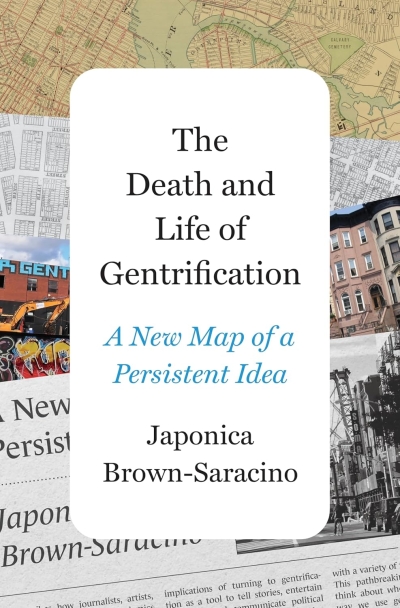
The Death and Life of Gentrification. A New Map of a Persistent Idea

The Death and Life of Gentrification. A New Map of a Persistent Idea

Sociologist Ruth Glass coined the term gentrification in the 1960s to mark the displacement of working-class residents in London neighborhoods by the professional classes. The Death and Life of Gentrification traces how the word has far outgrown Glass’s meaning, becoming a socially charged metaphor for cultural appropriation, upscaling, and the loss of authenticity.

In this lively and insightful book, Japonica Brown-Saracino traces how a concept originally intended to describe the brick-and-mortar transformation of neighborhoods has come to characterize transformations that have little to do with cities. She describes how journalists, artists, filmmakers, novelists, and academics use gentrification as a symbolic device to mourn how everyday pleasures and forms of self-expression—from music to marijuana, kale, and tattoos—entered the domain of the elite. She weighs the implications of turning to gentrification as a tool to tell stories, entertain audiences, and communicate political messages. Relying on vivid examples, the book reveals how the term today expresses widespread ambivalence about rising economic inequality and unease with a variety of forms of social change. This pathbreaking book forces us to think about whether the wide-ranging way we use gentrification dilutes its meaning and stymies efforts to identify and resist urban displacement.

Drawing on everything from film and television to novels and art, The Death and Life of Gentrification sheds critical light on the changing meaning of gentrification in contemporary life. The book is a must-read for anyone interested in gentrification and urban dynamics, as well as for readers curious about attitudes about growing income inequality and the evolution and circulation of ideas.


Japonica Brown-Saracino
The Death and Life of Gentrification. A New Map of a Persistent Idea
Princeton University Press, 2026, 9780691244358
gerade nicht auf Lager