







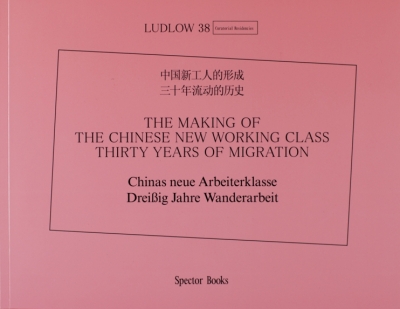
The Making of the Chinese New Working Class. Thirty years of migration / Chinas neue Arbeiterlasse. Dreißig Jahre Wanderarbeit
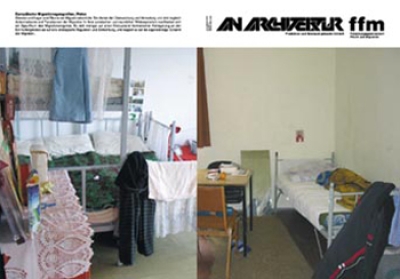
In the past thirty years since China first adopted reform policies, opening its doors to the world, the country has progressed extremely fast in areas of industrialization, urbanization, and economic development. The main reason for this development has been the two hundred million plus migrant workers who have played an indispensable role in the country‘s rise while also contributing greatly to the world economy. The publication accompanied the exhibition »The Making of the Chinese New Working Class» by the Culture and Art Museum of Migrant Workers (CAMMW) Beijing shown in Ludlow 38, New York 2011. CAMMW goes back to an idea of Sun Heng, a former migrant worker and musician, who wanted to support the rights of migrant workers and provide education for their children. »The opression that migrants face from the forces of capitalism is comparable to past colonial exploitation.«
(Quotation from: »The Making of the Chinese New Working Class – Thirty Years of Migration«)
Vor 30 Jahren wurde in China eine Reformpolitik eingeleitet, die sich der westlichen Globalisierung öffnete. Als Ergebnis entstand eine neue Arbeiterklasse: die Wanderarbeiter, die mittlerweile mehr als 200 Millionen zählt und den wirtschaftlichen Aufstieg Chinas im weltweiten Wettbewerb überhaupt erst ermöglichte. Die Publikation entstand zur Ausstellung »The Making of the Chinese New Working Class« vom Culture and Art Museum of Migrant Workers (CAMMW) Beijing und wurde im Ludlow 38, New York 2011 gezeigt. Das CAMMW geht auf eine Idee von Sun Heng zurück, einem Ex-Wanderarbeiter und Musiker, der mit dem Museum die Rechte von chinesischen Wanderarbeitern stärken und die Bildung ihrer Kinder unterstützen wollte.