

Direkt zum Inhalt

Warenkorb

  • Jörg Dünne, Stephan Günzel (Hg.)

    Raumtheorie. Grundlagentexte aus Philosophie und…

  • An Architektur

    An Architektur 16-17

  • Vera Beyer, Jutta Voorhoeve, Anselm…

    Das Bild ist der König. Repräsentation nach Louis Marin

  • An Architektur

    An Architektur 15 / FFM 11: Europäische…

  • Orhan Esen, Stephan Lanz (Hg)

    Self Service City. Istanbul (metrozones 4)

  • An Architektur

    An Architektur 14: Camp for Oppositional Architecture

  • Stephan Lanz (Hg.)

    City of COOP. Ersatzökonomiern und städtische Bewegungen in…

  • An Architektur

    An Architektur 11-13: Theorie und Praxis der Kartografie

  • An Architektur

    An Architektur 10: Gemeinschaftsräume

  • Jochen Becker, Stephan Lanz (Hg.)

    Space//Troubles. Jenseits des Guten Regierens:…

  • Sarai media lab

    Sarai Reader 03: shaping technologies

  • An Architektur

    An Architektur 04-09: Krieg und die Produktion von Raum

  • IDEA Magazine

    IDEA 296. Books <preposition> graphic design

  • IDEA Magazine

    IDEA 293. Stanley Donwood / Vacances. DD-DDD / Dimensions…

  • gerade nicht auf Lager
    An Architektur

    An Architektur 01-03

  • Martina Löw

    Raumsoziologie

  • Pro qm

    Gutschein / Voucher

  • Brian O'Doherty

    In der weissen Zelle. Inside the White Cube

  • gerade nicht auf Lager
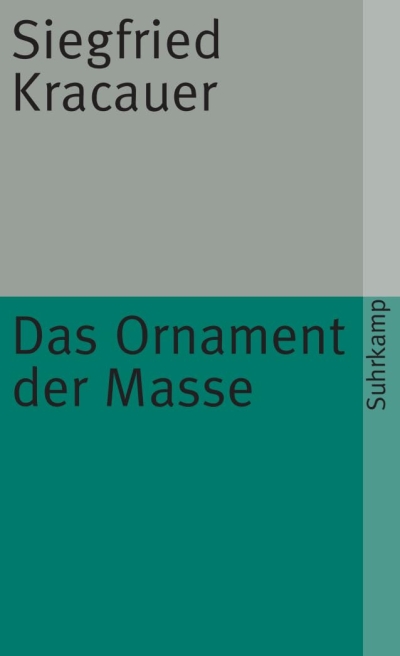
    Siegfried Kracauer

    Das Ornament der Masse. Essays

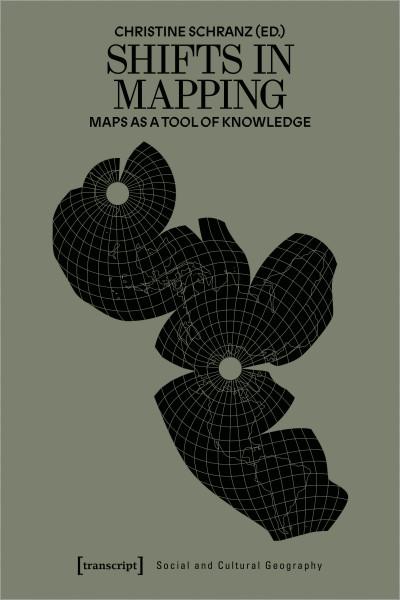
Shifts in Mapping. Maps as a tool of knowledge

Depicting the world, territory, and geopolitical realities involves a high degree of interpretation and imagination. It is never neutral. Cartography originated in ancient times to represent the world and to enable circulation, communication, and economic exchange. Today, IT companies are a driving force in this field and change our view of the world; how we communicate, navigate, and consume globally. Questions of privacy, authorship, and economic interests are highly relevant to cartography's practices. So how to deal with such powers and what is the critical role of cartography in it? How might a bottom-up perspective (and actions) in map-making change the conception of a geopolitical space?


Christine Schranz (ed.)
Shifts in Mapping. Maps as a tool of knowledge
Transcript, 2021, 978-3-8376-6041-8
39,00 €