
















































Direkt zum Inhalt

Warenkorb

  • gerade nicht auf Lager
    Felicity D. Scott

    Architecture or Techno-Utopia. Politics after Modernism

  • gerade nicht auf Lager
    Birgit Schneider

    Textiles Prozessieren

  • Bruno Latour

    Wir sind nie modern gewesen. Versuch einer Symmetrischen…

  • gerade nicht auf Lager
    Georges Canguilhem

    Wissenschaft, Technik, Leben. Beiträge zur historischen…

  • gerade nicht auf Lager
    Stuart Elden, Elizabeth Lebas, Eleonore…

    Henri Lefebvre. Key Writings

  • Laurence A. Rickels

    Ulrike Ottinger. Eine Autobiografie

  • N. John Habraken, Arnulf Lüchinger

    Die Träger und die Menschen. Das Ende des Massenwohnungsbau…

  • gerade nicht auf Lager
    Liz Kotz

    Words to Be Looked at. Language in 1960s Art

  • Guy Debord

    Comments on the Society of the Spectacle

  • Michel de Certeau

    Kunst des Handelns

  • gerade nicht auf Lager
    Jacques Ranciere

    Ist Kunst widerständig?

  • Alain Badiou

    Wofür steht der Name Sarkozy?

  • gerade nicht auf Lager
    Donna Haraway

    Die Neuerfindung der Natur. Primaten, Cyborgs und Frauen.

  • gerade nicht auf Lager
    Stefanie Schulte Strathaus, Florian…

    Wer sagt denn, dass Beton nicht brennt, hast Du’s probiert?

  • gerade nicht auf Lager
    Henri Lefebvre

    Writings on Cities

  • gerade nicht auf Lager
    Henri Lefebvre

    The Production of Space

  • Hiromasa Shirai, André Schmidt (Hg.)

    Big Bang Beijing. Urban Change in Beijing

  • gerade nicht auf Lager
    John F. C. Turner

    Housing by People. Towards Autonomy in Building…

  • Loretta Napoleoni

    Rogue Economics. Capitalism's New Reality

  • AD

    AD 174. Vol. 75. Nr. 2. Samantha Hardingham. The 1970'…

  • An Architektur

    An Architektur 18: Camp for Oppositional Architecture:…

  • Johan Frederik Hartle

    Der geöffnete Raum. Zur Politik der ästhetischen Form

  • An Architektur

    An Architektur 16-17

  • Vera Beyer, Jutta Voorhoeve, Anselm…

    Das Bild ist der König. Repräsentation nach Louis Marin

  • An Architektur

    An Architektur 15 / FFM 11: Europäische…

  • An Architektur

    An Architektur 14: Camp for Oppositional Architecture

  • An Architektur

    An Architektur 11-13: Theorie und Praxis der Kartografie

  • An Architektur

    An Architektur 10: Gemeinschaftsräume

  • An Architektur

    An Architektur 04-09: Krieg und die Produktion von Raum

  • IDEA Magazine

    IDEA 296. Books <preposition> graphic design

  • IDEA Magazine

    IDEA 293. Stanley Donwood / Vacances. DD-DDD / Dimensions…

  • gerade nicht auf Lager
    An Architektur

    An Architektur 01-03

  • Pro qm

    Gutschein / Voucher

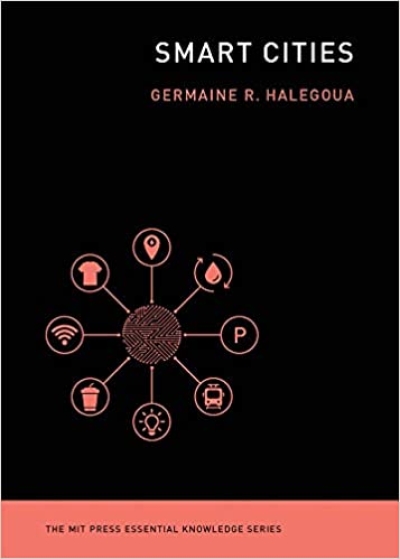
Smart Cities

Key concepts, definitions, examples, and historical contexts for understanding smart cities, along with discussions of both drawbacks and benefits of this approach to urban problems.
Over the past ten years, urban planners, technology companies, and governments have promoted smart cities with a somewhat utopian vision of urban life made knowable and manageable through data collection and analysis. Emerging smart cities have become both crucibles and showrooms for the practical application of the Internet of Things, cloud computing, and the integration of big data into everyday life. Are smart cities optimized, sustainable, digitally networked solutions to urban problems? Or are they neoliberal, corporate-controlled, undemocratic non-places? This volume in the MIT Press Essential Knowledge series offers a concise introduction to smart cities, presenting key concepts, definitions, examples, and historical contexts, along with discussions of both the drawbacks and the benefits of this approach to urban life.
After reviewing current terminology and justifications employed by technology designers, journalists, and researchers, the book describes three models for smart city development—smart-from-the-start cities, retrofitted cities, and social cities—and offers examples of each. It covers technologies and methods, including sensors, public wi-fi, big data, and smartphone apps, and discusses how developers conceive of interactions among the built environment, technological and urban infrastructures, citizens, and citizen engagement. Throughout, the author—who has studied smart cities around the world—argues that smart city developers should work more closely with local communities, recognizing their preexisting relationship to urban place and realizing the limits of technological fixes. Smartness is a means to an end: improving the quality of urban life.


Germaine R. Halegoua
Smart Cities
MIT Press, 2020, 9780262538053
gerade nicht auf Lager