












Direkt zum Inhalt

Warenkorb

  • An Architektur

    An Architektur 23: On the Commons

  • IDEA Magazine

    IDEA 341. Dialogues with Tatsuya Ariyama

  • gerade nicht auf Lager
    Brandon LaBelle

    Acoustic Territories. Sound Culture and Everyday Life.…

  • gerade nicht auf Lager
    Adolf Opel (Hg.)

    Adolf Loos. Gesammelte Schriften

  • Pal Ahluwalia

    Out of Africa. Post-Structuralism's Colonial Roots

  • Christoph Schäfer

    Die Stadt ist unsere Fabrik. The City is Our Factory.

  • Stefan Marx

    85 Zeichnungen

  • Sandra Schaefer

    Stagings. Kabul, Film & Production of Representation

  • gerade nicht auf Lager
    Steve Goodman

    Sonic Warfare. Sound, Affect, and the Ecology of Fear

  • Gui Bonsiepe

    Entwurfskultur und Gesellschaft. Gestaltung zwischen…

  • gerade nicht auf Lager
    Claire Doherty (Hg.)

    Situation. Documents of Contemporary Art

  • Charles Harrison

    Since 1950. art and its criticism

  • gerade nicht auf Lager
    James Hennessey, Victor Papanek

    Nomadic Furniture. D-I-Y Projects that are Lightweight

  • Claire Fontaine

    Vivre, vaincre

  • Claire Fontaine

    Claire Fontaine. Vivre, Vaincre

  • Brian Holmes

    Escape the Overcode. Activist Art in the Control Society

  • IDEA Magazine

    IDEA 332. How does graphic design CHANGE?

  • Jean-Luc Godard, Youssef Ishaghpour

    Archäologie des Kinos, Gedächtnis des Jahrhunderts

  • Arkitip No. 0048

    Ryan McGinness

  • Rahel Lämmler, Michael Wagner

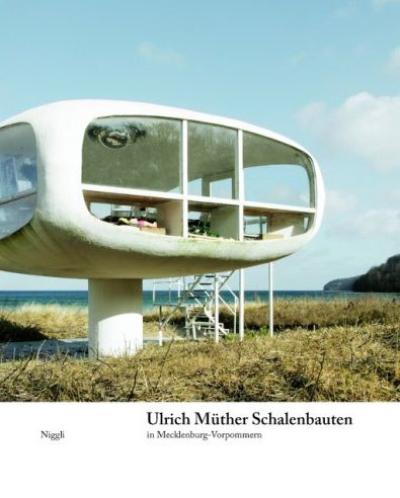
    Ulrich Müther. Schalenbauten in Mecklenburg-Vorpommern

  • Martina Löw

    Soziologie der Städte

  • Sven Spieker

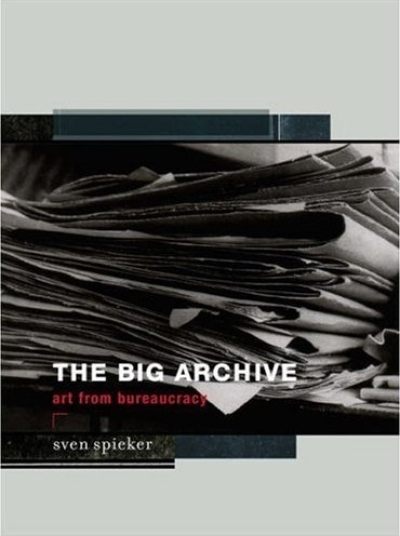
    The Big Archive. Art From Bureaucracy

  • Thomas Meinecke

    Jungfrau

  • Grada Kilomba

    Plantation Memories. Episodes of Everyday Racism

  • An Architektur

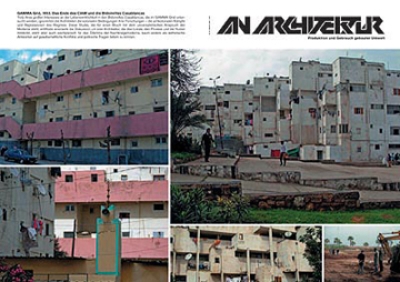
    An Architektur 22: GAMMA Grid, 1953. Das Ende des CIAM und…

  • An Architektur

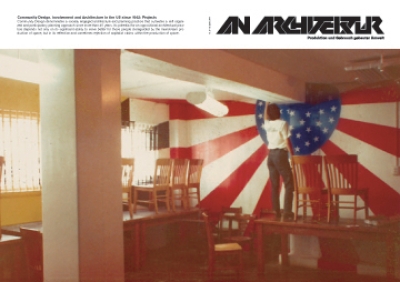
    An Architektur 19-21: Community Design. Involvement and…

  • Antonio Negri

    The Porcelain Workshop. For a New Grammar of Politics

  • Christoph Schaub, Michael Schindhelm

    Bird's Nest (DVD, 87 min.). Jacques Herzog und Pierre…

  • Laurence A. Rickels

    Ulrike Ottinger. Eine Autobiografie

  • N. John Habraken, Arnulf Lüchinger

    Die Träger und die Menschen. Das Ende des Massenwohnungsbau…

  • gerade nicht auf Lager
    Guy Debord

    Comments on the Society of the Spectacle

  • Michel de Certeau

    Kunst des Handelns

  • Alain Badiou

    Wofür steht der Name Sarkozy?

  • gerade nicht auf Lager
    Donna Haraway

    Die Neuerfindung der Natur. Primaten, Cyborgs und Frauen.

  • gerade nicht auf Lager
    Stefanie Schulte Strathaus, Florian…

    Wer sagt denn, dass Beton nicht brennt, hast Du’s probiert?

  • gerade nicht auf Lager
    Henri Lefebvre

    Writings on Cities

  • Loretta Napoleoni

    Rogue Economics. Capitalism's New Reality

  • AD

    AD 174. Vol. 75. Nr. 2. Samantha Hardingham. The 1970…

  • An Architektur

    An Architektur 18: Camp for Oppositional Architecture:…

  • Johan Frederik Hartle

    Der geöffnete Raum. Zur Politik der ästhetischen Form

  • An Architektur

    An Architektur 16-17

  • Vera Beyer, Jutta Voorhoeve, Anselm…

    Das Bild ist der König. Repräsentation nach Louis Marin

  • An Architektur

    An Architektur 15 / FFM 11: Europäische…

  • An Architektur

    An Architektur 14: Camp for Oppositional Architecture

  • An Architektur

    An Architektur 11-13: Theorie und Praxis der Kartografie

  • An Architektur

    An Architektur 10: Gemeinschaftsräume

  • An Architektur

    An Architektur 04-09: Krieg und die Produktion von Raum

  • IDEA Magazine

    IDEA 296. Books <preposition> graphic design

  • IDEA Magazine

    IDEA 293. Stanley Donwood / Vacances. DD-DDD / Dimensions…

  • gerade nicht auf Lager
    An Architektur

    An Architektur 01-03

  • Pro qm

    Gutschein / Voucher

  • Siegfried Kracauer

    Das Ornament der Masse. Essays

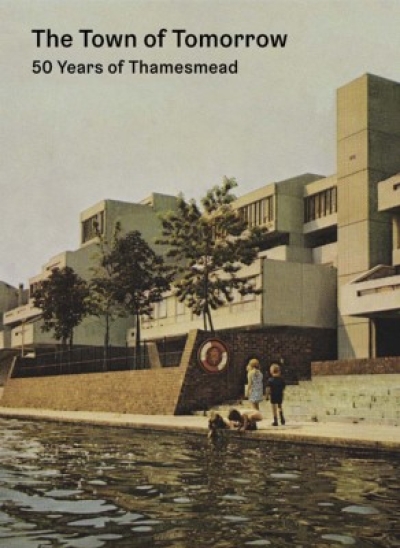
The Town of Tomorrow: 50 years of Thamesmead

Rising from London’s Erith marshes in the 1960s, Thamesmead was London County Council’s bold attempt to build a new town to address the city’s housing shortage after the Second World War. Noted for its daring, experimental design – concrete modern terraces, blocks of flats and elevated walkways built around a system of lakes and canals – the town received attention from architects, sociologists and politicians throughout the world but also gained notoriety as the backdrop to Stanley Kubrick’s film, ‘A Clockwork Orange’.
Today Thamesmead is home to more than 40,000 people, but over the years, economic, political and social pressures have left their mark. In the 1980s, as opinion turned against the modernist concrete architecture, the focus shifted to more conventional red-brick homes. Since the 1990s, as some of the original buildings began to fall into disrepair, Thamesmead has relied increasingly on private investment for new developments in what had previously been a mainly council-run town. After the abolition of the Greater London Council in 1986, numerous bodies have managed the town and now Peabody are embarking on an ambitious regeneration plan.
In ‘The Town of Tomorrow’, 50 years of Thamesmead’s history have been assembled and preserved. The architecture of the town and its inhabitants are captured by archive material combined with newly commissioned photography by Tara Darby. Original plans, models, postcards, leaflets and newspaper cuttings are presented alongside interviews with local residents. Together with an introductory essay by John Grindrod, the images convey the story of this influential but often misunderstood town, from the dreams and excitement of its ambitious original vision to the complex realities of living there today.


Peter Chadwick, Ben Weaver (Eds.)
The Town of Tomorrow: 50 years of Thamesmead
Here Press, 2019, 978-0-993585395
gerade nicht auf Lager