





Direkt zum Inhalt

Warenkorb

  • Johan Frederik Hartle

    Der geöffnete Raum. Zur Politik der ästhetischen Form

  • Jörg Dünne, Stephan Günzel (Hg.)

    Raumtheorie. Grundlagentexte aus Philosophie und…

  • An Architektur

    An Architektur 16-17

  • Vera Beyer, Jutta Voorhoeve, Anselm…

    Das Bild ist der König. Repräsentation nach Louis Marin

  • An Architektur

    An Architektur 15 / FFM 11: Europäische…

  • Orhan Esen, Stephan Lanz (Hg)

    Self Service City. Istanbul (metrozones 4)

  • An Architektur

    An Architektur 14: Camp for Oppositional Architecture

  • Stephan Lanz (Hg.)

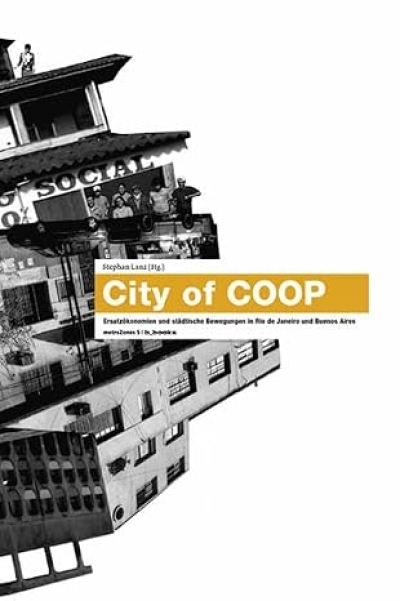
    City of COOP. Ersatzökonomiern und städtische Bewegungen in…

  • An Architektur

    An Architektur 11-13: Theorie und Praxis der Kartografie

  • An Architektur

    An Architektur 10: Gemeinschaftsräume

  • Jochen Becker, Stephan Lanz (Hg.)

    Space//Troubles. Jenseits des Guten Regierens:…

  • Sarai media lab

    Sarai Reader 03: shaping technologies

  • An Architektur

    An Architektur 04-09: Krieg und die Produktion von Raum

  • IDEA Magazine

    IDEA 296. Books <preposition> graphic design

  • IDEA Magazine

    IDEA 293. Stanley Donwood / Vacances. DD-DDD / Dimensions…

  • gerade nicht auf Lager
    An Architektur

    An Architektur 01-03

  • Martina Löw

    Raumsoziologie

  • Pro qm

    Gutschein / Voucher

  • Brian O'Doherty

    In der weissen Zelle. Inside the White Cube

  • gerade nicht auf Lager
    Siegfried Kracauer

    Das Ornament der Masse. Essays

cover data forms

Data Farms. Circuits, Labour, Territory

What is at stake in naming data centres as data farms? These installations are essentially hangars packed with computers. They congregate servers, switches and wires that facilitate the storage, processing and transmission of data in high volumes and at fast speeds. Data centres present a scale of operations, potentially planetary in scope, that intensifies and multiplies the productive and extractive capacities of digital technologies. The economic advantages that accrue to parties with servers in these installations derive not only from opportunities for peering and networking but also from inputs to client machines that may be situated at vast distance. Yet data centres have precise locations, often clustering where there is access to energy, skills, land concessions, tax exemptions or undersea cables. There are no data centres without land and water. Like the ‘dark satanic mills’ associated with the factories of the industrial revolution, data centres burn fossil fuels. Yet, despite these continuities with agrarian and industrial activity, the data economy generates stark figurations of territory, power and circulation.


Tsvetelina Hristova, Brett Neilson and Ned Rossiter (eds)
Data Farms. Circuits, Labour, Territory
Open Humanities Press, 2022, 978-1-78542-126-6
gerade nicht auf Lager