

























Direkt zum Inhalt

Warenkorb

  • Metahaven

    The Hard Question of Art. Cognitive Futures

  • Cecilia Rikap

    The Rulers. Corporate Power in the Age of AI and the Cloud

  • Hans-Peter Bürgi (Hg)

    Labor der Extreme: Klima - Alpen - Architektur

  • Michel Foucault

    Die Hermaphroditen

  • Julia Alekseyeva

    Antifascism and the Avant-Garde. Radical Documentary in the…

  • Sara Nadal-Melsio

    Europe and the Wolf. Political Variations on a Musical…

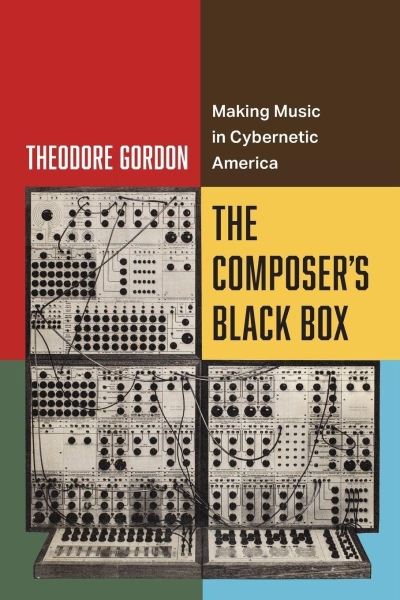
  • Theodore Gordon

    Composer's Black Box. Making Music in Cybernetic…

  • Évelyne Gayou

    A Revolution in Music. The History of the Groupe de…

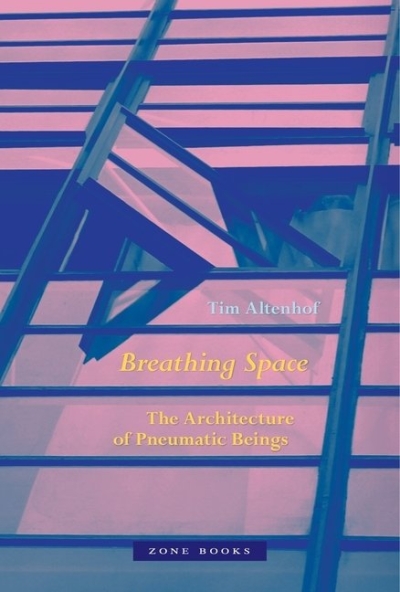
  • Tim Altenhof

    Breathing Space. The Architecture of Pneumatic Beings

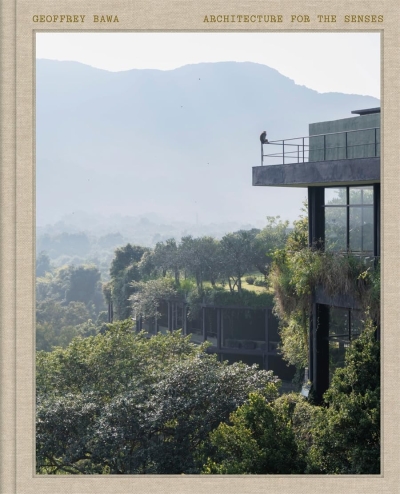
  • Shayari de Silva, Johan Deurell,…

    Geoffrey Bawa. Architecture for the Senses

  • Tung-Hui Hu

    Digital Lethargy. Dispatches from an Age of Disconnection

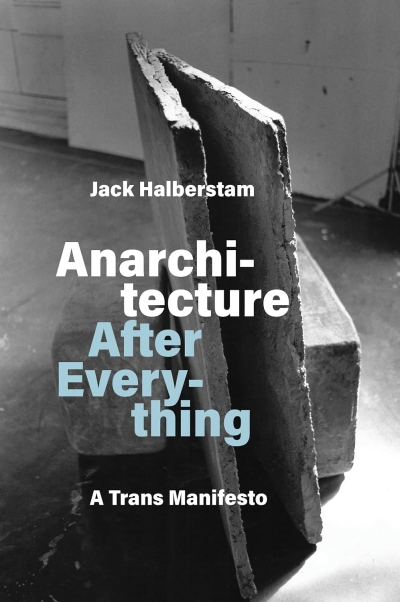
  • Jack Halberstam

    Anarchitecture After Everything. A Trans Manifesto

  • Jeanette Kunsmann, Laura Traub (Hg.)

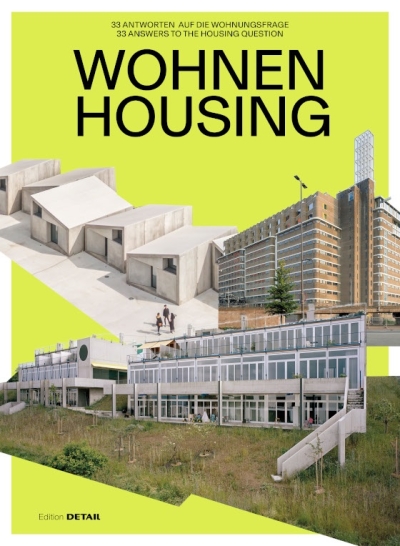
    Wohnen. 33 Antworten auf die Wohnungsfrage. Housing. 33…

  • Jens Balzer

    Erlösung. Über Messianismus und Apokalyptik in den…

  • Katarina Bajc

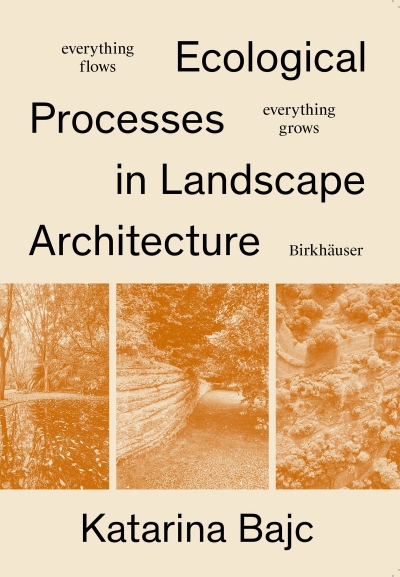
    Ecological Processes in Landscape Architecture

  • Elsbeth Ronner, Hans Teerds, Janna…

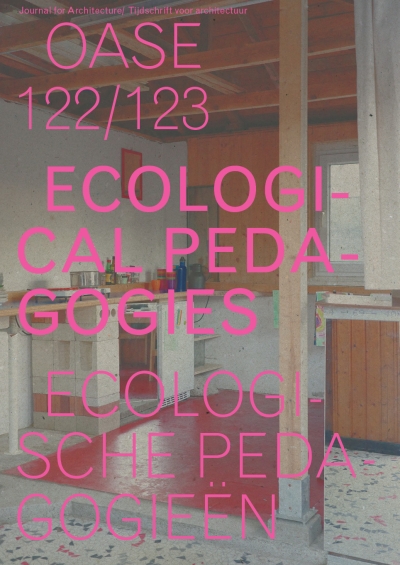
    OASE 122/123 Ecological Pedagogies

  • Stefano Harney, Fred Moten

    11 Jahre | 11 Interviews

  • Marco Baravalle

    The Battleground of Art. Radical Curating in the Crisis of…

  • Thomas Köhler, Philip Kurz, Ursula…

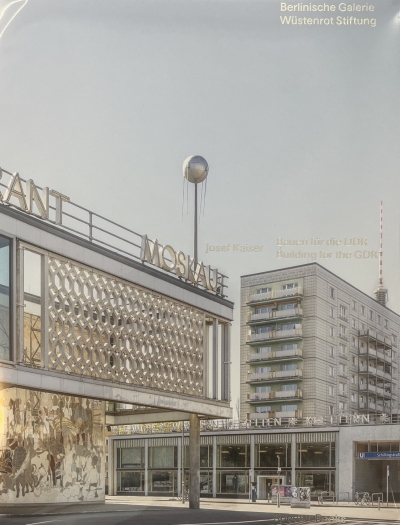
    Josef Kaiser. Bauen für die DDR / Building for the GDR

  • Isabell Lorey (Hg.)

    Tosquelles. Politiken des Wahnsinns

  • Frieder Bohaumilitzky

    Metapolitik der Dinge. Materielle Kultur und rechtes Denken

  • Kyle Devine

    Recomposed. Music, Climate, Crisis, Change

  • Daniel Martin Feige, Gerhard…

    Kritische Theorie des Designs (Schriftenreihe des Weißenhof…

  • Davide Giuriato

    Die Fliege. Versuch über ein politisches Tier

  • Anna Tscherch, Wibke Schaeffer, Carsten…

    Nachhaltige Innenarchitektur. Strategien für Raum, Struktur…

  • Ines Weizman

    The Architectural Casino. Conversations about Colonial…

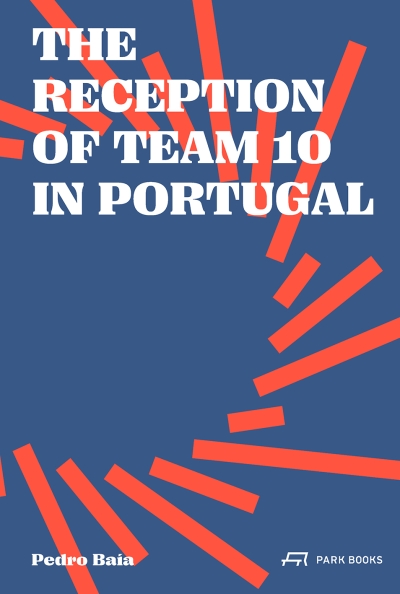
  • Pedro Baía

    The Reception of Team 10 in Portugal

  • Renate Flagmeier, Florentine Nadolni,…

    Objects Exhibitions Spaces. A Museum History Werkbundarchiv…

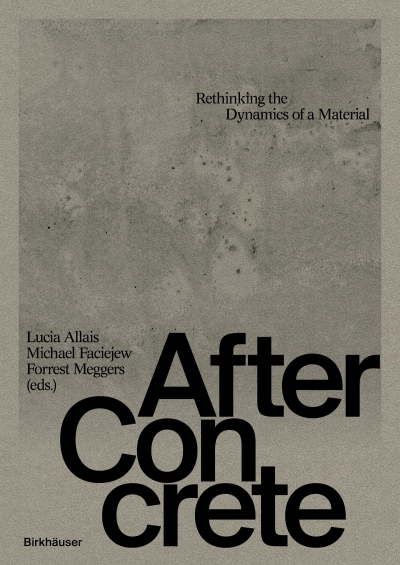
  • Lucia Allais, Michael Faciejew, Forrest…

    After Concrete. Rethinking the Dynamics of a Material

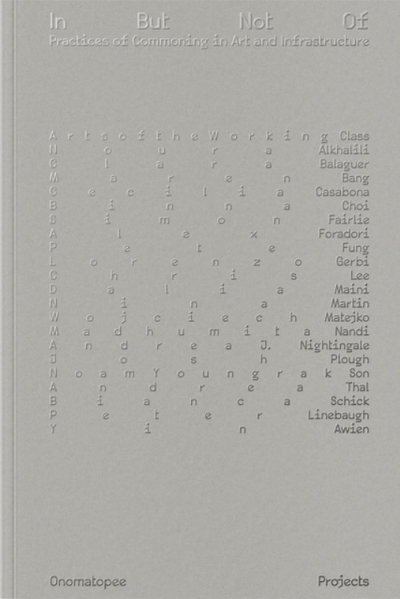
  • Cecilia Casabona, Noam Youngrak Son (Ed…

    In But Not Of. Practices of Commoning in Art and…

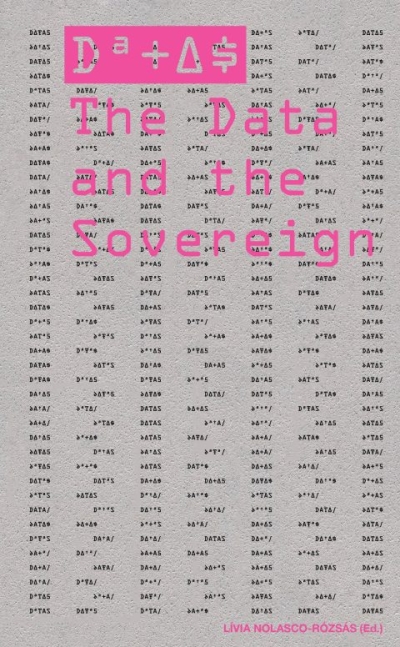
  • Lívia Nolasco-Rózsás (Ed.)

    DATAS The Data and the Sovereign

  • Bhuleshwar Mate, Kaushambi Mate

    Vernacular Branding: Reading Identity through Design and…

  • Martino Stierli, Ikem Stanley Okoye,…

    Architects of Liberation. Modernism in Western Africa

  • Javier Fernández Contreras

    The Interiors of Social Media. Architecture, Space, and…

  • Sophie Lewis

    Feindliche Feminismen. TERFs, Pro-Life-Feminist*innen &…

  • Eurogruppe (Hg.)

    Intercity. Zeitschrift für Föderalismus und Polyamorie

  • Karlssonwilker inc.

    Finding an Identity for Calder Gardens

  • Liene Jākobsone (ed.)

    Border-Land-Scapes

  • CRADLE, Chris van Uffelen

    Begrünte Architektur. Fassenbegrünung, Dachbegrünung,…

  • Stanley Fuls (Hg.)

    Die Typenreihe Q6. Von der Bauakademie zur…

  • gerade nicht auf Lager
    Marie Canet

    Lucy McKenzie. The Tenant

  • André Tavares

    Fearless Forms, Fearful Concrete. The Onset of Brazilian…

  • Sinthujan Varatharajah

    wo zeit stehen bleibt. Vom tourismus und seiner gewalt

  • Natalia Peťková

    Building in Stone Today. Voices and Commentaries

  • gerade nicht auf Lager
    Japonica Brown-Saracino

    The Death and Life of Gentrification. A New Map of a…

  • Laura Ferrarello, Rob Phillips

    Engaging Design. Tools for Design Practices Urging New…

  • V. Mitch Mcewen

    Erasure by Design. Racial Protocols of Displacement,…

  • Andrea Pinotti

    At the Threshold of the Image. From Narcissus to Virtual…

  • gerade nicht auf Lager
    Annie McClanahan

    Beneath the Wage. Tips, Tasks, and Gigs in the Age of…

  • Susan Zieger

    Logistics and Power. Supply Chains from Slavery to Space

  • Jessica Pykett

    Governing Global Emotions. Technology and The New Science…

  • Alison Cool

    Deep Dark Data. How Information Became Personal

  • Mario Rinke, Frederik Vandyck (Eds.)

    Crafting Circularity. Rethinking Sustainable Design and…

  • François Tosquelles

    Materialismus, Psychopathologie, Begehren.

  • William Rose (ed.)

    Ken Jacobs. I walked into my Shortcomings

  • Beatrice Gibson, Ben Rivers, Erika…

    The Machine that Kills Bad People. Notes from a Film Club

  • Alexia Mathieu

    Manifestes 9. Wear the Game: Designing Narratives for…

  • Jack Self (Ed.)

    Real Review #18

  • Diego Ceresuela-Wiesmann, Hubert…

    Manual for Designing Urban Imaginaries Colombia

  • Ignacio G. Galán (ed.)

    Architecture's Kinships. Projects and programs towards…

  • Abdulrahman and Turki Gazzaz, Bricklab…

    Saudi Modern. Jeddah in Transition 1938 - 1964

  • gerade nicht auf Lager
    Lou Downe

    Bad Services. How to fix services that don't work

  • Oxana Timofeeva

    Freuds Beasty Boys. Sex, Gewalt und Männlichkeit

  • Adrian Nichols

    Lexicon of Anarchy

  • Lukasz Stanek (ed.)

    The Gift. Spaces of Global Socialism and Their Afterlives

  • Eva Bentcheva, Birgit Hopfener,…

    Worlding Global Art Histories through Teaching

  • Kimia Kamvari

    Kimia Kamvari. Negative Landscapes

  • Eyal Weizman

    Insubmission. Forensische Architektur. Manifest für eine…

  • Katie Filek, Marc-Antoine Durand

    Traduire: Architecture / Translating: Architecture

  • Julian Schubert, Elena Schütz, Leonard…

    Constellations - Housing Life as It Unfolds

  • gerade nicht auf Lager
    Martin Braathen, Marte Nødtvedt…

    What can you live without? Wenche Selmer's cabins

  • gerade nicht auf Lager
    J. Hoberman

    Everything is Now: The 1960s New York Avant-Garde, Primal…

  • Penny Sparke, Jana Scholze, Pat Kirkham…

    Exhibition as Interior, Interior as Exhibition. Spaces of…

  • Simon Payne

    Experimental Cinema. Structures, Systems and Strategies

  • Lesley Millar, Alice Kettle (Eds.)

    Reading the Thread. Cloth and Communication

  • Valerie Steele

    Dress, Dreams, and Desire. A History of Fashion and…

  • Leslie Atzmon (Ed.)

    Design and Science

  • gerade nicht auf Lager
    Lucy Bolton (Hg)

    The Feminist Film Philosophy Reader

  • Bernardo Bianchi, Andreas Lipowsky,…

    Die ontologische Wende. Indigene Kosmologien und die…

  • Minna Henriksson, Sezgin Boynik

    A Shot in the Factory

  • dérive

    dérive N° 104, Design als soziale und ökologische Praxis…

  • SPECTRAL

    SPECTRAL. Spatial, Performative & Expanded Cinematics -…

  • Axel Müller-Schöll / idea… Institut e.V…

    Nach innen gedacht. 12 Indikative zum Wirkungspotenzial der…

  • Paul Dobraszczyk

    The Matter of Architecture. Geology, Buildings and Us

  • asphalt/Kollektiv für Architektur,…

    Umbauhof. Ein Ort für die Wiederverwendung von Bauteilen

  • Marc Angélil, Cary Siress

    A Thousand Cuts. Architectures of Displacement

  • David Brodsky, Ana Chorgolashvili, Nata…

    Guide to Tbilisi Districts. Kala

  • Asli Cicek, Christoph Grafe, Fredie…

    OASE 121. Architects Think Furniture

  • Asma Mhalla

    Cyberpunk. Das neue totalitäre System

  • Emanuele De Donno, Amadeo Martegani…

    Architecture of Invention. 10 Experimental Bibliographies

  • Robin Jaspert

    Neokolonialer Kapitalismus. Eine Geschichte globaler…

  • Center for Critical Studies in…

    The Housing Question is a Feminist Question.

  • Kathrin Aste, Teresa Stillebacher (Hg.)

    Über das Werk des Architekten Josef Lackner. Zwölf Thesen…

  • Alina Schmuch

    Alina Schmuch. Wo Abwässer münden

  • Pau Bajet, Mariona Benedito, Maria…

    Becoming. Architectures for a Planet in Transition

  • Cagla Özbek, Emrah Serdan (Eds.)

    Peter Watkins: No Shortcuts

  • Allison Anderson

    Climate Adaptation for Architects A Design Toolkit

  • Carola Ebert (ed.)

    Theorising Interior Architecture and Design: Identity,…

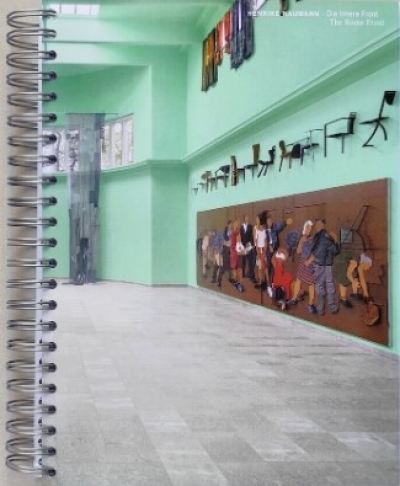
Cover Henrike Naumann. Die Innere Front. The Home Front

Henrike Naumann. Die Innere Front. The Home Front

German/English mit Texten von/with texts by Clemens Villinger, Kerstin Stakemeier. Design by Johannes Büttner

Die Publikation erscheint unabhängig als Materialsammlung zu Henrike Naumanns Beitrag für die Ausstellung RUIN im Deutschen Pavillon der diesjährigen Venedig Biennale (Kuratorin: Kathleen Reinhardt; Künstlerinnen: Henrike Naumann, Sung Tieu).

Sie hat keinen klaren Anfang und kein Ende. Beim ‚Forever‘-Umrunden der Seiten entlang der Spiralbindung entstehen neue Verknüpfungen, Fragmente verschieben sich, Bedeutungen kippen, Gesehenes erscheint in der Wiederholung anders. Klare Lesarten verweigern sich. Das zusammengetragene Material wird kontextualisiert und verwirrt gleichzeitig. Es ist ‚ungemütlich‘, ähnlich wie Henrike Naumann ihren Beitrag bezeichnete. Es zeigt sich eine dichte künstlerische Praxis, die nicht bewusst abgeschlossen werden konnte, sondern durch ein abruptes Ende bestimmt ist.

Als Materialsammlung werden verschiedene Elemente und Ansätze aus dem gesamten Arbeitsprozess zusammengeführt. Einmal die Hieroglyphen, die Henrike Naumann als Glossar und eigenes Zeichensystem beschrieb, teilweise begleitet von Texten von Clemens Villinger. Dazu kommt das umfangreiche ‚masterplan.key‘, ein fortlaufend bearbeitetes Dokument, mit dem sie vor über einem Jahr begann, um Ideen und Verknüpfungen zu sammeln. Es half ihr konzeptionelle Ansätze und Brüche zu entwickeln, sowie ihre Notizen und Denkprozesse aus den Skizzen und intensiven Recherchen zu visualisieren. Darunter der erste Konzeptentwurf aus dem Bewerbungsprozess.

Ähnlich wie bei ihrer Praxis der ‚Konzeptpapiere‘ nutzte Henrike ‚masterplan.key‘ als internes konzeptionelles Dokument, in dem sie Collagen und Manipulationen entwickelte, um das Material und die übereinanderliegenden Kontexte zu bändigen. Die Seitengröße des Dokuments orientiert sich an dem Laptopbildschirm, vor dem man mit ihr saß, während sie eine ihrer Keynote-Präsentationen durchklickte, um den künstlerischen Prozess in einem Projekt zu erläutern.

Die Sammlung enthält weiterhin Naumanns Konzepttextskizzen und einen Text von Kerstin Stakemeier. Dazu kommen einzelne Objektaufnahmen der Hieroglyphen, die noch in Naumanns Studio entstanden waren, sowie Ausstellungsansichten aus Venedig. Der Künstler Johannes Büttner entwickelte die konzeptionelle und grafischen Umsetzung der Publikation.

Die Materialsammlung war nicht mehr von Henrike Naumann geplant gewesen. Die Herausgeber:innen entschieden sich zur Veröffentlichung, um an ihren gewählten Schritt einer Sichtbarmachung von Ideen, Ansätzen und Recherchen anzuknüpfen, den sie mit dem Metallordner CONCEPTS eingeschlagen hatte. Die breite Vermittlung ihrer Arbeit war Henrike Naumann immer besonders wichtig, das Offenlegen ihrer Recherchelinien und Denkprozesse zu ihrem Pavillonbeitrag versucht diese Motivation so gut wie möglich zu unterstützen.

Es ist ein offenes Dokument entstanden, das Einblick gibt, aber vor allem herausfordert und zum Weiterdenken provoziert.

————————————————————————————————

This publication is an independently released collection of materials relating to Henrike Naumann’s contribution to the exhibition RUIN in the German Pavilion at this year’s Venice Biennale (curator: Kathleen Reinhardt; artists: Henrike Naumann, Sung Tieu).

It has no clear beginning or end. As one ‘forever’ turns the pages along the spiral binding, new connections emerge, fragments and meanings shift, and what has been seen appears different in repetitions. Clear interpretations elude the reader. The compiled material is both contextualizing and bewildering at the same time. It is ‘uncomfortable’, much as Henrike Naumann described her work in the pavilion. What emerges is a dense artistic practice that could not be consciously brought to a close, but is instead defined by an abrupt ending.

As a collection of material, various elements and approaches from the entire working process are brought together. Firstly, the hieroglyphs, which Henrike Naumann described as a glossary and a sign system in her own right, partly accompanied by texts by Clemens Villinger. Added to this is the extensive ‘masterplan.key’, a document that she constantly updated, and began working on over a year ago to collect ideas and connections. It helped her to develop conceptual approaches and disruptions, as well as to visualise her notes and thought processes drawn from the sketches and her intensive research. Among these is the first conceptual draft from the application procedure.

Much like her practice of ‘concept papers’, Henrike used ‘masterplan.key’ as an internal conceptual document in which she developed collages and manipulations to bring the material and the overlapping contexts ‘under control’. The page size of the document is based on the laptop screen in front of which one sat with her whilst she clicked through one of her Keynote presentations to explain the artistic process in a project.

The collection also includes Naumann’s conceptual text sketches and a text by Kerstin Stakemeier. In addition, there are individual photographs of the hieroglyphs, taken whilst they were still in Naumann’s studio, as well as exhibition views from Venice. The artist Johannes Büttner developed the conceptual and graphic design of the publication.

The collection of materials had not originally been planned by Henrike Naumann. The editors decided to publish it shortly before the opening in order to build on the approach she had adopted – that of bringing ideas, approaches and research to light – which she had embarked upon with the metal folder CONCEPTS. Communicating and mediating the work widely has always been particularly important to her; the disclosure of her lines of research and thoughts relating to her pavilion contribution seeks to support this motivation as effectively as possible.

The result is an open document that provides insight, but above all challenges the reader and provokes to further continue these approaches.


Studio Henrike Naumann
Henrike Naumann. Die Innere Front. The Home Front
Bierke Verlag, 2026, 978-3-948546-70-0
38,00 €