






















Direkt zum Inhalt

Warenkorb

  • Claire Fontaine

    Claire Fontaine. Vivre, Vaincre

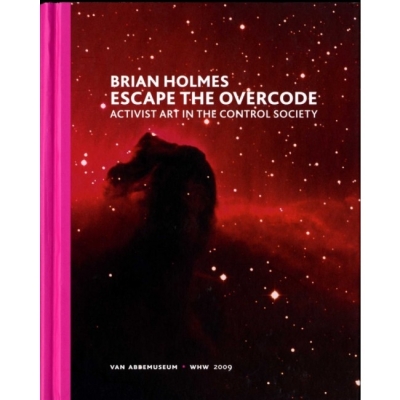
  • Brian Holmes

    Escape the Overcode. Activist Art in the Control Society

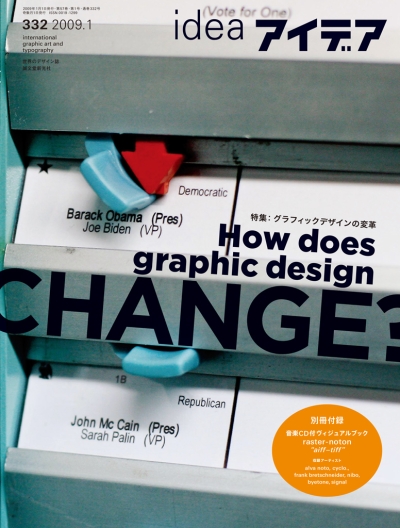
  • IDEA Magazine

    IDEA 332. How does graphic design CHANGE?

  • Jean-Luc Godard, Youssef Ishaghpour

    Archäologie des Kinos, Gedächtnis des Jahrhunderts

  • Arkitip No. 0048

    Ryan McGinness

  • Rahel Lämmler, Michael Wagner

    Ulrich Müther. Schalenbauten in Mecklenburg-Vorpommern

  • Martina Löw

    Soziologie der Städte

  • Sven Spieker

    The Big Archive. Art From Bureaucracy

  • Thomas Meinecke

    Jungfrau

  • Grada Kilomba

    Plantation Memories. Episodes of Everyday Racism

  • An Architektur

    An Architektur 22: GAMMA Grid, 1953. Das Ende des CIAM und…

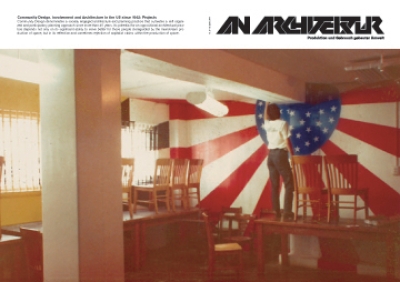
  • An Architektur

    An Architektur 19-21: Community Design. Involvement and…

  • Antonio Negri

    The Porcelain Workshop. For a New Grammar of Politics

  • Christoph Schaub, Michael Schindhelm

    Bird's Nest (DVD, 87 min.). Jacques Herzog und Pierre…

  • Laurence A. Rickels

    Ulrike Ottinger. Eine Autobiografie

  • N. John Habraken, Arnulf Lüchinger

    Die Träger und die Menschen. Das Ende des Massenwohnungsbau…

  • gerade nicht auf Lager
    Guy Debord

    Comments on the Society of the Spectacle

  • Michel de Certeau

    Kunst des Handelns

  • Alain Badiou

    Wofür steht der Name Sarkozy?

  • gerade nicht auf Lager
    Donna Haraway

    Die Neuerfindung der Natur. Primaten, Cyborgs und Frauen.

  • gerade nicht auf Lager
    Stefanie Schulte Strathaus, Florian…

    Wer sagt denn, dass Beton nicht brennt, hast Du’s probiert?

  • gerade nicht auf Lager
    Henri Lefebvre

    Writings on Cities

  • Loretta Napoleoni

    Rogue Economics. Capitalism's New Reality

  • AD

    AD 174. Vol. 75. Nr. 2. Samantha Hardingham. The 1970…

  • An Architektur

    An Architektur 18: Camp for Oppositional Architecture:…

  • Johan Frederik Hartle

    Der geöffnete Raum. Zur Politik der ästhetischen Form

  • An Architektur

    An Architektur 16-17

  • Vera Beyer, Jutta Voorhoeve, Anselm…

    Das Bild ist der König. Repräsentation nach Louis Marin

  • An Architektur

    An Architektur 15 / FFM 11: Europäische…

  • An Architektur

    An Architektur 14: Camp for Oppositional Architecture

  • An Architektur

    An Architektur 11-13: Theorie und Praxis der Kartografie

  • An Architektur

    An Architektur 10: Gemeinschaftsräume

  • An Architektur

    An Architektur 04-09: Krieg und die Produktion von Raum

  • IDEA Magazine

    IDEA 296. Books <preposition> graphic design

  • IDEA Magazine

    IDEA 293. Stanley Donwood / Vacances. DD-DDD / Dimensions…

  • gerade nicht auf Lager
    An Architektur

    An Architektur 01-03

  • Pro qm

    Gutschein / Voucher

  • Siegfried Kracauer

    Das Ornament der Masse. Essays

Omnicide: Mania, Fatality, and the Future-in-Delirium

A fragmentary catalogue of poetic derangements that reveals the ways in which mania communicates with an extreme will to annihilation
What kind of circumstances provoke an obsessive focus on the most minute object or activity? And what causes such mania to blossom into the lethal conviction that everything must be annihilated? There is no turning away from the imperative to study this riddle in all its mystifying complexity and its disturbing contemporary resonance—to trace the obscure passage between a lone state of delirium and the will to world-erasure..
A fragmentary catalogue of the thousand-and-one varieties of manic disposition (augomania, dromomania, catoptromania, colossomania…), Omnicide enters the chaotic imaginations of the most significant poetic talents of the Middle East in order to instigate a new discourse on obsession, entrancement, excess, and delirium. Placing these voices into direct conversation, Jason Bahbak Mohaghegh excavates an elaborate network of subterranean ideas and interpretive chambers, byways, and burrows by which mania communicates with fatality. Like secret passages leading from one of the multitudinous details of a bustling Persian miniature to the blank burning immanence of the desert, each is a contorted yet effective channel connecting some attractive universe (of adoration, worship, or astonishment) to the instinct for all-engulfing oblivion (through hatred, envy, indifference, rage, or forgetting).
A captivating fractal of conceptual prisms in half-storytelling, half-theoretical prose, a rhythmic, poetic, insidious work that commands submission, Omnicide absorbs the reader into unfamiliar and estranging landscapes whose every subtle euphoric aspect threatens to become an irresistible invitation to the end of all things.


Jason Bahbak Mohaghegh
Omnicide: Mania, Fatality, and the Future-in-Delirium
Urbanomic, 2019, 9780997567465
gerade nicht auf Lager