




























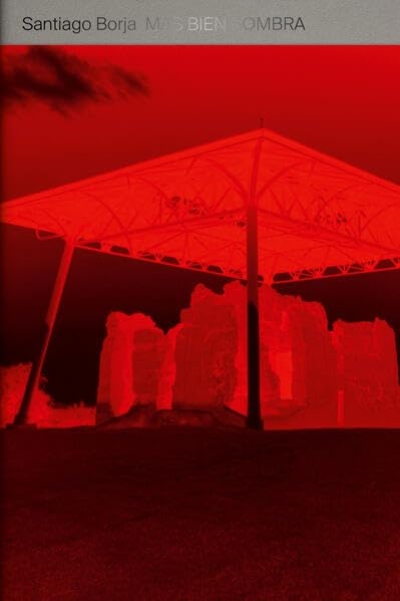
Santiago Borja. Rather like a shadow / Más bien sombra
While comparing magic and science in The Savage Mind, Claude Lévi-Strauss argued that the former was like a shadow (sombra) moving ahead of its origin, or a projection that anticipates the body that produces it. For the anthropologist, magic was a complete and well-articulated system—finished and coherent—rather than some earlier or more “primitive stage” of a subsequent scientific development. By both tracking and departing from these penumbral specters, Rather like a shadow / Más bien sombra insists on a plurality of knowledge forms, thereby reevaluating the importance of ethical and aesthetic experience in the formation of social and political worlds. While taking up these questions, the book—published in K. Verlag‘s Processing Process series—is no less an itinerary of the work and practice of artist Santiago Borja. Borja generates speculative analogies between the system of modern thought and other forms of knowledge that are alleged to be symptomatic of a certain malaise suffered under the weight of an imposed rationalism, when they are not definitely alien to such claims. The book includes visual essays of Borja’s site-specific work and is interspersed with texts by eight renowned authors. Through models, photographic techniques, graphic and textile designs, and site-specific interventions, Borja enters conversations about inherently tense topics past and present, embracing their complexity as a way to affirm the need to acknowledge a perspectival multiplicity that both pre-exists and resists all absolutist versions of reality.