










Direkt zum Inhalt

Warenkorb

  • Annette Wehrmann

    Serpentine streamer texts

  • IDEA Magazine

    IDEA 390. writtenafterwards. Material Bindings. The Savage…

  • gerade nicht auf Lager
    Jane Bennett

    Influx & Efflux. Writing up with Walt Whitman

  • gerade nicht auf Lager
    Slavoj Žižek

    Der Exzess der Leere. Ökonomisch-philosophosche Notizen zu…

  • gerade nicht auf Lager
    Jörg Kreienbrock

    Sich im Weltall orientieren. Philosophieren im Kosmos 1950…

  • gerade nicht auf Lager
    Stéphane Mallarmé

    The Book

  • gerade nicht auf Lager
    Bram Büscher, Robert Fletcher

    Conservation Revolution. Radical Ideas for Saving Nature…

  • gerade nicht auf Lager
    Erin Y. Huang

    Urban Horror: Neoliberal Post-Socialism and the Limits of…

  • Christian Huck

    Digitalschatten. Das Netz und die Dinge

  • gerade nicht auf Lager
    Byung-Chul Han

    Palliativgesellschaft. Schmerz heute

  • Bastian Lange u.a. (Hg.)

    Postwachstumsgeographien. Raumbezüge diverser und…

  • gerade nicht auf Lager
    Thomas Flierl (Hg.)

    Bauhaus – Shanghai – Stalinallee – Ha-Neu. Der Lebensweg…

  • Alexandra Martini

    Inspired by Method: Creative tools for the design process

  • Yuk Hui

    Die Frage nach der Technik in China. Ein Essay über die…

  • gerade nicht auf Lager
    Ruedi Baur, Ulrike Felsing (Eds.)

    Visual Coexistence. Informationdesign and Typography in the…

  • Brandon LaBelle

    The Other Citizen

  • Roland Reichenbach, Rolf Bossart (Hg.)

    Bildungsferne. Essays und Gespräche zur Kritik der Pädagogik

  • gerade nicht auf Lager
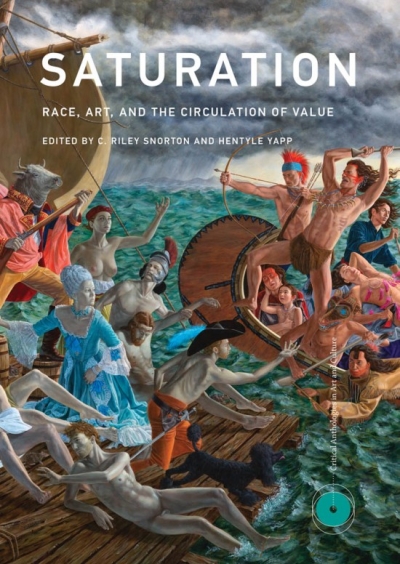
    C. Riley Snorton, Hentyle Yapp (Ed.)

    Saturation. Race, Art, and the Circulation of Value

  • gerade nicht auf Lager
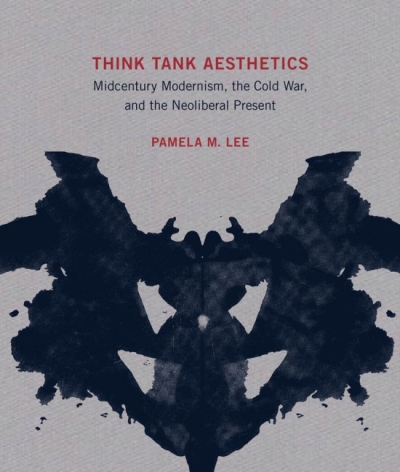
    Pamela M. Lee

    Think Tank Aesthetics. Midcentury Modernism, the Cold War,…

  • gerade nicht auf Lager
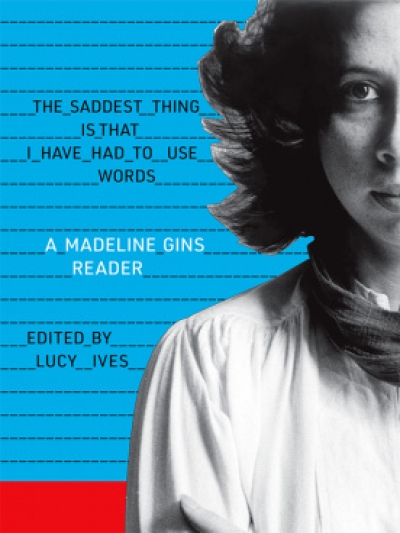
    Lucy Ives (Ed.)

    The Saddest Thing Is That I Have Had To Use Words. A…

  • gerade nicht auf Lager
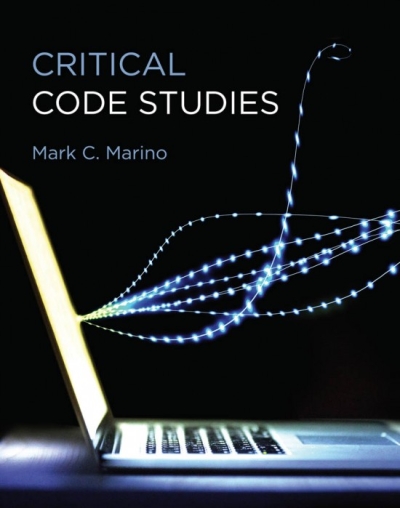
    Marino, Mark C.

    Critical Code Studies

  • gerade nicht auf Lager
    Lucy McKenzie, Beca Lipscombe (Eds.)

    Atelier E.B: Passer-By

  • gerade nicht auf Lager
    Ursula K. Le Guin

    The Carrier Bag Theory of Fiction

  • gerade nicht auf Lager
    John Beck, Ryan Bishop

    Technocrats of the Imagination. Art, Technology, and the…

  • gerade nicht auf Lager
    Louise Amoore

    Cloud Ethics. Algorithms and the Attributes of Ourselves…

  • gerade nicht auf Lager
    David Grubbs

    The Voice in the Headphones

  • gerade nicht auf Lager
    Hertz-Labor Hg. (Peter Weibel, Ludger…

    From Xenakis’s UPIC to Graphic Notation Today

  • gerade nicht auf Lager
    Cyril Veillon, Nadja Maillard (Eds.)

    Isle of Models. Architecture and Scale

  • gerade nicht auf Lager
    Isabelle Graw

    In einer anderen Welt. Notizen 2014-2017

  • Sabine Hark, Paula-Irene Villa

    The Future of Difference. Beyond the Toxic Entanglement of…

  • gerade nicht auf Lager
    Max Haiven

    Revenge Capitalism. The Ghosts of Empire, the Demons of…

  • gerade nicht auf Lager
    Data Chigholashvili, Nini…

    Tbilisi - It's Complicated. Onomatopee 173

  • gerade nicht auf Lager
    Isa Genzken

    Isa Genzken. I Love New York, Crazy City

  • Raul Zelik

    Wir Untoten des Kapitals. Über politische Monster und einen…

  • gerade nicht auf Lager
    Danielle Allen

    Politische Gleichheit

  • gerade nicht auf Lager
    Silvia Henke, Dieter Mersch, Thomas…

    Manifest der künstlerischen Forschung / Manifesto of…

  • gerade nicht auf Lager
    Christian Werner

    Christian Werner. Everything Is So Democratic and Cool

  • gerade nicht auf Lager
    Paulo Mendes da Rocha

    Designed Future or selected writings by Paulo Mendes da…

  • gerade nicht auf Lager
    Moyra Davey

    Index Cards

  • gerade nicht auf Lager
    Emanuele Coccia

    Sinnenleben

  • gerade nicht auf Lager
    ARCH+, Anh-Linh Ngo, Arno Brandlhuber,…

    Arch+. The Property Issue: Politics of Space and Data.

  • gerade nicht auf Lager
    Philip Kovce, Birger P. Priddat (Hg.)

    Bedingungsloses Grundeinkommen. Grundlagentexte

  • gerade nicht auf Lager
    Aaron Bastani

    Fully Automated Luxury Communism

  • Martijn De Rijk, Thomas Spijkerman

    Reinventing Daily Life

  • gerade nicht auf Lager
    Adriano Pedrosa, Jose Esparza Chong Cuy…

    Lina Bo Bardi. Habitat

  • gerade nicht auf Lager
    Cloe Pitiot, Nina Stritzler-Levine (Hg)

    Eileen Gray. Designer and Architect

  • Verena Pfeiffer-Kloss

    Der Himmel unter West-Berlin. Die post-sachlichen U-…

  • Mary Bosworth, Khadija von Zinnenburg…

    Bordered Lives. Immigration Detention Archive

  • gerade nicht auf Lager
    bell hooks

    Die Bedeutung von Klasse

  • gerade nicht auf Lager
    Marcus Steinweg

    Metaphysik der Leere

  • gerade nicht auf Lager
    Jeppe Ugelvig

    Fashion Work. 1993-2018. 25 Years of Art in Fashion

  • gerade nicht auf Lager
    Ursula K. Le Guin

    Am Anfang war der Beutel

  • gerade nicht auf Lager
    Franco La Cecla

    Against Urbanism

  • gerade nicht auf Lager
    John Maeda

    How to Speak Machine. Laws of Design for a Computational Age

  • gerade nicht auf Lager
    Holger Schulze

    Sonic Fiction

  • gerade nicht auf Lager
    Christopher M. Kelty

    The Participant. A Century of Participation in Four Stories

  • Kevin Lotery

    The Long Front of Culture. The Independent Group and…

  • Matthew Gandy, Sandra Jasper (Hg)

    The Botanical City

  • gerade nicht auf Lager
    Riccardo Badano, Rebecca Lewin, Natalia…

    Formafantasma Cambio

  • gerade nicht auf Lager
    Rozemin Keshvani (Ed.)

    The Locked Room. Four Years that Shook Art Education, 1969–…

  • gerade nicht auf Lager
    Nick Mauss

    Transmissions

  • gerade nicht auf Lager
    Stanislaus von Moos, Martino Stierli

    Eyes That Saw: Architecture after Las Vegas

  • S. Delz, R. Hehl, P. Ventura

    Housing the Co-op. A Micro-political Manifesto

  • Sasha Costanza-Chock

    Design Justice. Community-led Practices to build the Worlds…

  • gerade nicht auf Lager
    Mary Kaldor and Saskia Sassen (Ed)

    Cities at War. Global Insecurity and Urban Resistance

  • Claire Fontaine

    La Grève Humaine et l’art de créer la liberté

  • Christian Nae (Editor)

    Dan Mihaltianu. Canal Grande: The Capital Pool and the…

  • gerade nicht auf Lager
    Hashim Sarkis, Roi Salgueiro Barrio,…

    The World as an Architectural Project.

  • gerade nicht auf Lager
    Pier Vittorio Aureli (Hg)

    The City as a Project

  • Stephen Barber

    The Projectionists. Eadweard Muybridge and the Future…

  • Zoran Terzić

    Idiocracy. Denken und Handeln im Zeitalter des Idioten

  • gerade nicht auf Lager
    Paul B. Preciado

    Ein Apartment auf dem Uranus. Chroniken eines Übergangs

  • gerade nicht auf Lager
    Corinna Burkhart, Matthias Schmelzer,…

    Degrowth in Movement(s). Exploring Pathways for…

  • Anita Chari, Claire Fontaine, Jaleh…

    Claire Fontaine. Newsfloor

  • gerade nicht auf Lager
    Angela McRobbie

    Feminism and the Politics of Resilience. Essays on Gender,…

  • gerade nicht auf Lager
    Gabriele Klein

    Pina Bausch’s Dance Theater. Company, Artistic Practices,…

  • Joachim Hamou, Maija Rudovska, Barbara…

    Active Art

  • Institut für Raumexperimente e.V.,…

    Poetry Jazz: Wax and Gold

  • gerade nicht auf Lager
    Larry D. Busbea

    The Responsive Environment. Design, Aesthetics, and the…

  • gerade nicht auf Lager
    Alain Badiou

    Migrants and Militants

  • gerade nicht auf Lager
    Frieda Grafe

    HaFI 011: Souvenirs, Ursprünge, Gefundene Fiktion /…

  • gerade nicht auf Lager
    Etel Adnan

    Wir wurden kosmisch

  • gerade nicht auf Lager
    D. R. McElroy

    Signs & Symbols of the World: Over 1,001 Visual Signs…

  • David Yaffe

    Joni Mitchell - Ein Porträt

  • gerade nicht auf Lager
    Gloria Meynen

    Inseln und Meere. Zur Geschichte und Geografie fluider…

  • gerade nicht auf Lager
    Leander Scholz

    Die Menge der Menschen

  • gerade nicht auf Lager
    Jakob Hayner

    Warum Theater

  • gerade nicht auf Lager
    Sylvia Lavin

    Architecture Itself and Other Postmodernist Myths

  • Alastair Hemmens, Gabriel Zacarias (Eds…

    The Situationist International. A Critical Handbook

  • Claudia Mareis, Michael Rottmann

    Entwerfen mit System

  • gerade nicht auf Lager
    James Lovelock

    Novozän: Das kommende Zeitalter der Hyperintelligenz

  • Naomi Hennig, Anna-Lena Wenzel (Hg.)

    General Public 2005-2015

  • Holger Schulze

    Ubiquitäre Literatur. Eine Partikelpoetik

  • gerade nicht auf Lager
    Tom Bieling (Hg.)

    Gender (&) Design. Positionen zur Vergeschlechtlichung…

  • gerade nicht auf Lager
    Oliver Flügel-Martinsen

    Radikale Demokratietheorien zur Einführung

  • Simon Rothöhler

    Theorien der Serie zur Einführung

  • gerade nicht auf Lager
    Eugene Thacker

    Im Staub dieses Planeten: Horror der Philosophie

  • gerade nicht auf Lager
    Peter Wilson

    Some Reasons For Traveling To Albania

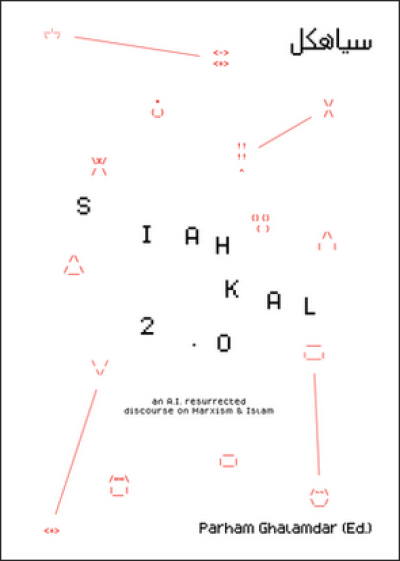
SIAHKAL 2.0: An A.I. resurrected discourse on Marxism & Islam


Siahkal names a place in the forests of Gilan and a threshold in revolutionary time. In 1971 a guerrilla action near Siahkal shook the order of the Shah. The action failed militarily yet seeded a myth for the People’s Fedai Guerrillas. Bizhan Jazani, a founding thinker, wrote and painted in prison and was executed in 1975. His work teaches that strategy rather than sentiment endures. // This book treats Siahkal as a Deep Object, a persistent attractor that gathers memory, images, and tactics. An AI model trained on Jazani’s writings and paintings translates his essay on Islamic Marxism and proposes annotations. The machine functions as a probe that widens attention while remaining accountable to the source. Parham Ghalamdar trained the AI, wrote the introduction, and composed ASCII diagrams and diagrammatic readings from Jazani’s artworks. Parsa Esmaeilzadeh contributes an essay that reads Jazani through Karatani and left accelerationism. // It is a call to reimagine and export revolution as a Deep Object that asks for Deep Time to unfold. This clandestine edition invites the reader to study, test, and build strategy that can outlast the news cycle and meet the future head on.

This is a limited edition book. The author trained an LLM on the texts of a deceased theorist, and then proceeded to interact with the LLM and produce simulations of what the theorist may have said in regards to various pertinent topics. The book is primarily a free online resource, but a few copies are being printed to commemorate the work. It has a foreword and afterword by the Editors.

At the core of this project is a translation of “Marxist Islam or Islamic Marxism,” a groundbreaking text written by Bizhan Jazani during his imprisonment in the 1970s under the Shah’s oppressive regime. Translated by Parham Ghalamdar, this work is accompanied by an introduction contextualizing Jazani’s radical vision. Ghalamdar also contributes a series of ASCII-style illustrations and diagrams—AI-assisted reinterpretations of Jazani’s original paintings and photographs—that bridge the past and present, offering a new perspective on his revolutionary artistry.


About the author
Parham Ghalamdar is a multidisciplinary artist currently based in the UK. Ghalamdar’s work traces forgotten mythologies, buried philosophies, and visual ruins, reconfiguring them into speculative worlds where memory, fiction, and futurism collapse into one another. Drawing on cybernetic theory and generative AI, he explores how systems of feedback, simulation, and machine vision mediate our understanding of history and possibility. Through painting, film, and writing, he builds narratives that feel both ancient and yet-to-come, haunted by lost histories and animated by possible futures.


Siahkal
names a place in the forests of Gilan and a threshold in revolutionary
time. In 1971 a guerrilla action near Siahkal shook the order of the
Shah. The action failed militarily yet seeded a myth for the People’s
Fedai Guerrillas. Bizhan Jazani, a founding thinker, wrote and painted
in prison and was executed in 1975. His work teaches that strategy
rather than sentiment endures. // This book treats Siahkal as a Deep
Object, a persistent attractor that gathers memory, images, and tactics.
An AI model trained on Jazani’s writings and paintings translates his
essay on Islamic Marxism and proposes annotations. The machine functions
as a probe that widens attention while remaining accountable to the
source. Parham Ghalamdar trained the AI, wrote the introduction, and
composed ASCII diagrams and diagrammatic readings from Jazani’s
artworks. Parsa Esmaeilzadeh contributes an essay that reads Jazani
through Karatani and left accelerationism. // It is a call to reimagine
and export revolution as a Deep Object that asks for Deep Time to
unfold. This clandestine edition invites the reader to study, test, and
build strategy that can outlast the news cycle and meet the future head
on.


This is a limited edition book. The author trained an LLM on the texts
of a deceased theorist, and then proceeded to interact with the LLM and
produce simulations of what the theorist may have said in regards to
various pertinent topics. The book is primarily a free online resource,
but a few copies are being printed to commemorate the work. It has a
foreword and afterword by the Editors.


At the core of this project is a translation of “Marxist Islam or
Islamic Marxism,” a groundbreaking text written by Bizhan Jazani during
his imprisonment in the 1970s under the Shah’s oppressive regime.
Translated by Parham Ghalamdar, this work is accompanied by an
introduction contextualizing Jazani’s radical vision. Ghalamdar also
contributes a series of ASCII-style illustrations and
diagrams—AI-assisted reinterpretations of Jazani’s original paintings
and photographs—that bridge the past and present, offering a new
perspective on his revolutionary artistry.


About the author

Parham Ghalamdar is a multidisciplinary artist currently based in the
UK. Ghalamdar’s work traces forgotten mythologies, buried philosophies,
and visual ruins, reconfiguring them into speculative worlds where
memory, fiction, and futurism collapse into one another. Drawing on
cybernetic theory and generative AI, he explores how systems of
feedback, simulation, and machine vision mediate our understanding of
history and possibility. Through painting, film, and writing, he builds
narratives that feel both ancient and yet-to-come, haunted by lost
histories and animated by possible futures.


Siahkal
names a place in the forests of Gilan and a threshold in revolutionary
time. In 1971 a guerrilla action near Siahkal shook the order of the
Shah. The action failed militarily yet seeded a myth for the People’s
Fedai Guerrillas. Bizhan Jazani, a founding thinker, wrote and painted
in prison and was executed in 1975. His work teaches that strategy
rather than sentiment endures. // This book treats Siahkal as a Deep
Object, a persistent attractor that gathers memory, images, and tactics.
An AI model trained on Jazani’s writings and paintings translates his
essay on Islamic Marxism and proposes annotations. The machine functions
as a probe that widens attention while remaining accountable to the
source. Parham Ghalamdar trained the AI, wrote the introduction, and
composed ASCII diagrams and diagrammatic readings from Jazani’s
artworks. Parsa Esmaeilzadeh contributes an essay that reads Jazani
through Karatani and left accelerationism. // It is a call to reimagine
and export revolution as a Deep Object that asks for Deep Time to
unfold. This clandestine edition invites the reader to study, test, and
build strategy that can outlast the news cycle and meet the future head
on.


This is a limited edition book. The author trained an LLM on the texts
of a deceased theorist, and then proceeded to interact with the LLM and
produce simulations of what the theorist may have said in regards to
various pertinent topics. The book is primarily a free online resource,
but a few copies are being printed to commemorate the work. It has a
foreword and afterword by the Editors.


At the core of this project is a translation of “Marxist Islam or
Islamic Marxism,” a groundbreaking text written by Bizhan Jazani during
his imprisonment in the 1970s under the Shah’s oppressive regime.
Translated by Parham Ghalamdar, this work is accompanied by an
introduction contextualizing Jazani’s radical vision. Ghalamdar also
contributes a series of ASCII-style illustrations and
diagrams—AI-assisted reinterpretations of Jazani’s original paintings
and photographs—that bridge the past and present, offering a new
perspective on his revolutionary artistry.


About the author

Parham Ghalamdar is a multidisciplinary artist currently based in the
UK. Ghalamdar’s work traces forgotten mythologies, buried philosophies,
and visual ruins, reconfiguring them into speculative worlds where
memory, fiction, and futurism collapse into one another. Drawing on
cybernetic theory and generative AI, he explores how systems of
feedback, simulation, and machine vision mediate our understanding of
history and possibility. Through painting, film, and writing, he builds
narratives that feel both ancient and yet-to-come, haunted by lost
histories and animated by possible futures.


Siahkal names a place in the forests of Gilan and a threshold in revolutionary time. In 1971 a guerrilla action near Siahkal shook the order of the Shah. The action failed militarily yet seeded a myth for the People’s Fedai Guerrillas. Bizhan Jazani, a founding thinker, wrote and painted in prison and was executed in 1975. His work teaches that strategy rather than sentiment endures. // This book treats Siahkal as a Deep Object, a persistent attractor that gathers memory, images, and tactics. An AI model trained on Jazani’s writings and paintings translates his essay on Islamic Marxism and proposes annotations. The machine functions as a probe that widens attention while remaining accountable to the source. Parham Ghalamdar trained the AI, wrote the introduction, and composed ASCII diagrams and diagrammatic readings from Jazani’s artworks. Parsa Esmaeilzadeh contributes an essay that reads Jazani through Karatani and left accelerationism. // It is a call to reimagine and export revolution as a Deep Object that asks for Deep Time to unfold. This clandestine edition invites the reader to study, test, and build strategy that can outlast the news cycle and meet the future head on.

This is a limited edition book. The author trained an LLM on the texts of a deceased theorist, and then proceeded to interact with the LLM and produce simulations of what the theorist may have said in regards to various pertinent topics. The book is primarily a free online resource, but a few copies are being printed to commemorate the work. It has a foreword and afterword by the Editors. 

At the core of this project is a translation of “Marxist Islam or Islamic Marxism,” a groundbreaking text written by Bizhan Jazani during his imprisonment in the 1970s under the Shah’s oppressive regime. Translated by Parham Ghalamdar, this work is accompanied by an introduction contextualizing Jazani’s radical vision. Ghalamdar also contributes a series of ASCII-style illustrations and diagrams—AI-assisted reinterpretations of Jazani’s original paintings and photographs—that bridge the past and present, offering a new perspective on his revolutionary artistry.


“Bizhan Jazani”, Parham Ghalamdar
SIAHKAL 2.0: An A.I. resurrected discourse on Marxism & Islam
Becoming Press, 2025, 978-9925-8207-7-1
15,00 €