













Direkt zum Inhalt

Warenkorb

  • gerade nicht auf Lager
    Carlana, Mezzalira, Pentimalli (eds.)

    Quirino De Giorgio. An Architect's Legacy

  • gerade nicht auf Lager
    Annette Weisser

    Mycelium

  • gerade nicht auf Lager
    Hendrik Kempt, Megan Volpert (Ed.)

    RuPaul's Drag Race and Philosophy. Sissy That Thought

  • gerade nicht auf Lager
    Warren Neidich

    The Glossary of Cognitive Activism (For a not so distant…

  • gerade nicht auf Lager
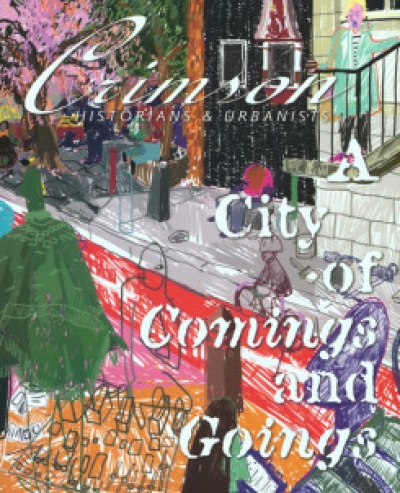
    Crimson Historians & Urbanists

    City of Comings and Goings

  • gerade nicht auf Lager
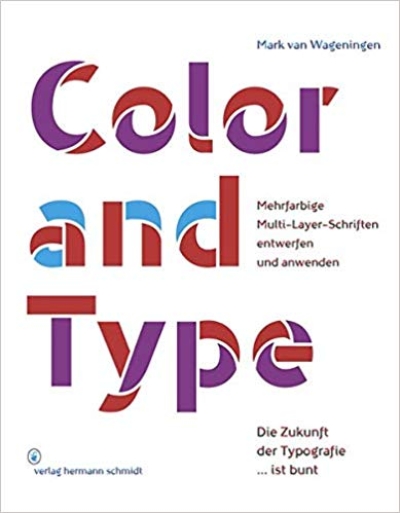
    Mark van Wageningen

    Color and Type: Mehrfarbige Multi-Layer-Schriften entwerfen…

  • gerade nicht auf Lager
    M. Kries, T. Cunz (Hg)

    Objekte der Begierde. Surrealismus und Design 1924 - Heute

  • gerade nicht auf Lager
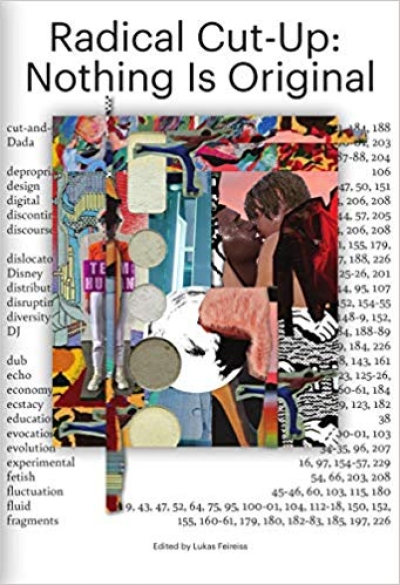
    Lukas Feireiss

    Radical Cut-Up: Nothing Is Original

  • Chanon Goodwin (Ed.)

    Permanent Recession: A Handbook on Art, Labour and…

  • gerade nicht auf Lager
    David Toop

    Inflamed Invisible: Collected Writings on Art and Sound,…

  • gerade nicht auf Lager
    Tom Bieling (Ed.)

    Design (&) Activism: Perspectives on Design as Activism…

  • gerade nicht auf Lager
    Material Matters 04

    Paper: Creative interpretations of common materials

  • gerade nicht auf Lager
    Kate Franklin, Caroline Till

    Radical Matter: Rethinking Materials for a Sustainable…

  • gerade nicht auf Lager
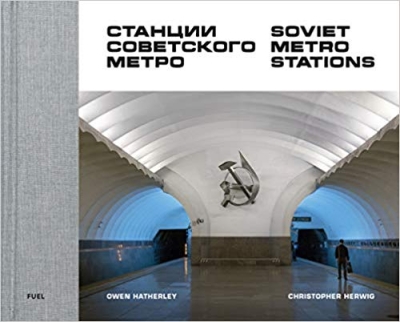
    Owen Hatherley, Christopher Herwig

    Soviet Metro Stations

  • Amt für Hochbauten der Stadt Zürich

    Pavillon Le Corbusier Zürich: Restaurierung eines…

  • gerade nicht auf Lager
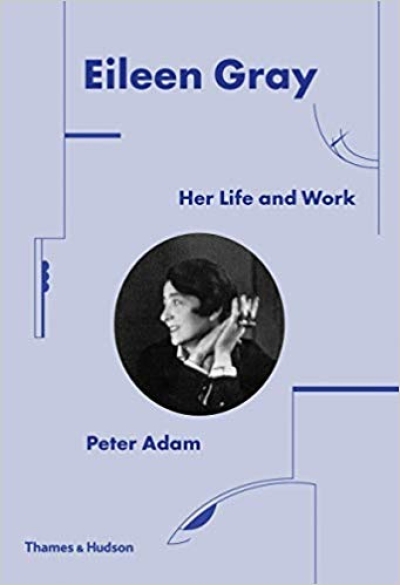
    Peter Adam

    Eileen Gray: Her Life and Work

  • gerade nicht auf Lager
    Diedrich Diederichsen, Anselm Franke (…

    Liebe und Ethnologie: die koloniale Dialektik der…

  • gerade nicht auf Lager
    Eyal Weizman

    Forensic Architecture: Violence at the Threshold of…

  • gerade nicht auf Lager
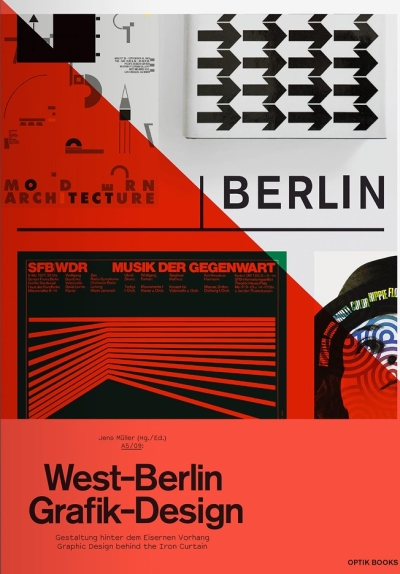
    Jens Müller (Ed.)

    West-Berlin Grafik-Design. Gestaltung hinter dem Eisernen…

  • gerade nicht auf Lager
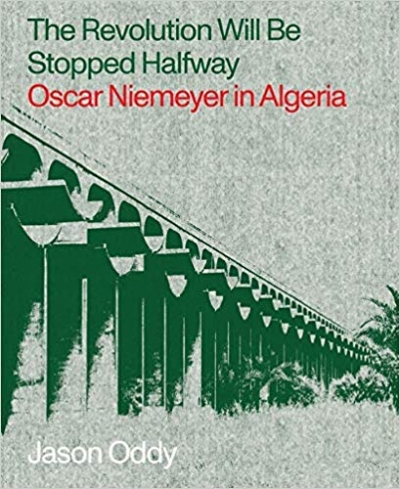
    Jason Oddy

    Revolution Will Be Stopped Halfway: Oscar Niemeyer in…

  • Alessandro Zambelli

    Scandalous Space - Between architecture and archaeology

  • gerade nicht auf Lager
    Holly Buck

    After Geoengineering: Climate Tragedy, Repair, and…

  • Junya Ishigami

    Serpentine Pavilion 2019

  • gerade nicht auf Lager
    Jesús Vassallo

    Epics in the Everyday: Photography, Architecture, and the…

  • gerade nicht auf Lager
    A. Gigon, M. Guyer (Hg.)

    Bürogebäude

  • gerade nicht auf Lager
    Mckenzie Wark

    Capital Is Dead: Is This Something Worse?

  • gerade nicht auf Lager
    Susanne Hefti & Damjan Kokalevski

    Skopje Walkie Talkie

  • gerade nicht auf Lager
    Fink, Graff, Rostek, Wagner (Hg.)

    Architects on Architects

  • gerade nicht auf Lager
    Natasha Lennard

    Being Numerous. Essays on Non-Fascist Life

  • gerade nicht auf Lager
    Peter Weibel (Hg.)

    Sound Art: Sound as a Medium of Art

  • gerade nicht auf Lager
    Walter Scheiffele

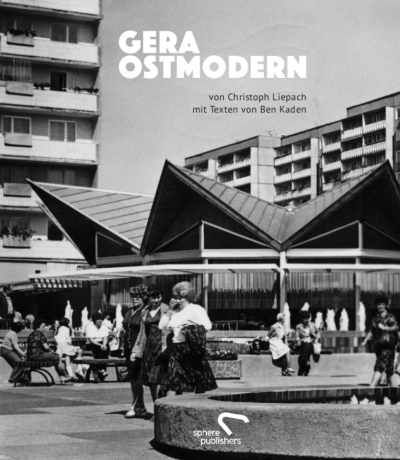
    Ostmoderne-Westmoderne

  • gerade nicht auf Lager
    Samuel Greengard

    Virtual Reality

  • Ion Grigorescu

    From static oblivion

  • gerade nicht auf Lager
    Guy Standing

    Plunder of the Commons: A Manifesto for Sharing Public…

  • gerade nicht auf Lager
    Sofia Bempeza

    Geschichte(n) des Kunststreiks

  • gerade nicht auf Lager
    Vilém Flusser

    Vom Stand der Dinge. Eine kleine Philosophie des Design

  • gerade nicht auf Lager
    Jane Hall

    Breaking Ground: Architecture by Women

  • gerade nicht auf Lager
    Jason Bahbak Mohaghegh

    Omnicide: Mania, Fatality, and the Future-in-Delirium

  • Chantal Akerman

    My Mother Laughs

  • Stiftung Buchkunst

    Die Schönsten Deutschen Bücher 2019: The Best German Book…

  • Franco "Bifo" Berardi

    Die Seele bei der Arbeit: Von der Entfremdung zur Autonomie

  • gerade nicht auf Lager
    Judith Butler

    Rücksichtslose Kritik. Körper, Rede, Aufstand

  • Alexandra Hopf, Regine Steenbock

    Vogue. M29 Special.09/2019 September

  • J. Dowling, C. Leterme

    From Latin America

  • gerade nicht auf Lager
    Matthias Schmelzer, Andrea Vetter

    Degrowth / Postwachstum zur Einführung

  • M. Rothenberger, T. Weber (Hg)

    Nico – Wie kann die Luft so schwer sein an einem Tag an dem…

  • gerade nicht auf Lager
    Marcel Hénaff

    Die Stadt im Werden

  • gerade nicht auf Lager
    Francesco Garutti

    Our Happy Life. Architecture and Well-Being in the Age of…

  • gerade nicht auf Lager
    Kenya Hara

    Designing Japan. A Future Built on Aesthetics

  • gerade nicht auf Lager
    Janwillem Schrofer (Ed.)

    Plan and Play, Play and Plan: Defining Your Art Practice

  • gerade nicht auf Lager
    Giorgio Agamben

    Creation and Anarchy: The Work of Art and the Religion of…

  • gerade nicht auf Lager
    Danae Io, Callum Copley (Ed.)

    Schemas of Uncertainty

  • gerade nicht auf Lager
    Lucy Cotter

    Reclaiming Artistic Research

  • gerade nicht auf Lager
    Sabine Hansmann, Finn Geipel (Hg.)

    Raummaschine: Exploring the Manifold Spaces

  • Peter Donhauser

    Musikmaschinen: Die Geschichte der Elektromusik

  • gerade nicht auf Lager
    Amanda Boetzkes

    Plastic Capitalism. Contemporary Art and the Drive to Waste

  • gerade nicht auf Lager
    Stefanie Graefe

    Resilienz im Krisenkapitalismus: Wider das Lob der…

  • Daniel Johnston

    Where are the ducks when you need them?

  • gerade nicht auf Lager
    Daniel Birnbaum, Sven-Olov Wallenstein

    Spacing Philosophy: Lyotard and the Idea of the Exhibition

  • Roland Meyer

    Operative Porträts. Eine Bildgeschichte der…

  • gerade nicht auf Lager
    A. Juppien, R. Zemp

    Vokabular des Zwischenraums: Gestaltungsmöglichkeiten von…

  • gerade nicht auf Lager
    Paul O'Neill, Simon Sheikh, Lucy…

    Curating after the Global: Roadmaps for the Present

  • gerade nicht auf Lager
    Maya Vinitsky (Ed.)

    Solar Guerrilla: Constructive Responses to Climate Change

  • gerade nicht auf Lager
    Annette Jael Lehmann

    Tacit Knowledge. Feminism / Post Studio (Post Studio /…

  • gerade nicht auf Lager
    G. Cachin (Hg.)

    Bobst Graphic. 1972 - 1981

  • gerade nicht auf Lager
    H. Bodenschatz, D. Brantz

    Grünfrage und Stadtentwicklung. 100 Jahre Groß-Berlin

  • gerade nicht auf Lager
    Christoph Cox

    Sonic Flux: Sound, Art, and Metaphysics

  • gerade nicht auf Lager
    Rosi Braidotti, Simone Bignall (eds.)

    Posthuman Ecologies. Complexity and Process after Deleuze

  • gerade nicht auf Lager
    T. Garcia, V. Normand (Hg)

    Theater, Garden, Bestiary: A Materialist History of…

  • gerade nicht auf Lager
    James Bridle

    New Dark Age: Der Sieg der Technologie und das Ende der…

  • gerade nicht auf Lager
    Sabine Breitwieser (Ed.)

    E.A.T. - Experiments in Arts and Technology

  • Richard Buckminster Fuller

    R. Buckminster Fuller. Nine Chains to the Moon. An…

  • Ulrike Bernard

    Wuan Wandeln

  • gerade nicht auf Lager
    C. Leonard, L. Khonsary (Hg)

    The Halifax Conference. Oct. 5&6 1970

  • gerade nicht auf Lager
    Birgit Rieger, Claudia Wahjudi

    Berlin Interviews. 16 Künstlerinnen und Künstler über eine…

  • Paolo Cirio

    Evidentiary Realism. Investigative, Forensic, Documentary…

  • Robert Kronenburg

    This Must Be The Place: An Architectural History of Popular…

  • gerade nicht auf Lager
    Oliver Marchart

    Conflictual Aesthetics: Artistic Activism and the Public…

  • Jürgen Hasse, Sara F. Levin

    Betäubte Orte: Erkundungen im Verdeckten

  • gerade nicht auf Lager
    Alexandra Klei

    Wie das Bauhaus nach Tel Aviv kam: Re-Konstruktion einer…

  • Sarah Banet-Weiser

    Empowered. Popular Feminism and Popular Misogyny

  • Stephen Prina

    As He Remembered It

  • Christoforos Savva

    Untimely, Again

  • gerade nicht auf Lager
    Barbagallo, Beuret, Harvie (Hg.)

    Commoning with George Caffentzis and Silvia Federici

  • A Prior #20

    The Research Issue

  • gerade nicht auf Lager
    Bernard Stiegler

    The Age of Disruption: Technology and Madness in…

  • gerade nicht auf Lager
    Edgar Cabanas, Eva Illouz

    Manufacturing Happy Citizens: How the Science and Industry…

  • gerade nicht auf Lager
    C. Profanter, H. Andersen, J. Eckhardt…

    The Middle Matter. Sound as Interstice

  • I. Galuzin, G. Severianova (Eds.)

    The Withdrawal of the Red Army

  • gerade nicht auf Lager
    IDEA #381

    Transboundary Design. Perspective of Yoshihisa Tanaka

  • gerade nicht auf Lager
    Andres Lepik, Daniel Talesnik (Hg)

    Access for All. São Paulo's Architectural…

  • gerade nicht auf Lager
    Isabelle Graw, Christoph Menke (eds.)

    The Value of Critique: Exploring the Interrelations of…

  • gerade nicht auf Lager
    Bernhard Denkinger

    Die vergessenen Alternativen. Strukturalismus und…

  • P. Bogner, G. Zillner

    Frederick Kiesler: Face to Face with the Avant-Garde:…

  • gerade nicht auf Lager
    Jonathan Hill

    The Architecture of Ruins: Designs on the Past, Present and…

  • gerade nicht auf Lager
    L. Giusti, N. Ricciardi (Eds.)

    Museums at the Post-Digital Turn

  • IDEA Magazine

    IDEA 386. Ministry of Graphic Design Fikra Graphic Design…

  • gerade nicht auf Lager
    Gregor H. Lersch, Léontine Meijer-van…

    Mischa Kuball. res.o.nant

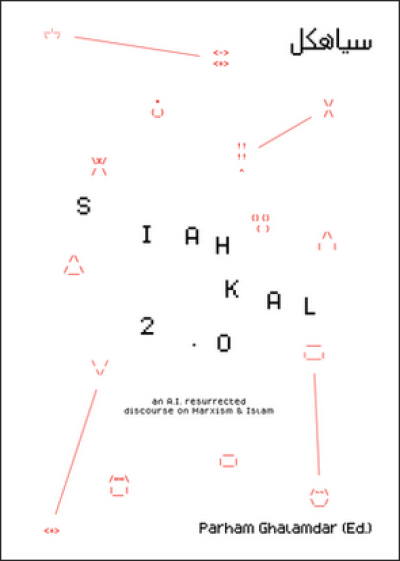
SIAHKAL 2.0: An A.I. resurrected discourse on Marxism & Islam


Siahkal names a place in the forests of Gilan and a threshold in revolutionary time. In 1971 a guerrilla action near Siahkal shook the order of the Shah. The action failed militarily yet seeded a myth for the People’s Fedai Guerrillas. Bizhan Jazani, a founding thinker, wrote and painted in prison and was executed in 1975. His work teaches that strategy rather than sentiment endures. // This book treats Siahkal as a Deep Object, a persistent attractor that gathers memory, images, and tactics. An AI model trained on Jazani’s writings and paintings translates his essay on Islamic Marxism and proposes annotations. The machine functions as a probe that widens attention while remaining accountable to the source. Parham Ghalamdar trained the AI, wrote the introduction, and composed ASCII diagrams and diagrammatic readings from Jazani’s artworks. Parsa Esmaeilzadeh contributes an essay that reads Jazani through Karatani and left accelerationism. // It is a call to reimagine and export revolution as a Deep Object that asks for Deep Time to unfold. This clandestine edition invites the reader to study, test, and build strategy that can outlast the news cycle and meet the future head on.

This is a limited edition book. The author trained an LLM on the texts of a deceased theorist, and then proceeded to interact with the LLM and produce simulations of what the theorist may have said in regards to various pertinent topics. The book is primarily a free online resource, but a few copies are being printed to commemorate the work. It has a foreword and afterword by the Editors.

At the core of this project is a translation of “Marxist Islam or Islamic Marxism,” a groundbreaking text written by Bizhan Jazani during his imprisonment in the 1970s under the Shah’s oppressive regime. Translated by Parham Ghalamdar, this work is accompanied by an introduction contextualizing Jazani’s radical vision. Ghalamdar also contributes a series of ASCII-style illustrations and diagrams—AI-assisted reinterpretations of Jazani’s original paintings and photographs—that bridge the past and present, offering a new perspective on his revolutionary artistry.


About the author
Parham Ghalamdar is a multidisciplinary artist currently based in the UK. Ghalamdar’s work traces forgotten mythologies, buried philosophies, and visual ruins, reconfiguring them into speculative worlds where memory, fiction, and futurism collapse into one another. Drawing on cybernetic theory and generative AI, he explores how systems of feedback, simulation, and machine vision mediate our understanding of history and possibility. Through painting, film, and writing, he builds narratives that feel both ancient and yet-to-come, haunted by lost histories and animated by possible futures.


Siahkal
names a place in the forests of Gilan and a threshold in revolutionary
time. In 1971 a guerrilla action near Siahkal shook the order of the
Shah. The action failed militarily yet seeded a myth for the People’s
Fedai Guerrillas. Bizhan Jazani, a founding thinker, wrote and painted
in prison and was executed in 1975. His work teaches that strategy
rather than sentiment endures. // This book treats Siahkal as a Deep
Object, a persistent attractor that gathers memory, images, and tactics.
An AI model trained on Jazani’s writings and paintings translates his
essay on Islamic Marxism and proposes annotations. The machine functions
as a probe that widens attention while remaining accountable to the
source. Parham Ghalamdar trained the AI, wrote the introduction, and
composed ASCII diagrams and diagrammatic readings from Jazani’s
artworks. Parsa Esmaeilzadeh contributes an essay that reads Jazani
through Karatani and left accelerationism. // It is a call to reimagine
and export revolution as a Deep Object that asks for Deep Time to
unfold. This clandestine edition invites the reader to study, test, and
build strategy that can outlast the news cycle and meet the future head
on.


This is a limited edition book. The author trained an LLM on the texts
of a deceased theorist, and then proceeded to interact with the LLM and
produce simulations of what the theorist may have said in regards to
various pertinent topics. The book is primarily a free online resource,
but a few copies are being printed to commemorate the work. It has a
foreword and afterword by the Editors.


At the core of this project is a translation of “Marxist Islam or
Islamic Marxism,” a groundbreaking text written by Bizhan Jazani during
his imprisonment in the 1970s under the Shah’s oppressive regime.
Translated by Parham Ghalamdar, this work is accompanied by an
introduction contextualizing Jazani’s radical vision. Ghalamdar also
contributes a series of ASCII-style illustrations and
diagrams—AI-assisted reinterpretations of Jazani’s original paintings
and photographs—that bridge the past and present, offering a new
perspective on his revolutionary artistry.


About the author

Parham Ghalamdar is a multidisciplinary artist currently based in the
UK. Ghalamdar’s work traces forgotten mythologies, buried philosophies,
and visual ruins, reconfiguring them into speculative worlds where
memory, fiction, and futurism collapse into one another. Drawing on
cybernetic theory and generative AI, he explores how systems of
feedback, simulation, and machine vision mediate our understanding of
history and possibility. Through painting, film, and writing, he builds
narratives that feel both ancient and yet-to-come, haunted by lost
histories and animated by possible futures.


Siahkal
names a place in the forests of Gilan and a threshold in revolutionary
time. In 1971 a guerrilla action near Siahkal shook the order of the
Shah. The action failed militarily yet seeded a myth for the People’s
Fedai Guerrillas. Bizhan Jazani, a founding thinker, wrote and painted
in prison and was executed in 1975. His work teaches that strategy
rather than sentiment endures. // This book treats Siahkal as a Deep
Object, a persistent attractor that gathers memory, images, and tactics.
An AI model trained on Jazani’s writings and paintings translates his
essay on Islamic Marxism and proposes annotations. The machine functions
as a probe that widens attention while remaining accountable to the
source. Parham Ghalamdar trained the AI, wrote the introduction, and
composed ASCII diagrams and diagrammatic readings from Jazani’s
artworks. Parsa Esmaeilzadeh contributes an essay that reads Jazani
through Karatani and left accelerationism. // It is a call to reimagine
and export revolution as a Deep Object that asks for Deep Time to
unfold. This clandestine edition invites the reader to study, test, and
build strategy that can outlast the news cycle and meet the future head
on.


This is a limited edition book. The author trained an LLM on the texts
of a deceased theorist, and then proceeded to interact with the LLM and
produce simulations of what the theorist may have said in regards to
various pertinent topics. The book is primarily a free online resource,
but a few copies are being printed to commemorate the work. It has a
foreword and afterword by the Editors.


At the core of this project is a translation of “Marxist Islam or
Islamic Marxism,” a groundbreaking text written by Bizhan Jazani during
his imprisonment in the 1970s under the Shah’s oppressive regime.
Translated by Parham Ghalamdar, this work is accompanied by an
introduction contextualizing Jazani’s radical vision. Ghalamdar also
contributes a series of ASCII-style illustrations and
diagrams—AI-assisted reinterpretations of Jazani’s original paintings
and photographs—that bridge the past and present, offering a new
perspective on his revolutionary artistry.


About the author

Parham Ghalamdar is a multidisciplinary artist currently based in the
UK. Ghalamdar’s work traces forgotten mythologies, buried philosophies,
and visual ruins, reconfiguring them into speculative worlds where
memory, fiction, and futurism collapse into one another. Drawing on
cybernetic theory and generative AI, he explores how systems of
feedback, simulation, and machine vision mediate our understanding of
history and possibility. Through painting, film, and writing, he builds
narratives that feel both ancient and yet-to-come, haunted by lost
histories and animated by possible futures.


Siahkal names a place in the forests of Gilan and a threshold in revolutionary time. In 1971 a guerrilla action near Siahkal shook the order of the Shah. The action failed militarily yet seeded a myth for the People’s Fedai Guerrillas. Bizhan Jazani, a founding thinker, wrote and painted in prison and was executed in 1975. His work teaches that strategy rather than sentiment endures. // This book treats Siahkal as a Deep Object, a persistent attractor that gathers memory, images, and tactics. An AI model trained on Jazani’s writings and paintings translates his essay on Islamic Marxism and proposes annotations. The machine functions as a probe that widens attention while remaining accountable to the source. Parham Ghalamdar trained the AI, wrote the introduction, and composed ASCII diagrams and diagrammatic readings from Jazani’s artworks. Parsa Esmaeilzadeh contributes an essay that reads Jazani through Karatani and left accelerationism. // It is a call to reimagine and export revolution as a Deep Object that asks for Deep Time to unfold. This clandestine edition invites the reader to study, test, and build strategy that can outlast the news cycle and meet the future head on.

This is a limited edition book. The author trained an LLM on the texts of a deceased theorist, and then proceeded to interact with the LLM and produce simulations of what the theorist may have said in regards to various pertinent topics. The book is primarily a free online resource, but a few copies are being printed to commemorate the work. It has a foreword and afterword by the Editors. 

At the core of this project is a translation of “Marxist Islam or Islamic Marxism,” a groundbreaking text written by Bizhan Jazani during his imprisonment in the 1970s under the Shah’s oppressive regime. Translated by Parham Ghalamdar, this work is accompanied by an introduction contextualizing Jazani’s radical vision. Ghalamdar also contributes a series of ASCII-style illustrations and diagrams—AI-assisted reinterpretations of Jazani’s original paintings and photographs—that bridge the past and present, offering a new perspective on his revolutionary artistry.


“Bizhan Jazani”, Parham Ghalamdar
SIAHKAL 2.0: An A.I. resurrected discourse on Marxism & Islam
Becoming Press, 2025, 978-9925-8207-7-1
15,00 €