







Direkt zum Inhalt

Warenkorb

  • Benjamin H. D. Buchloh, Hal Foster

    Exit Interview. Benjamin Buchloh in conversation with Hal…

  • gerade nicht auf Lager
    Gabriel Catren

    Pleromatica, or Elsinore's Trance

  • You Can Sit With Us

    You Can Sit With Us - 24/7

  • Johann Braun

    Stadt von Rechts. Über Brennpunkte und Ordnungsversuche

  • gerade nicht auf Lager
    Domitilla Dardi

    Playgrounding. The playground as a symbolic form of society…

  • gerade nicht auf Lager
    Paolo Pileri, Christina Renzoni, Paola…

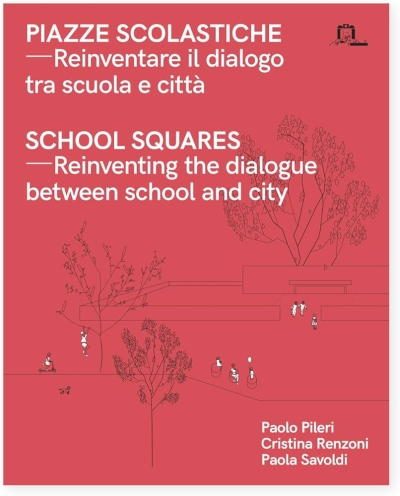
    Piazze Scolastiche / School squares. Reinventing the…

  • El Croquis

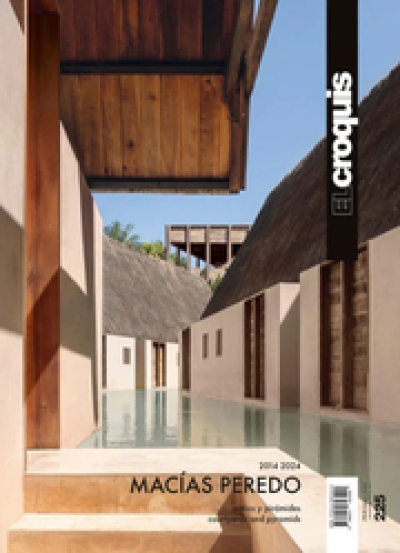
    El Croquis 225. Macías Peredo. 2014 - 2024

  • Kim Förster

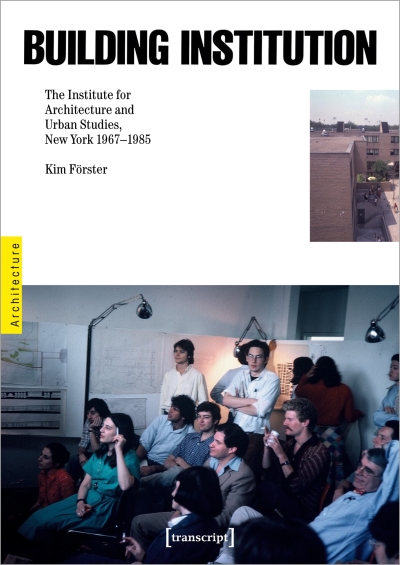
    Building Institution. The Institute for Architecture and…

  • Michael Marder

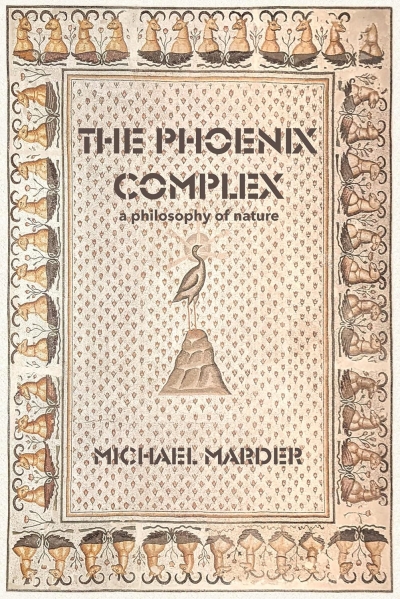
    The Phoenix Complex. A Philosophy of Nature

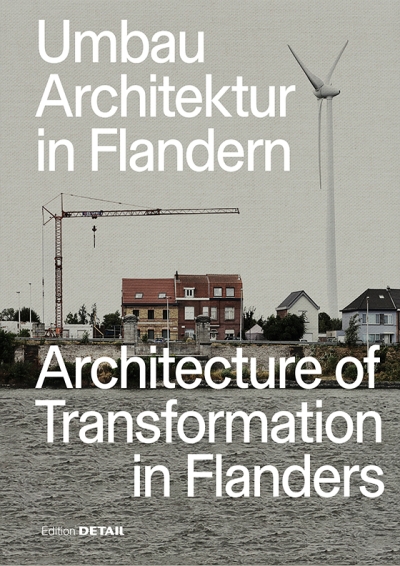
  • Florian Heilmeyer, Sandra Hofmeister

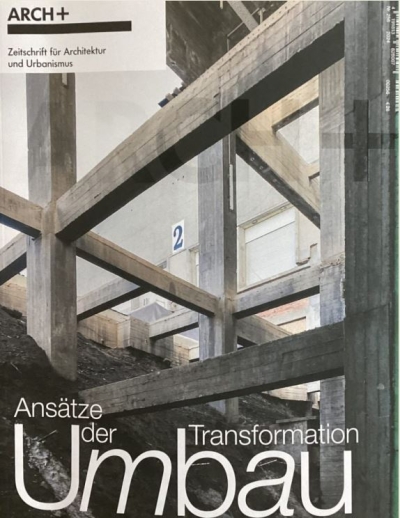
    Umbau Architektur in Flandern. Architecture of…

  • gerade nicht auf Lager
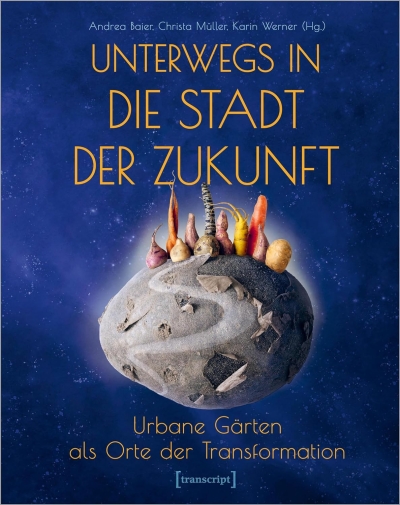
    Andrea Baier, Christa Müller, Karin…

    Unterwegs in die Stadt der Zukunft. Urbane Gärten als Orte…

  • Paul Wood (ed.)

    Biting the Hand. Traces of Resistance in the Art &…

  • gerade nicht auf Lager
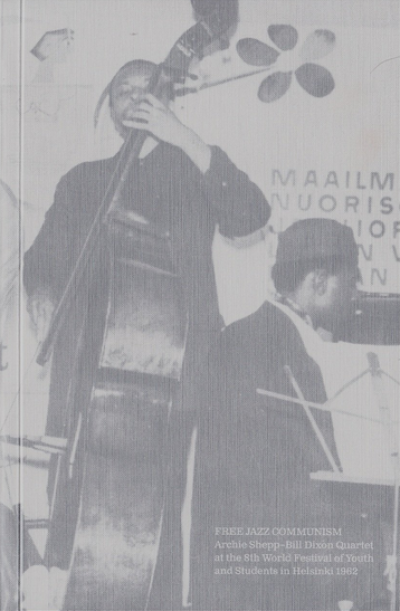
    Sezgin Boynik, Taneli Viitahuhta (eds.)

    Free Jazz Communism. Archie Shepp-Bill Dixon Quartet at the…

  • gerade nicht auf Lager
    Slavoj Žižek, Rastko Močnik, Zoja Skušek

    Punk Suprematism. Theoretical Writings on Punk, Nation,…

  • gerade nicht auf Lager
    Naomi Keena, Avi Friedman

    Sustainable Housing in a Circular Economy

  • Karel Teige

    The Marketplace of Art. 2 Volumes

  • Lukas Feireiss (ed.)

    Parasite 2.0: Collective Keywords

  • Riccardo Badano, Tomas Percival, Susan…

    Militant Media. Centre for Research Architecture 2

  • Exhibition Politics. Die documenta und die DDR

  • Karsten Krampitz

    Pogrom im Scheunenviertel. Antisemitismus in der Weimarer…

  • Thomas Irmer

    René Pollesch – Arbeit. Brecht. Cinema. Interviews und…

  • gerade nicht auf Lager
    Işil Eğrikavuk

    Global Protests Through Art. collaboration, co-creation,…

  • Felix Sommer, SB5ÜNF

    Beton & Nicht Beton

  • Julia Schulz-Dornburg

    The Complete Guide to Combat City

  • Dorothee Albrecht

    Assemblages of the Future

  • gerade nicht auf Lager
    Sam Ashby (ed.)

    Little Joe: A book about queers and cinema, mostly

  • Jürg Graser, Astrid Staufer, Christian…

    Architektur Klima Atlas. Klimabewusst entwerfen in…

  • gerade nicht auf Lager
    Charlotte Malterre-Barthes

    On Architecture and Greenwashing. The Political Economy of…

  • Judith Hopf

    Judith Hopf. Énergies

  • Marcus Steinweg, Sonja Dierks

    Kafka

  • Michael Marder, Giovanbattista Tusa (…

    Contemporanea. A Glossary for the Twenty-First Century

  • dérive

    dérive N° 95, Sampler (Apr-Jun 2024)

  • gerade nicht auf Lager
    Vladimir Guculak, Paul Bourel

    Sh*tscapes. 100 Mistakes in Landscape Architecture

  • Fulya İLBEY

    CONSTRUCTIVE MANIPULATIONS™ FOR STRATEGIC RESILIENCE

  • gerade nicht auf Lager
    Alan Smart, Jack Henrie Fisher (ed.)

    Counter-Signals 5. Systems and their Discontents

  • gerade nicht auf Lager
    Silke Kapp, Mariana Moura (ed.)

    Sérgio Ferro. Architecture from Below. An Anthology

  • Daniel Loick

    Die Überlegenheit der Unterlegenen. Eine Theorie der…

  • Víctor Aguado, Ramón del Buey, Brandon…

    Party Studies Vol. 2. Underground Clubs, Parallel…

  • Nina Dragičević

    Auditory Poverty and its Discontents – An Essay

  • Iracema Dulley, Özgün Eylül İşcen (eds)

    Displacing Theory through the Global South

  • Karoline Mayer, Katharina Ritter,…

    Über Tourismus

  • gerade nicht auf Lager
    Bernd Stiegler

    Bildpolitiken der Identität. Von Porträtfotografie bis zu…

  • Chris Kraus

    Ehrgeiz, Demut, Glück. Texte zu Kunst und Freundschaft

  • gerade nicht auf Lager
    Laboratory EAST

    Studies on Assemblies: Mass Made Units.

  • gerade nicht auf Lager
    Tom Holert

    „ca. 1972” Gewalt – Umwelt – Identität – Methode

  • Nadejda Bartels (Hg.)

    Alvar Aalto in Deutschland: Gezeichnete Moderne / Alvar…

  • Tchoban Foundation

    Sauerbruch Hutton. Drawing in Space

  • Derek McCormack

    Judy Blame's Obituary. Writings on Fashion and Death

  • gerade nicht auf Lager
    Corinne Cath

    Eaten by the Internet

  • gerade nicht auf Lager
    Nike

    After All, there is No Finish Line

  • ECCHR

    Beyond Limitations. Wolfgang Kaleck, Tomas Saraceno

  • ECCHR

    Challenging Corporate Power. Gearoid O Cuinn, Miriam Saage-…

  • Jeanne Gang

    The Art of Architectural Grafting. Usefulness and Desire in…

  • Jochen Eisenbrand

    Transform! Designing the Future of Energy

  • gerade nicht auf Lager
    Adam Gibbons, Eva Wilson

    Abbas Zahedi in conversation with Eva Wilson "" #7

  • gerade nicht auf Lager
    Kevin Yuen Kit Lo

    Design Against Design. Cause and consequence of a…

  • Timon Beyes

    Organizing Color. Toward a Chromatics of the Social

  • gerade nicht auf Lager
    Eric Drott

    Streaming Music, Streaming Capital

  • Francois Laruelle

    Phenomenon & Difference. Essay on the Ontology of…

  • gerade nicht auf Lager
    Mohammad Salemy (ed.)

    Model Is the Message. Incredible Machines Conference 2022

  • gerade nicht auf Lager
    Joshua Comaroff, Ong Ker-Shing

    Horror in Architecture. The Reanimated Edition

  • Armen Avanessian, Daniel Falb

    Planeten Denken. Hyper-Antizipation und Biografische…

  • Arch+ Zeitschrift für Architektur und…

    Arch+ 254. Klaus Heinrich - Dahlemer Vorlesungen: Giovanni…

  • Florian Reischauer

    Pieces of Berlin 2019-2023

  • gerade nicht auf Lager
    Tim Carpenter

    To Photograph is to Learn How to Die

  • Oxana Timofeeva

    Solarpolitik. Ein philosophischer Essay über die Sonne,…

  • Hans-Christian Dany

    Schuld war mein Hobby. Bilanz einer Familie

  • Andreas Weber

    Indigenialität

  • gerade nicht auf Lager
    Achim Szepanski, Force Inc. / Mille…

    In the Delirium of the Simulation: Baudrillard Revisited by…

  • gerade nicht auf Lager
    Never Sleep (Ed.)

    Archivio #1 - Records Store Ads & Paper Ephemera From…

  • Diedrich Diederichsen

    Das 21. Jahrhundert. Essays

  • gerade nicht auf Lager
    Redaktion Protocol

    Protocol 14. Nonkonforme Architekturpraxis

  • gerade nicht auf Lager
    Markus Miessen (Ed.)

    Agonistic Assemblies. On the Spatial Politics of…

  • Hella Gerlach

    Gelenkstellen - Loose Joints

  • gerade nicht auf Lager
    Grant H. Kester

    Beyond the Sovereign Self. Aesthetic Autonomy from the…

  • Jana Müller

    Jana Müller. Falscher Hase / Mock Rabbit

  • gerade nicht auf Lager
    Editors for this issue: Ariane Müller,…

    Starship 20

  • Moises Puente (Hg.)

    2G 90. Johansen Skovstedt

  • gerade nicht auf Lager
    Achille Mbembe

    Brutalism

  • gerade nicht auf Lager
    Leigh Claire La Berge

    Marx for Cats. A Radical Bestiary

  • Léa Perraudin, Clemens Winkler, Claudia…

    Material Trajectories. Designing With Care?

  • gerade nicht auf Lager
    Chus Martínez

    The Complex Answer. On Art as a Nonbinary Intelligence

  • gerade nicht auf Lager
    Kader Attia, Anselm Franke, Ana…

    The White West: Fascism, Unreason, and the Paradox of…

  • Marion von Osten (Aut), Lucie Kolb,…

    Material Marion von Osten 1: MoneyNations

  • gerade nicht auf Lager
    Aleksandra Kędziorek, Katarzyna…

    CIAM ARCHIPELAGO. The Letters by Helena Syrkus

  • Georgina Voss

    Systems Ultra. How Things, People, and Ideas Connect in a…

  • Piet Eckert, Wim Eckert (Hg.)

    Ontologie der Konstruktion. Raumwirkung in der Architektur

  • Gabrielle Schaad, Torsten Lange (eds.)

    archithese reader: Critical Positions in Search of…

  • gerade nicht auf Lager
    Kersten Geers, Jelena Pancevac (eds.)

    Giancarlo de Carlo. Experiments in Thickness

  • Lauren Berlant

    Grausamer Optimismus

  • Joanna Zylinska

    The Perception Machine

  • gerade nicht auf Lager
    Alessandro Ludovico

    Tactical Publishing

  • Aaron Betsky

    The Monster Leviathan. Anarchitecture

  • gerade nicht auf Lager
    Jason McBride

    Eat Your Mind. The Radical Life and Work of Kathy Acker

  • Nóra Ó Murchú, Janez Fakin Janša (Eds.)

    A Short Incomplete History of Technologies That Scale

  • gerade nicht auf Lager
    Ingo Niermann

    The Monadic Age. Notes on the Coming Social Order

  • gerade nicht auf Lager
    Dennis Pohl

    Building Carbon Europe

  • Julieta Aranda, Kaye Cain-Nielsen,…

    Wonderflux - A Decade of e-flux Journal

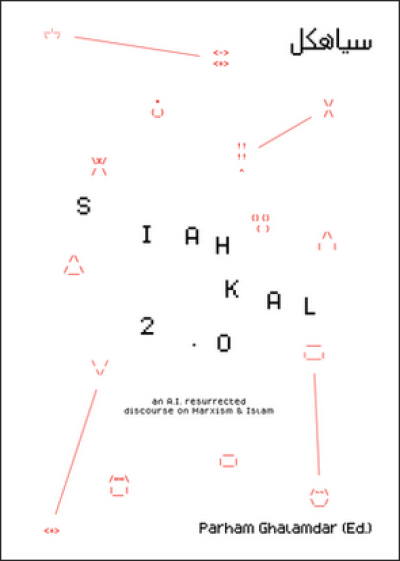
SIAHKAL 2.0: An A.I. resurrected discourse on Marxism & Islam


Siahkal names a place in the forests of Gilan and a threshold in revolutionary time. In 1971 a guerrilla action near Siahkal shook the order of the Shah. The action failed militarily yet seeded a myth for the People’s Fedai Guerrillas. Bizhan Jazani, a founding thinker, wrote and painted in prison and was executed in 1975. His work teaches that strategy rather than sentiment endures. // This book treats Siahkal as a Deep Object, a persistent attractor that gathers memory, images, and tactics. An AI model trained on Jazani’s writings and paintings translates his essay on Islamic Marxism and proposes annotations. The machine functions as a probe that widens attention while remaining accountable to the source. Parham Ghalamdar trained the AI, wrote the introduction, and composed ASCII diagrams and diagrammatic readings from Jazani’s artworks. Parsa Esmaeilzadeh contributes an essay that reads Jazani through Karatani and left accelerationism. // It is a call to reimagine and export revolution as a Deep Object that asks for Deep Time to unfold. This clandestine edition invites the reader to study, test, and build strategy that can outlast the news cycle and meet the future head on.

This is a limited edition book. The author trained an LLM on the texts of a deceased theorist, and then proceeded to interact with the LLM and produce simulations of what the theorist may have said in regards to various pertinent topics. The book is primarily a free online resource, but a few copies are being printed to commemorate the work. It has a foreword and afterword by the Editors.

At the core of this project is a translation of “Marxist Islam or Islamic Marxism,” a groundbreaking text written by Bizhan Jazani during his imprisonment in the 1970s under the Shah’s oppressive regime. Translated by Parham Ghalamdar, this work is accompanied by an introduction contextualizing Jazani’s radical vision. Ghalamdar also contributes a series of ASCII-style illustrations and diagrams—AI-assisted reinterpretations of Jazani’s original paintings and photographs—that bridge the past and present, offering a new perspective on his revolutionary artistry.


About the author
Parham Ghalamdar is a multidisciplinary artist currently based in the UK. Ghalamdar’s work traces forgotten mythologies, buried philosophies, and visual ruins, reconfiguring them into speculative worlds where memory, fiction, and futurism collapse into one another. Drawing on cybernetic theory and generative AI, he explores how systems of feedback, simulation, and machine vision mediate our understanding of history and possibility. Through painting, film, and writing, he builds narratives that feel both ancient and yet-to-come, haunted by lost histories and animated by possible futures.


Siahkal
names a place in the forests of Gilan and a threshold in revolutionary
time. In 1971 a guerrilla action near Siahkal shook the order of the
Shah. The action failed militarily yet seeded a myth for the People’s
Fedai Guerrillas. Bizhan Jazani, a founding thinker, wrote and painted
in prison and was executed in 1975. His work teaches that strategy
rather than sentiment endures. // This book treats Siahkal as a Deep
Object, a persistent attractor that gathers memory, images, and tactics.
An AI model trained on Jazani’s writings and paintings translates his
essay on Islamic Marxism and proposes annotations. The machine functions
as a probe that widens attention while remaining accountable to the
source. Parham Ghalamdar trained the AI, wrote the introduction, and
composed ASCII diagrams and diagrammatic readings from Jazani’s
artworks. Parsa Esmaeilzadeh contributes an essay that reads Jazani
through Karatani and left accelerationism. // It is a call to reimagine
and export revolution as a Deep Object that asks for Deep Time to
unfold. This clandestine edition invites the reader to study, test, and
build strategy that can outlast the news cycle and meet the future head
on.


This is a limited edition book. The author trained an LLM on the texts
of a deceased theorist, and then proceeded to interact with the LLM and
produce simulations of what the theorist may have said in regards to
various pertinent topics. The book is primarily a free online resource,
but a few copies are being printed to commemorate the work. It has a
foreword and afterword by the Editors.


At the core of this project is a translation of “Marxist Islam or
Islamic Marxism,” a groundbreaking text written by Bizhan Jazani during
his imprisonment in the 1970s under the Shah’s oppressive regime.
Translated by Parham Ghalamdar, this work is accompanied by an
introduction contextualizing Jazani’s radical vision. Ghalamdar also
contributes a series of ASCII-style illustrations and
diagrams—AI-assisted reinterpretations of Jazani’s original paintings
and photographs—that bridge the past and present, offering a new
perspective on his revolutionary artistry.


About the author

Parham Ghalamdar is a multidisciplinary artist currently based in the
UK. Ghalamdar’s work traces forgotten mythologies, buried philosophies,
and visual ruins, reconfiguring them into speculative worlds where
memory, fiction, and futurism collapse into one another. Drawing on
cybernetic theory and generative AI, he explores how systems of
feedback, simulation, and machine vision mediate our understanding of
history and possibility. Through painting, film, and writing, he builds
narratives that feel both ancient and yet-to-come, haunted by lost
histories and animated by possible futures.


Siahkal
names a place in the forests of Gilan and a threshold in revolutionary
time. In 1971 a guerrilla action near Siahkal shook the order of the
Shah. The action failed militarily yet seeded a myth for the People’s
Fedai Guerrillas. Bizhan Jazani, a founding thinker, wrote and painted
in prison and was executed in 1975. His work teaches that strategy
rather than sentiment endures. // This book treats Siahkal as a Deep
Object, a persistent attractor that gathers memory, images, and tactics.
An AI model trained on Jazani’s writings and paintings translates his
essay on Islamic Marxism and proposes annotations. The machine functions
as a probe that widens attention while remaining accountable to the
source. Parham Ghalamdar trained the AI, wrote the introduction, and
composed ASCII diagrams and diagrammatic readings from Jazani’s
artworks. Parsa Esmaeilzadeh contributes an essay that reads Jazani
through Karatani and left accelerationism. // It is a call to reimagine
and export revolution as a Deep Object that asks for Deep Time to
unfold. This clandestine edition invites the reader to study, test, and
build strategy that can outlast the news cycle and meet the future head
on.


This is a limited edition book. The author trained an LLM on the texts
of a deceased theorist, and then proceeded to interact with the LLM and
produce simulations of what the theorist may have said in regards to
various pertinent topics. The book is primarily a free online resource,
but a few copies are being printed to commemorate the work. It has a
foreword and afterword by the Editors.


At the core of this project is a translation of “Marxist Islam or
Islamic Marxism,” a groundbreaking text written by Bizhan Jazani during
his imprisonment in the 1970s under the Shah’s oppressive regime.
Translated by Parham Ghalamdar, this work is accompanied by an
introduction contextualizing Jazani’s radical vision. Ghalamdar also
contributes a series of ASCII-style illustrations and
diagrams—AI-assisted reinterpretations of Jazani’s original paintings
and photographs—that bridge the past and present, offering a new
perspective on his revolutionary artistry.


About the author

Parham Ghalamdar is a multidisciplinary artist currently based in the
UK. Ghalamdar’s work traces forgotten mythologies, buried philosophies,
and visual ruins, reconfiguring them into speculative worlds where
memory, fiction, and futurism collapse into one another. Drawing on
cybernetic theory and generative AI, he explores how systems of
feedback, simulation, and machine vision mediate our understanding of
history and possibility. Through painting, film, and writing, he builds
narratives that feel both ancient and yet-to-come, haunted by lost
histories and animated by possible futures.


Siahkal names a place in the forests of Gilan and a threshold in revolutionary time. In 1971 a guerrilla action near Siahkal shook the order of the Shah. The action failed militarily yet seeded a myth for the People’s Fedai Guerrillas. Bizhan Jazani, a founding thinker, wrote and painted in prison and was executed in 1975. His work teaches that strategy rather than sentiment endures. // This book treats Siahkal as a Deep Object, a persistent attractor that gathers memory, images, and tactics. An AI model trained on Jazani’s writings and paintings translates his essay on Islamic Marxism and proposes annotations. The machine functions as a probe that widens attention while remaining accountable to the source. Parham Ghalamdar trained the AI, wrote the introduction, and composed ASCII diagrams and diagrammatic readings from Jazani’s artworks. Parsa Esmaeilzadeh contributes an essay that reads Jazani through Karatani and left accelerationism. // It is a call to reimagine and export revolution as a Deep Object that asks for Deep Time to unfold. This clandestine edition invites the reader to study, test, and build strategy that can outlast the news cycle and meet the future head on.

This is a limited edition book. The author trained an LLM on the texts of a deceased theorist, and then proceeded to interact with the LLM and produce simulations of what the theorist may have said in regards to various pertinent topics. The book is primarily a free online resource, but a few copies are being printed to commemorate the work. It has a foreword and afterword by the Editors. 

At the core of this project is a translation of “Marxist Islam or Islamic Marxism,” a groundbreaking text written by Bizhan Jazani during his imprisonment in the 1970s under the Shah’s oppressive regime. Translated by Parham Ghalamdar, this work is accompanied by an introduction contextualizing Jazani’s radical vision. Ghalamdar also contributes a series of ASCII-style illustrations and diagrams—AI-assisted reinterpretations of Jazani’s original paintings and photographs—that bridge the past and present, offering a new perspective on his revolutionary artistry.


“Bizhan Jazani”, Parham Ghalamdar
SIAHKAL 2.0: An A.I. resurrected discourse on Marxism & Islam
Becoming Press, 2025, 978-9925-8207-7-1
15,00 €