

















Direkt zum Inhalt

Warenkorb

  • Jörg Dünne, Stephan Günzel (Hg.)

    Raumtheorie. Grundlagentexte aus Philosophie und…

  • An Architektur

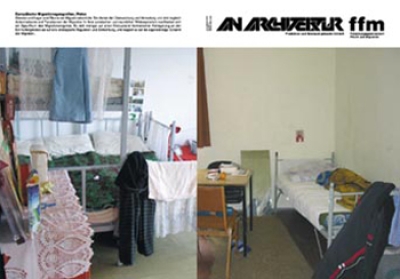
    An Architektur 16-17

  • Vera Beyer, Jutta Voorhoeve, Anselm…

    Das Bild ist der König. Repräsentation nach Louis Marin

  • An Architektur

    An Architektur 15 / FFM 11: Europäische…

  • Orhan Esen, Stephan Lanz (Hg)

    Self Service City. Istanbul (metrozones 4)

  • An Architektur

    An Architektur 14: Camp for Oppositional Architecture

  • Stephan Lanz (Hg.)

    City of COOP. Ersatzökonomiern und städtische Bewegungen in…

  • An Architektur

    An Architektur 11-13: Theorie und Praxis der Kartografie

  • An Architektur

    An Architektur 10: Gemeinschaftsräume

  • Jochen Becker, Stephan Lanz (Hg.)

    Space//Troubles. Jenseits des Guten Regierens:…

  • Sarai media lab

    Sarai Reader 03: shaping technologies

  • An Architektur

    An Architektur 04-09: Krieg und die Produktion von Raum

  • IDEA Magazine

    IDEA 296. Books <preposition> graphic design

  • IDEA Magazine

    IDEA 293. Stanley Donwood / Vacances. DD-DDD / Dimensions…

  • gerade nicht auf Lager
    An Architektur

    An Architektur 01-03

  • Martina Löw

    Raumsoziologie

  • Pro qm

    Gutschein / Voucher

  • Brian O'Doherty

    In der weissen Zelle. Inside the White Cube

  • gerade nicht auf Lager
    Siegfried Kracauer

    Das Ornament der Masse. Essays

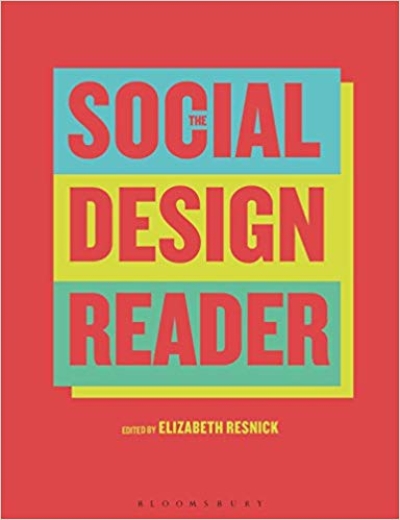
The Social Design Reader

The Social Design Reader explores the ways in which design can be a catalyst for social change. Bringing together key texts of the last fifty years, editor Elizabeth Resnick traces the emergence of the notion of socially responsible design. This volume represents the authentic voices of the thinkers, writers and designers who are helping to build a 'canon' of informed literature which documents the development of the discipline.
The Social Design Reader is divided into three parts. Section 1: Making a Stand includes an introduction to the term 'social design' and features papers which explore its historical underpinnings. Section 2: Creating the Future documents the emergence of social design as a concept, as a nascent field of study, and subsequently as a rapidly developing professional discipline, and Section 3: A Sea Change is made up of papers acknowledging social design as a firmly established practice.
Contextualising section introductions are provided to aid readers in understanding the original source material, while summary boxes clearly articulate how each text fits with the larger milieu of social design theory, methods, and practice.


Elizabeth Resnick
The Social Design Reader
Bloomsbury, 2019, 9781350026056
gerade nicht auf Lager