



Direkt zum Inhalt

Warenkorb

  • Johan Frederik Hartle

    Der geöffnete Raum. Zur Politik der ästhetischen Form

  • Jörg Dünne, Stephan Günzel (Hg.)

    Raumtheorie. Grundlagentexte aus Philosophie und…

  • An Architektur

    An Architektur 16-17

  • Vera Beyer, Jutta Voorhoeve, Anselm…

    Das Bild ist der König. Repräsentation nach Louis Marin

  • An Architektur

    An Architektur 15 / FFM 11: Europäische…

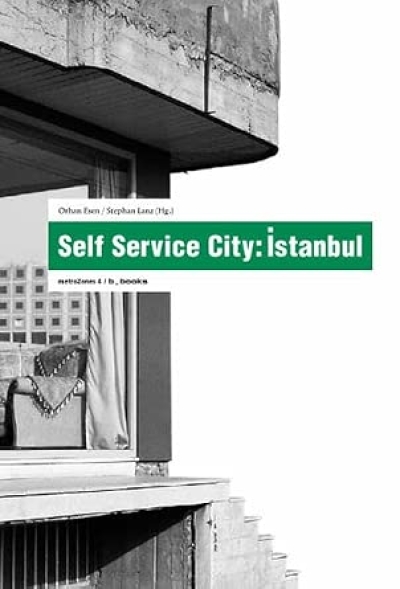
  • Orhan Esen, Stephan Lanz (Hg)

    Self Service City. Istanbul (metrozones 4)

  • An Architektur

    An Architektur 14: Camp for Oppositional Architecture

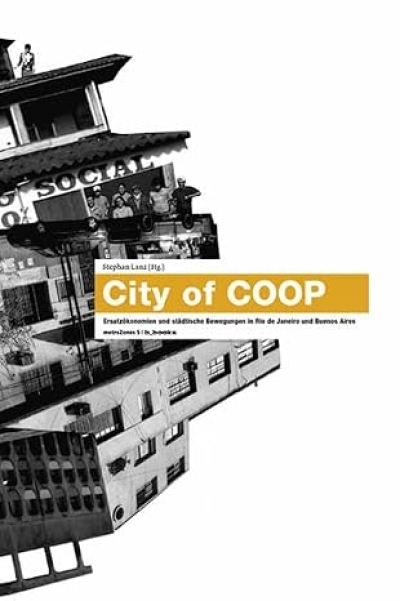
  • Stephan Lanz (Hg.)

    City of COOP. Ersatzökonomiern und städtische Bewegungen in…

  • An Architektur

    An Architektur 11-13: Theorie und Praxis der Kartografie

  • An Architektur

    An Architektur 10: Gemeinschaftsräume

  • Jochen Becker, Stephan Lanz (Hg.)

    Space//Troubles. Jenseits des Guten Regierens:…

  • Sarai media lab

    Sarai Reader 03: shaping technologies

  • An Architektur

    An Architektur 04-09: Krieg und die Produktion von Raum

  • IDEA Magazine

    IDEA 296. Books <preposition> graphic design

  • IDEA Magazine

    IDEA 293. Stanley Donwood / Vacances. DD-DDD / Dimensions…

  • gerade nicht auf Lager
    An Architektur

    An Architektur 01-03

  • Martina Löw

    Raumsoziologie

  • Pro qm

    Gutschein / Voucher

  • Brian O'Doherty

    In der weissen Zelle. Inside the White Cube

  • gerade nicht auf Lager
    Siegfried Kracauer

    Das Ornament der Masse. Essays

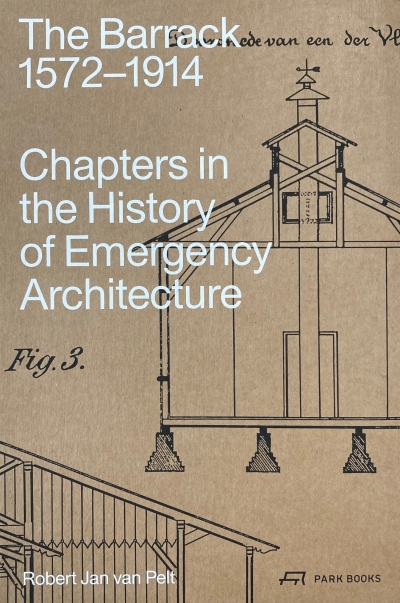
The Barrack. 1572-1914. Chapters in the History of Emergency Architecture

The Barrack, 1572–1914 tells the little-known history of a building type that many people used to register as an alien interloper in conventionally built-up areas. The barrack is a mostly lightweight construction, a hybrid between shack, tent, and traditional building. It is a highly efficient structure that sometimes also proves to be extremely durable. Easy to erect and to take down, it is—after the introduction of railways and later motor vehicles in the late 19th and early 20th centuries—also easy to transplant from one location to another. Originating as a standardized accommodation in the late 16th century, the barrack became a mass-produced utility of military and civilian mobilization in the 19th century, providing immediate shelter for soldiers as well as for displaced persons, disaster victims, or prisoners. The barrack played a decisive role in shaping the political space of modernity.

Robert Jan van Pelt traces nearly 350 years of barrack history up to 1914. That year, in which the Great War broke out, proved to be a turning point in the perception of the barrack, away from pragmatic emergency shelter and towards sinister forced housing. Richly illustrated with some 250 images, van Pelt’s book records the traditions of barrack design and the technological inventiveness that went into it in the late 19th century.


Robert Jan van Pelt
The Barrack. 1572-1914. Chapters in the History of Emergency Architecture
Park Books, 2024, 978-3-03860-365-8
48,00 €