








Direkt zum Inhalt

Warenkorb

  • gerade nicht auf Lager
    Henri Lefebvre

    Writings on Cities

  • gerade nicht auf Lager
    Henri Lefebvre

    The Production of Space

  • Hiromasa Shirai, André Schmidt (Hg.)

    Big Bang Beijing. Urban Change in Beijing

  • gerade nicht auf Lager
    John F. C. Turner

    Housing by People. Towards Autonomy in Building…

  • Loretta Napoleoni

    Rogue Economics. Capitalism's New Reality

  • AD

    AD 174. Vol. 75. Nr. 2. Samantha Hardingham. The 1970'…

  • An Architektur

    An Architektur 18: Camp for Oppositional Architecture:…

  • Johan Frederik Hartle

    Der geöffnete Raum. Zur Politik der ästhetischen Form

  • An Architektur

    An Architektur 16-17

  • Vera Beyer, Jutta Voorhoeve, Anselm…

    Das Bild ist der König. Repräsentation nach Louis Marin

  • An Architektur

    An Architektur 15 / FFM 11: Europäische…

  • An Architektur

    An Architektur 14: Camp for Oppositional Architecture

  • An Architektur

    An Architektur 11-13: Theorie und Praxis der Kartografie

  • An Architektur

    An Architektur 10: Gemeinschaftsräume

  • An Architektur

    An Architektur 04-09: Krieg und die Produktion von Raum

  • IDEA Magazine

    IDEA 296. Books <preposition> graphic design

  • IDEA Magazine

    IDEA 293. Stanley Donwood / Vacances. DD-DDD / Dimensions…

  • gerade nicht auf Lager
    An Architektur

    An Architektur 01-03

  • Pro qm

    Gutschein / Voucher

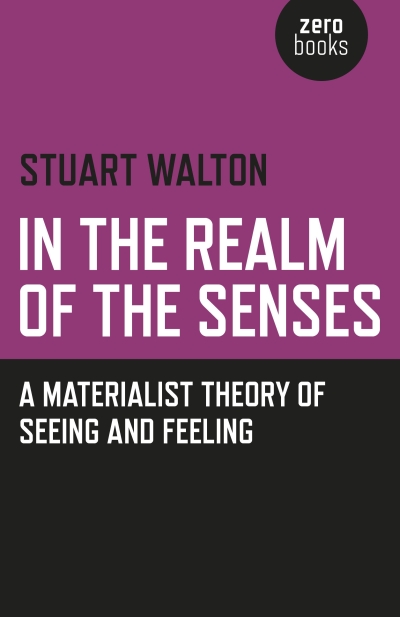
In The Realm of the Senses. A Materialist Theory of Seeing and Feeling

The five physical senses of seeing, hearing, smelling, tasting and touching have been held to underpin the complexity of human experience ever since Aristotle first theorised about how they worked. Classical and scholastic philosophy up to the time of the European Enlightenment relegated their operations to its margins, viewing them as at best a distraction from higher thinking, and at worst a positive deception. Paradoxically, what one could not objectively know, the products of the mind, were accorded precedence over the concrete.
From the Romantic era onwards, the senses moved to the centre of speculative thought, and the various dialectical currents of philosophy after Hegel made them interdependent with the intellectual function, which was held to derive most or all of its authority from them. This tendency has continued down to the sensualist, hedonist and anti-intellectual currents of our own day.
In this theoretical consideration of what has been done to the senses in modern experience, Stuart Walton subjects the life of the senses to a further materialist turn, one that refuses a spiritualisation of the material realm, to which contemporary discourses of the body have often fallen prey, while at the same time preserving sensuality from being delivered once again to a sterile idealism.


Stuart Walton
In The Realm of the Senses. A Materialist Theory of Seeing and Feeling
Zero Books, 2016, 978-1-78279-051-8
gerade nicht auf Lager