
























Direkt zum Inhalt

Warenkorb

  • gerade nicht auf Lager
    Gui Bonsiepe

    Entwurfskultur und Gesellschaft. Gestaltung zwischen…

  • gerade nicht auf Lager
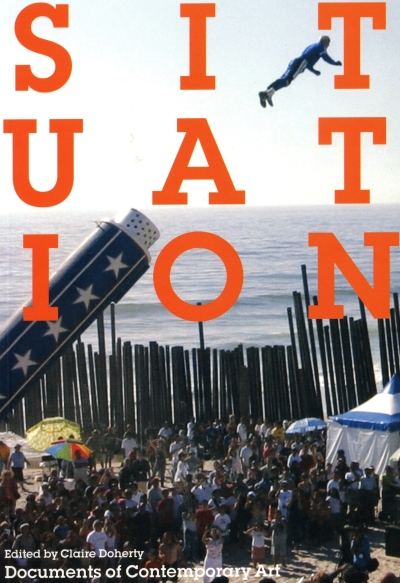
    Claire Doherty (Hg.)

    Situation. Documents of Contemporary Art

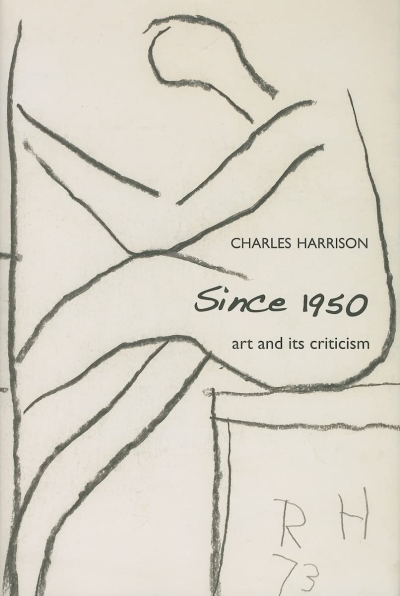
  • Charles Harrison

    Since 1950. art and its criticism

  • gerade nicht auf Lager
    James Hennessey, Victor Papanek

    Nomadic Furniture. D-I-Y Projects that are Lightweight

  • Claire Fontaine

    Vivre, vaincre

  • Claire Fontaine

    Claire Fontaine. Vivre, Vaincre

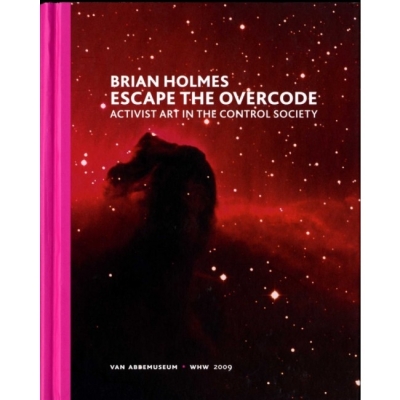
  • Brian Holmes

    Escape the Overcode. Activist Art in the Control Society

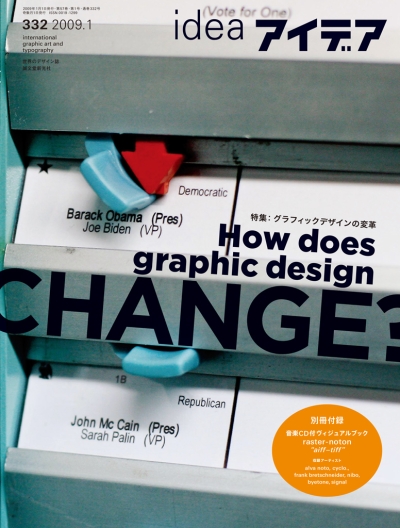
  • IDEA Magazine

    IDEA 332. How does graphic design CHANGE?

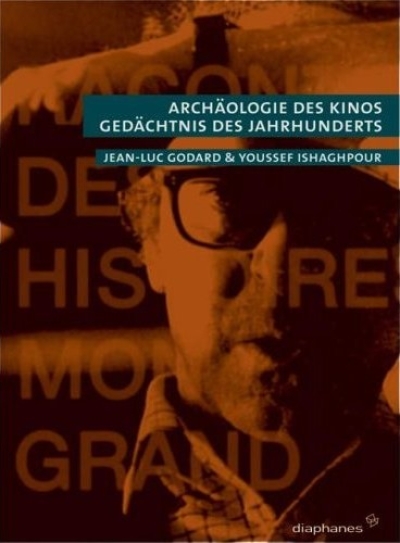
  • Jean-Luc Godard, Youssef Ishaghpour

    Archäologie des Kinos, Gedächtnis des Jahrhunderts

  • Arkitip No. 0048

    Ryan McGinness

  • Rahel Lämmler, Michael Wagner

    Ulrich Müther. Schalenbauten in Mecklenburg-Vorpommern

  • Martina Löw

    Soziologie der Städte

  • Sven Spieker

    The Big Archive. Art From Bureaucracy

  • Thomas Meinecke

    Jungfrau

  • Grada Kilomba

    Plantation Memories. Episodes of Everyday Racism

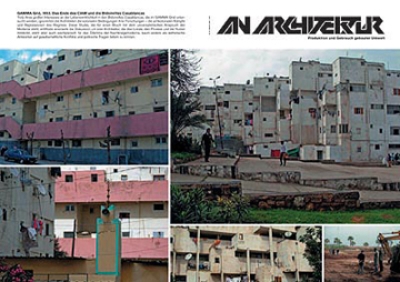
  • An Architektur

    An Architektur 22: GAMMA Grid, 1953. Das Ende des CIAM und…

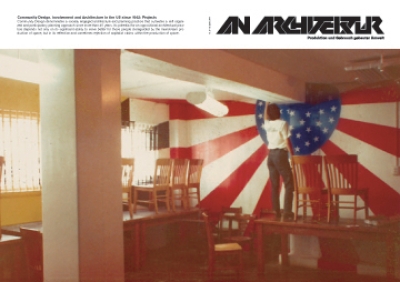
  • An Architektur

    An Architektur 19-21: Community Design. Involvement and…

  • Antonio Negri

    The Porcelain Workshop. For a New Grammar of Politics

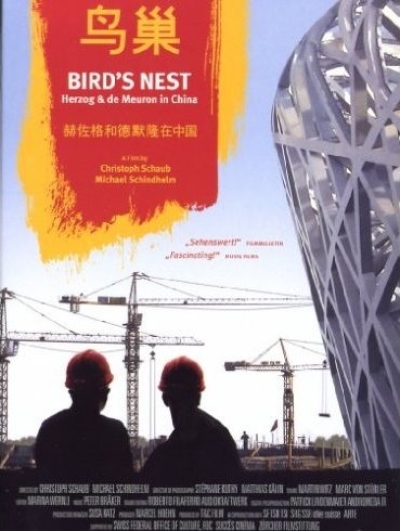
  • Christoph Schaub, Michael Schindhelm

    Bird's Nest (DVD, 87 min.). Jacques Herzog und Pierre…

  • Laurence A. Rickels

    Ulrike Ottinger. Eine Autobiografie

  • N. John Habraken, Arnulf Lüchinger

    Die Träger und die Menschen. Das Ende des Massenwohnungsbau…

  • gerade nicht auf Lager
    Guy Debord

    Comments on the Society of the Spectacle

  • Michel de Certeau

    Kunst des Handelns

  • Alain Badiou

    Wofür steht der Name Sarkozy?

  • gerade nicht auf Lager
    Donna Haraway

    Die Neuerfindung der Natur. Primaten, Cyborgs und Frauen.

  • gerade nicht auf Lager
    Stefanie Schulte Strathaus, Florian…

    Wer sagt denn, dass Beton nicht brennt, hast Du’s probiert?

  • gerade nicht auf Lager
    Henri Lefebvre

    Writings on Cities

  • Loretta Napoleoni

    Rogue Economics. Capitalism's New Reality

  • AD

    AD 174. Vol. 75. Nr. 2. Samantha Hardingham. The 1970…

  • An Architektur

    An Architektur 18: Camp for Oppositional Architecture:…

  • Johan Frederik Hartle

    Der geöffnete Raum. Zur Politik der ästhetischen Form

  • An Architektur

    An Architektur 16-17

  • Vera Beyer, Jutta Voorhoeve, Anselm…

    Das Bild ist der König. Repräsentation nach Louis Marin

  • An Architektur

    An Architektur 15 / FFM 11: Europäische…

  • Orhan Esen, Stephan Lanz (Hg)

    Self Service City. Istanbul (metrozones 4)

  • An Architektur

    An Architektur 14: Camp for Oppositional Architecture

  • Stephan Lanz (Hg.)

    City of COOP. Ersatzökonomiern und städtische Bewegungen in…

  • An Architektur

    An Architektur 11-13: Theorie und Praxis der Kartografie

  • An Architektur

    An Architektur 10: Gemeinschaftsräume

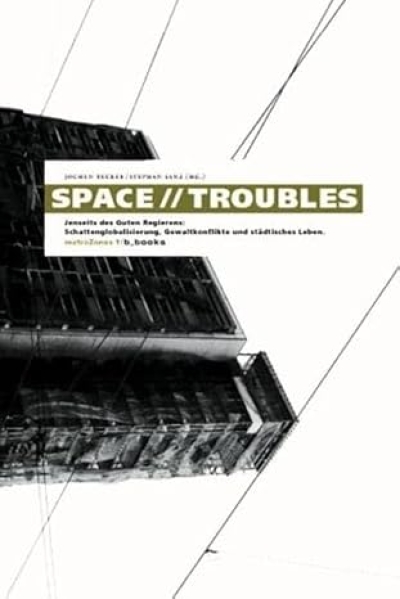
  • Jochen Becker, Stephan Lanz (Hg.)

    Space//Troubles. Jenseits des Guten Regierens:…

  • Sarai media lab

    Sarai Reader 03: shaping technologies

  • An Architektur

    An Architektur 04-09: Krieg und die Produktion von Raum

  • IDEA Magazine

    IDEA 296. Books <preposition> graphic design

  • IDEA Magazine

    IDEA 293. Stanley Donwood / Vacances. DD-DDD / Dimensions…

  • gerade nicht auf Lager
    An Architektur

    An Architektur 01-03

  • Martina Löw

    Raumsoziologie

  • Pro qm

    Gutschein / Voucher

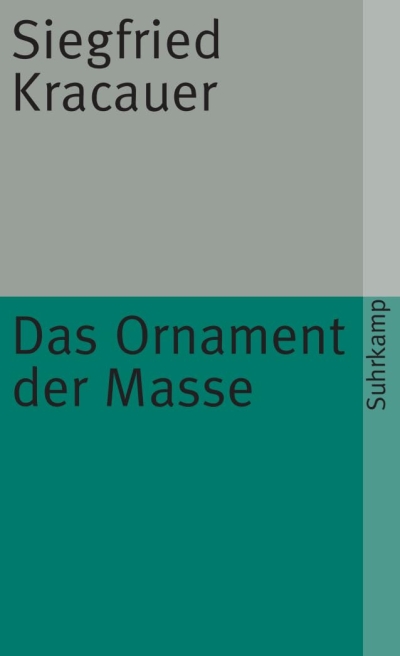
  • Siegfried Kracauer

    Das Ornament der Masse. Essays

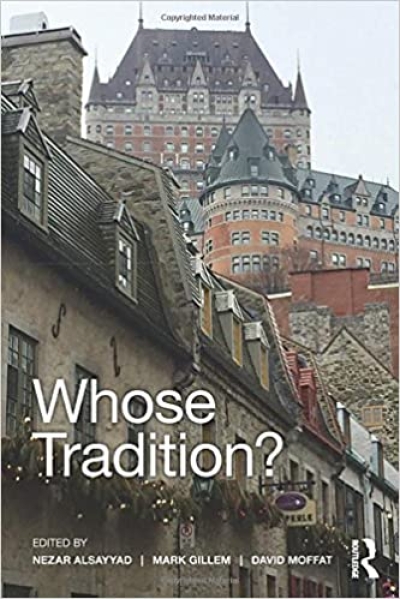
Whose Tradition? Discourses on the Built Environment

In seeking to answer the question Whose Tradition? this book pursues four themes: Place: Whose Nation, Whose City?; People: Whose Indigeneity?; Colonialism: Whose Architecture?; and Time: Whose Identity?
Following Nezar AlSayyad’s Prologue, contributors addressing the first theme take examples from Indonesia, Myanmar and Brazil to explore how traditions rooted in a particular place can be claimed by various groups whose purposes may be at odds with one another. With examples from Hong Kong, a Santal village in eastern India and the city of Kuala Lumpur, contributors investigate the concept of indigeneity, the second theme, and its changing meaning in an increasingly globalized milieu from colonial to post-colonial times. Contributors to the third theme examine the lingering effects of colonial rule in altering present-day narratives of architectural identity, taking examples from Guam, Brazil, and Portugal and its former colony, Mozambique. Addressing the final theme, contributors take examples from Africa and the United States to demonstrate how traditions construct identities, and in turn how identities inform the interpretation and manipulation of tradition within contexts of socio-cultural transformation in which such identities are in flux and even threatened. The book ends with two reflective pieces: the first drawing a comparison between a sense of ‘home’ and a sense of tradition; the second emphasizing how the very concept of a tradition is an attempt to pin down something that is inherently in flux.


Nezar AlSayyad, Mark Gillem, David Moffat (Eds.)
Whose Tradition? Discourses on the Built Environment
Routledge , 2019, 9780367140960
45,80 €