






Direkt zum Inhalt

Warenkorb

  • gerade nicht auf Lager
    Jacques Ranciere

    Ist Kunst widerständig?

  • Alain Badiou

    Wofür steht der Name Sarkozy?

  • gerade nicht auf Lager
    Donna Haraway

    Die Neuerfindung der Natur. Primaten, Cyborgs und Frauen.

  • gerade nicht auf Lager
    Stefanie Schulte Strathaus, Florian…

    Wer sagt denn, dass Beton nicht brennt, hast Du’s probiert?

  • gerade nicht auf Lager
    Henri Lefebvre

    Writings on Cities

  • gerade nicht auf Lager
    Henri Lefebvre

    The Production of Space

  • Hiromasa Shirai, André Schmidt (Hg.)

    Big Bang Beijing. Urban Change in Beijing

  • gerade nicht auf Lager
    John F. C. Turner

    Housing by People. Towards Autonomy in Building…

  • Loretta Napoleoni

    Rogue Economics. Capitalism's New Reality

  • AD

    AD 174. Vol. 75. Nr. 2. Samantha Hardingham. The 1970'…

  • An Architektur

    An Architektur 18: Camp for Oppositional Architecture:…

  • Johan Frederik Hartle

    Der geöffnete Raum. Zur Politik der ästhetischen Form

  • An Architektur

    An Architektur 16-17

  • Vera Beyer, Jutta Voorhoeve, Anselm…

    Das Bild ist der König. Repräsentation nach Louis Marin

  • An Architektur

    An Architektur 15 / FFM 11: Europäische…

  • An Architektur

    An Architektur 14: Camp for Oppositional Architecture

  • An Architektur

    An Architektur 11-13: Theorie und Praxis der Kartografie

  • An Architektur

    An Architektur 10: Gemeinschaftsräume

  • An Architektur

    An Architektur 04-09: Krieg und die Produktion von Raum

  • IDEA Magazine

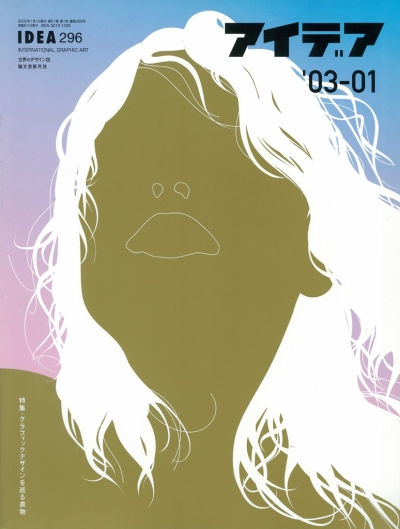
    IDEA 296. Books <preposition> graphic design

  • IDEA Magazine

    IDEA 293. Stanley Donwood / Vacances. DD-DDD / Dimensions…

  • gerade nicht auf Lager
    An Architektur

    An Architektur 01-03

  • Pro qm

    Gutschein / Voucher

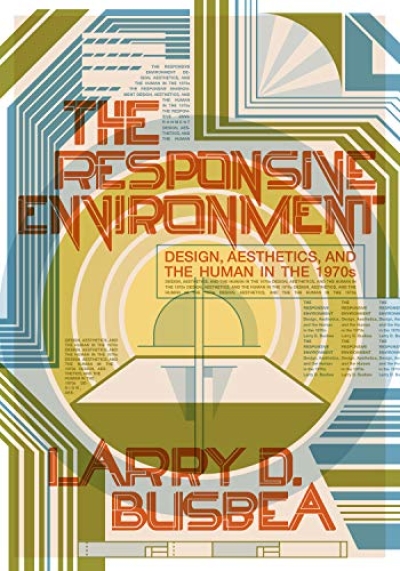
The Responsive Environment. Design, Aesthetics, and the Human in the 1970s

At the end of the 1960s, new models of responsiveness between humans and their environments had a profound impact on theories and practices in architecture, design, art, technology, media, and the sciences. The resulting initiatives—design philosophies, art installations, architectural projects, exhibitions, publications, and symposia—sought to bring together insights from biology, systems theory, psychology, and anthropology with modernist legacies of total design.
In The Responsive Environment, Larry D. Busbea takes up this concept of environment as an object and method of design at the height of its aesthetic, technical, and discursive elaboration. Exploring emerging paradigms of environmental perception, patterning, and control as developed by Gregory Bateson, Edward T. Hall, Wolf Hilbertz, György Kepes, Marshall McLuhan, Nicholas Negroponte, Paolo Soleri, and others, he shows how living space itself was reimagined as a domain capable of modification through input from its newly sensitized inhabitants.
The Responsive Environment intercuts the development of new ideas about environmental awareness with case studies of specific architecture and design projects for responsive environments. Throughout, Busbea connects these theories and practices to the contemporary obsession with “smart” things: responsive technologies, intelligent environments, biomimetic materials, and digital atmospherics.


Larry D. Busbea
The Responsive Environment. Design, Aesthetics, and the Human in the 1970s
University of Minnesota Press, 2020, 9781517907105
gerade nicht auf Lager