




Direkt zum Inhalt

Warenkorb

  • gerade nicht auf Lager
    Jacques Ranciere

    Ist Kunst widerständig?

  • Alain Badiou

    Wofür steht der Name Sarkozy?

  • gerade nicht auf Lager
    Donna Haraway

    Die Neuerfindung der Natur. Primaten, Cyborgs und Frauen.

  • gerade nicht auf Lager
    Stefanie Schulte Strathaus, Florian…

    Wer sagt denn, dass Beton nicht brennt, hast Du’s probiert?

  • gerade nicht auf Lager
    Henri Lefebvre

    Writings on Cities

  • gerade nicht auf Lager
    Henri Lefebvre

    The Production of Space

  • Hiromasa Shirai, André Schmidt (Hg.)

    Big Bang Beijing. Urban Change in Beijing

  • gerade nicht auf Lager
    John F. C. Turner

    Housing by People. Towards Autonomy in Building…

  • Loretta Napoleoni

    Rogue Economics. Capitalism's New Reality

  • AD

    AD 174. Vol. 75. Nr. 2. Samantha Hardingham. The 1970'…

  • An Architektur

    An Architektur 18: Camp for Oppositional Architecture:…

  • Johan Frederik Hartle

    Der geöffnete Raum. Zur Politik der ästhetischen Form

  • An Architektur

    An Architektur 16-17

  • Vera Beyer, Jutta Voorhoeve, Anselm…

    Das Bild ist der König. Repräsentation nach Louis Marin

  • An Architektur

    An Architektur 15 / FFM 11: Europäische…

  • An Architektur

    An Architektur 14: Camp for Oppositional Architecture

  • An Architektur

    An Architektur 11-13: Theorie und Praxis der Kartografie

  • An Architektur

    An Architektur 10: Gemeinschaftsräume

  • An Architektur

    An Architektur 04-09: Krieg und die Produktion von Raum

  • IDEA Magazine

    IDEA 296. Books <preposition> graphic design

  • IDEA Magazine

    IDEA 293. Stanley Donwood / Vacances. DD-DDD / Dimensions…

  • gerade nicht auf Lager
    An Architektur

    An Architektur 01-03

  • Pro qm

    Gutschein / Voucher

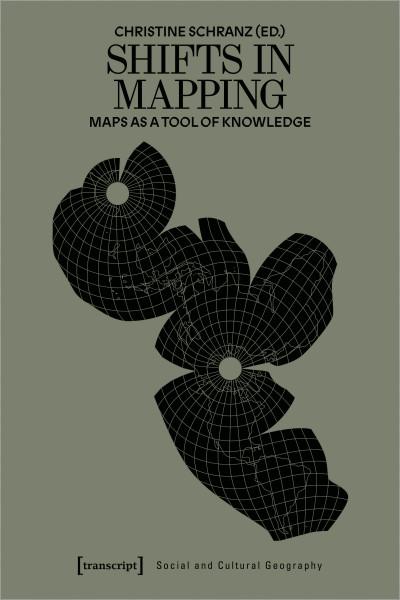
Shifts in Mapping. Maps as a tool of knowledge

Depicting the world, territory, and geopolitical realities involves a high degree of interpretation and imagination. It is never neutral. Cartography originated in ancient times to represent the world and to enable circulation, communication, and economic exchange. Today, IT companies are a driving force in this field and change our view of the world; how we communicate, navigate, and consume globally. Questions of privacy, authorship, and economic interests are highly relevant to cartography's practices. So how to deal with such powers and what is the critical role of cartography in it? How might a bottom-up perspective (and actions) in map-making change the conception of a geopolitical space?


Christine Schranz (ed.)
Shifts in Mapping. Maps as a tool of knowledge
Transcript, 2021, 978-3-8376-6041-8
39,00 €