




















Direkt zum Inhalt

Warenkorb

  • gerade nicht auf Lager
    Jacques Ranciere

    Ist Kunst widerständig?

  • Alain Badiou

    Wofür steht der Name Sarkozy?

  • gerade nicht auf Lager
    Donna Haraway

    Die Neuerfindung der Natur. Primaten, Cyborgs und Frauen.

  • gerade nicht auf Lager
    Stefanie Schulte Strathaus, Florian…

    Wer sagt denn, dass Beton nicht brennt, hast Du’s probiert?

  • gerade nicht auf Lager
    Henri Lefebvre

    Writings on Cities

  • gerade nicht auf Lager
    Henri Lefebvre

    The Production of Space

  • Hiromasa Shirai, André Schmidt (Hg.)

    Big Bang Beijing. Urban Change in Beijing

  • gerade nicht auf Lager
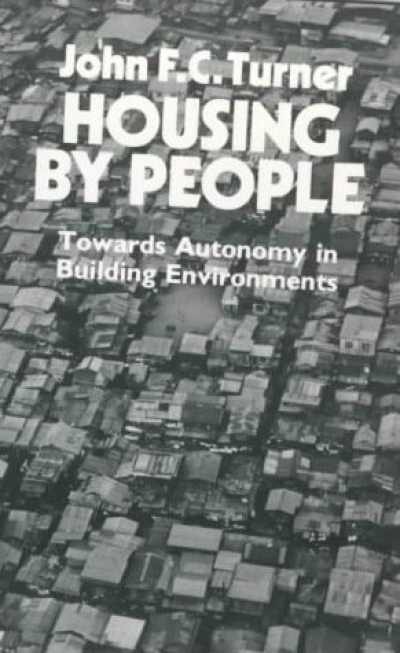
    John F. C. Turner

    Housing by People. Towards Autonomy in Building…

  • Loretta Napoleoni

    Rogue Economics. Capitalism's New Reality

  • AD

    AD 174. Vol. 75. Nr. 2. Samantha Hardingham. The 1970'…

  • An Architektur

    An Architektur 18: Camp for Oppositional Architecture:…

  • Johan Frederik Hartle

    Der geöffnete Raum. Zur Politik der ästhetischen Form

  • An Architektur

    An Architektur 16-17

  • Vera Beyer, Jutta Voorhoeve, Anselm…

    Das Bild ist der König. Repräsentation nach Louis Marin

  • An Architektur

    An Architektur 15 / FFM 11: Europäische…

  • An Architektur

    An Architektur 14: Camp for Oppositional Architecture

  • An Architektur

    An Architektur 11-13: Theorie und Praxis der Kartografie

  • An Architektur

    An Architektur 10: Gemeinschaftsräume

  • An Architektur

    An Architektur 04-09: Krieg und die Produktion von Raum

  • IDEA Magazine

    IDEA 296. Books <preposition> graphic design

  • IDEA Magazine

    IDEA 293. Stanley Donwood / Vacances. DD-DDD / Dimensions…

  • gerade nicht auf Lager
    An Architektur

    An Architektur 01-03

  • Pro qm

    Gutschein / Voucher

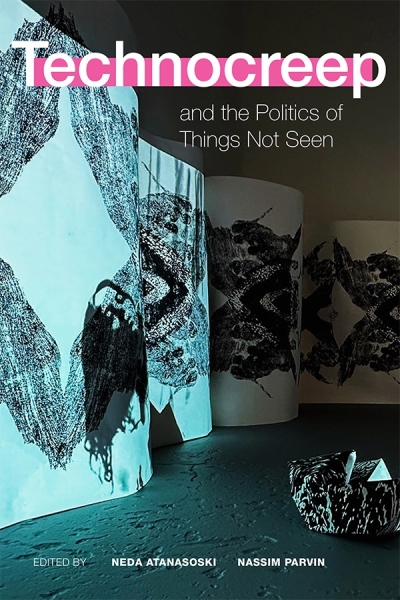
Cover Technocreep and the Politics of Things Not Seen

Technocreep and the Politics of Things Not Seen

New and emerging technologies, especially ones that infiltrate intimate spaces, relations, homes, and bodies, are often referred to as creepy in media and political discourses. In Technocreep and the Politics of Things Not Seen, Neda Atanasoski and Nassim Parvin introduce a feminist theory of creep that they substantiate through critical engagement with smart homes, smart dust, smart desires, and smart forests toward dreams of feminist futures. Contributing authors further illuminate what is otherwise obscured, assumed, or dismissed in characterizations of technology as creepy or creeping. Considering diverse technologies such as border surveillance and China’s credit system to sexcams and home assistants, the volume’s essays and artworks demonstrate that the potentials and pitfalls of artificial intelligence and digital and robotic technologies cannot be assessed through binaries of seeing/being seen, privacy/surveillance, or harmful/useful. Together, their multifaceted and multimodal approach transcends such binaries, accounting for technological relations that exceed sight to include touch, presence, trust, and diverse modes of collectivity. As such, this volume develops creep as a feminist analytic and creative mode on par with technology’s complex entanglement with intimate, local, and global politics.

Contributors. Neda Atanasoski, Katherine Bennett, Iván Chaar López, Sushmita Chatterjee, Hayri Dortdivanlioglu, Sanaz Haghani, Jacob Hagelberg, Jennifer Hamilton, Antonia Hernández, Marjan Khatibi, Tamara Kneese, Erin McElroy, Vernelle A. A. Noel, Jessica Olivares, Nassim Parvin, Beth Semel, Renee Shelby, Tanja Wiehn 


Neda Atanasoski, Nassim Parvin (Hg)
Technocreep and the Politics of Things Not Seen
Duke University Press, 2025, 9781478031253
gerade nicht auf Lager