
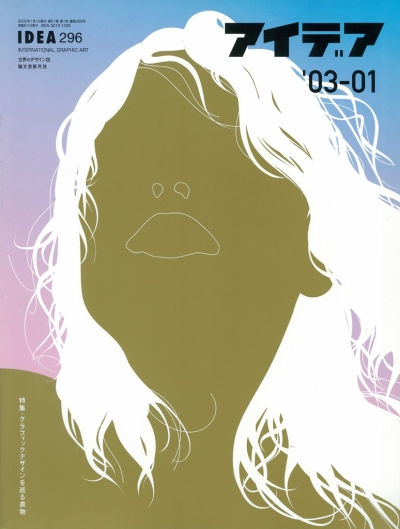

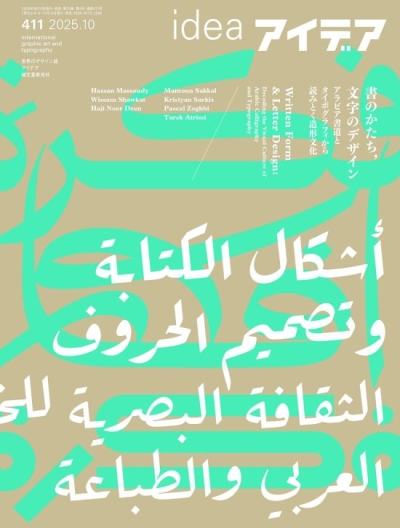
Idea 411. Written Form & Letter Design: Decoding the Visual Culture of Arabic Calligraphy and Typography
For approximately 1,400 years the intertwined form of spirituality and artistic beauty that is Arabic script has sustained both the culture and faith of the Islamic world. Arabic calligraphy flourished with the first writings of the Holy Quran (which had been bequeathed verbally before then) and has since become an appropriate visual expression befitting the Quran’s sublime ideals. Use of images is restricted in the Islamic context; this lends to the positioning of Arabic script as a respected means of visual expression for meaning and beauty to coexist. In particular, this can be seen in religious architecture, such as mosques and madrasas schools, where writings adorn walls and domes alongside geometric and organic motifs, bestowing upon viewers both spiritual profundity and symbolism.
Due to the nature of the unbroken lines of Arabic script and its complex modularity in letterform, the Arabic writing system has been difficult to adapt into the world of printing, and hence Arabic forms of letterpress printing have lagged behind their counterpart European languages. More orthodox forms of Muslim letterpress printing began in the 18th century, and initially faced a major challenge of retaining the beauty in calligraphy while allowing for the mechanical reproduction required.
Today we are witnessing the emergence of diverse attempts to surpass these limitations and bridge tradition and innovation. While some calligraphers reinterpret classical traditions by incorporating modern sensibilities, some designers explore typeface design and layout in the digital world, and pioneer new forms of typographical expression. They all work to preserve the inherent beauty in Arabic calligraphy̶the fluidity and rhythm of its lines and compositions of letter spacing and negative spaces̶and bequeath its legacy through contemporary visual culture such as posters, logotypes, book design, and other forms of media.
This issue’s feature is divided into two parts: chapter 1, Calligraphy, which traces the origin and aesthetics of Arabic calligraphy, and chapter 2, Typography, which explores its more modern developments and printing methods. Read together they reveal the genealogy of the visual culture that Arabic script has established. We hope this feature article assists in reexamining both the form and meaning inherent in Arabic script, and helps us contemplate how this calligraphy culture, with its bedrock in religion, still continues to thrive throughout the ages and accompanying technological changes.
Design by LABORATORIES (Kensaku Kato, Sae Kamata, Sakura Koizumi