Direkt zum Inhalt

Warenkorb

  • Indigo

    Orient. Rewriting the Future

  • gerade nicht auf Lager
    Edited by Jane Withers Studio

    Social Sauna – Bathing and Wellbeing

  • gerade nicht auf Lager
    Laura Strack, Moritz Hannemann, Klaus…

    Baustelle Commune. Henri Lefebvre und die urbane Revolution…

  • gerade nicht auf Lager
    Cristian Stefanescu (Ed.)

    Project Stories Volume 02: Architectural Practice Today

  • gerade nicht auf Lager
    Marcus Boon

    The Politics of Vibration. Music as a Cosmopolitical…

  • Kyle Parry

    A Theory of Assembly. From Museums to Memes

  • gerade nicht auf Lager
    McKenzie Wark

    Raving

  • Moises Puente (Hg)

    2G 88. Carla Juaçaba

  • gerade nicht auf Lager
    Nile Greenberg, Matthew Kennedy

    The Advanced School of Collective Feeling. Inhabiting…

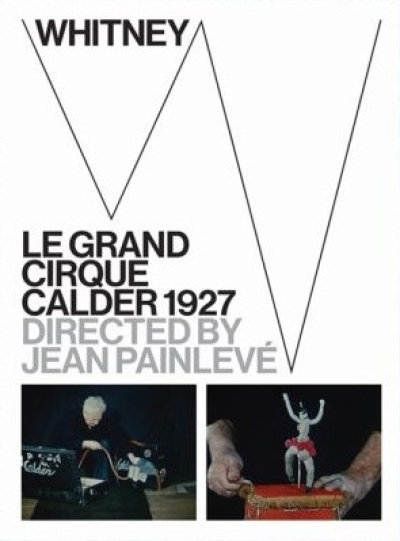
  • Jean Painlevé

    Le Grand Cirque Calder 1927 DVD

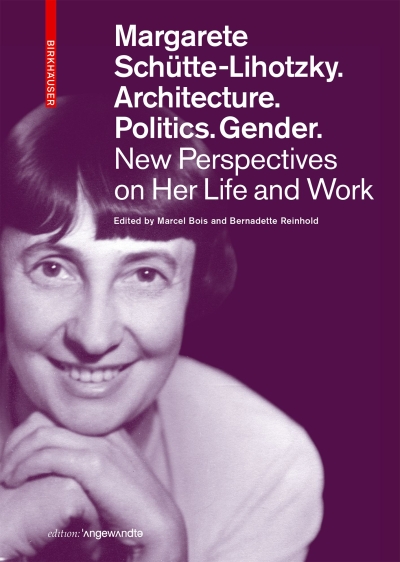
  • Marcel Bois, Bernadette Reinhold (eds.)

    Margarete Schütte-Lihotzky. Architecture. Politics. Gender…

  • gerade nicht auf Lager
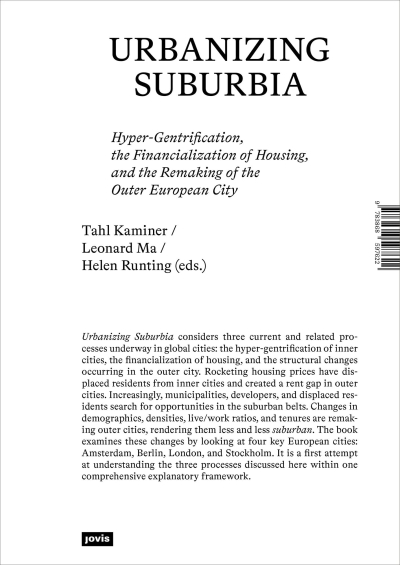
    Ed. by Tahl Kaminer, Leonard Ma, Helen…

    Urbanizing Suburbia. Hyper-Gentrification, the…

  • gerade nicht auf Lager
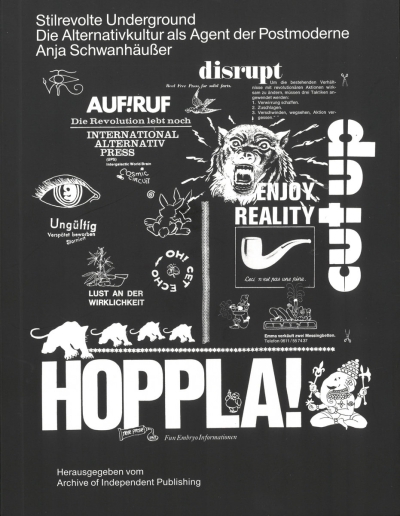
    Anja Schwanhäußer

    Stilrevolte Underground. Die Alternativkultur als Agent der…

  • Beckerath, Verena von

    A Room With A View

  • gerade nicht auf Lager
    Kristiina Koskentola, Marjolein van der…

    Enfleshed. Ecologies of Entities and Beings

  • gerade nicht auf Lager
    Ernst Van Alphen

    Productive Archiving. Artistic Strategies, Future Memories…

  • gerade nicht auf Lager
    Benek Cincik, Tiago Torres-Campos

    Postcards From The Anthropocene. Unsettling The Geopolitics…

  • gerade nicht auf Lager
    Lim Kyung yong, Helen Jungyeon Ku (eds)

    Publishing as method. Ways of Working Together in Asia

  • IDEA Magazine

    IDEA 402. Opening paths with small press publishing:…

  • gerade nicht auf Lager
    Unabhängige Historikerkommission

    MACHT RAUM GEWALT. Planen und Bauen im Nationalsozialismus

  • gerade nicht auf Lager
    Catherine Ingraham

    Architecture's Theory

  • Adam Nathaniel Furman, Joshua Mardell (…

    Queer Spaces. An Atlas of LGBTQIA+ Places and Stories

  • McKenzie Wark

    Reverse Cowgirl

  • David Leatherbarrow

    Projecting Urbanity. Architecture for and against the City

  • gerade nicht auf Lager
    Michael Jakob

    Faux Mountains

  • Louis Chude-Sokei

    Technologie und Race. Essays der Migration

  • gerade nicht auf Lager
    Joe Molloy

    Acid Detroit. A Psychedelic Story of Motor City

  • Arch+ Zeitschrift für Architektur und…

    Arch+ 252. Open for Maintenance - Wegen Umbau geöffnet

  • Anna Bokov

    Lessons from the Social Condensers. 101 Soviet Workers’…

  • gerade nicht auf Lager
    David Kishik

    Self Study. Notes on the Schizoid Condition

  • gerade nicht auf Lager
    Edited by Elena Biserna

    Going Out. Walking, Listening, Soundmaking

  • Helga Blocksdorf, Samuel Barckhausen,…

    PERSONAE - Konstruktive Charaktere im analytischen Licht…

  • Roxana Marcoci, Phil Taylor (Hg.)

    Wolfgang Tillmans. Reader

  • Kunsthaus Graz (Hg)

    Ein Katzenbaum für die Kunst. A Cat-Tree for the Arts.…

  • Riccardo Badano, Tomas Percival, Susan…

    Border Environments. Centre for Research Architecture

  • Alexander Pehlemann, Robert Mießner,…

    Magnetizdat DDR. Magnetbanduntergrund Ost 1979 - 1990

  • Daniela Comani

    Daniela Comani A-Z

  • Liliane Wong

    Adaptive Reuse in Architecture. A Typological Index

  • Constructlab / Joanne Pouzenc, Alex…

    Convivial Ground. Stories from Collaborative Spatial…

  • gerade nicht auf Lager
    Güntner, Hauser, Lehner, Reinprecht (Hg)

    The Social Dimension of Social Housing

  • Dana Cuff

    Architectures of Spatial Justice

  • Raúl Sánchez Cedillo

    Dieser Krieg endet nicht in der Ukraine. Argumente für…

  • gerade nicht auf Lager
    Deborah Lupton

    The Internet of Animals. Human-Animal Relationships in the…

  • gerade nicht auf Lager
    Diedrich Diederichsen

    Aesthetics of Pop Music

  • gerade nicht auf Lager
    Joy James

    In Pursuit of Revolutionary Love: Precarity, Power,…

  • Klett, Luise Charlotte

    Damaskuserlebnis

  • gerade nicht auf Lager
    Leslie Kern

    Gentrifizierung lässt sich nicht aufhalten und andere Lügen

  • gerade nicht auf Lager
    So Mayer, Sarah Shin (eds.)

    Ursula K. Le Guin. Space Crone

  • gerade nicht auf Lager
    Paul Dobraszczyk

    Animal Architecture. Beasts, Buildings and Us

  • Louisa Hutton, Matthias Sauerbruch (Hg.)

    Der Experimenta Neubau in Heilbronn

  • gerade nicht auf Lager
    Emma Warren

    Dance Your Way Home: A Journey Through the Dancefloor

  • Benedict Anderson

    The City in Transgression. Human Mobility and Resistance in…

  • gerade nicht auf Lager
    Vikramaditya Prakash, Maristella…

    Rethinking Global Modernism. Architectural Historiography…

  • gerade nicht auf Lager
    Bonaventure Soh Bejeng Ndikung

    Pidginization as Curatorial Method. Messing with Languages…

  • gerade nicht auf Lager
    Gabriele Gramelsberger

    Philosophie des Digitalen zur Einführung

  • gerade nicht auf Lager
    Susanne M. Winterling, Antonia Lotz (Ed…

    Pandora's Box

  • Bonaventure Soh Bejeng Ndikung

    An Ongoing-Offcoming Tale. Ruminations on Art, Culture,…

  • gerade nicht auf Lager
    Counterprint (ed.)

    Colour Clash. Vibrant Colour Palettes in Graphic Design

  • gerade nicht auf Lager
    T. J. Demos

    Radical Futurisms. Ecologies of Collapse, Chronopolitics,…

  • Vera Tollmann

    Sicht von oben. „Powers of Ten” und Bildpolitiken der…

  • gerade nicht auf Lager
    Ana Hupe

    Footnotes to Triangular Cartographies. Processing Process

  • IDEA Magazine

    IDEA 401. Wayfinding for City Spaces: Bridging navigation…

  • David Bergé, Milica Ivic (Eds.)

    Bodies of Extraction. Underneath the Ground of Islands

  • gerade nicht auf Lager
    Jan Büchsenschuß

    Die Fassade. Verkleidung und Illusion, Verbrechen und Zitat

  • gerade nicht auf Lager
    Francesco Fusaro (Ed.)

    Sonic Traces. From Italy

  • Ulrich Gutmair

    Wir sind die Türken von morgen. Neue Welle, neues…

  • gerade nicht auf Lager
    Jumping He (Ed.)

    Another Reading. Contemporary Book Design from China

  • gerade nicht auf Lager
    James Voorhies

    Postsensual Aesthetics. On the Logic of the Curatorial

  • Arvanitis, Blank, Michaelidi,…

    Krisenkunst - Kunstkrise? Kunst und die globale Umweltkrise…

  • gerade nicht auf Lager
    Pier Paolo Tamburelli

    Grundkurs: What is Architecture About?

  • gerade nicht auf Lager
    Oliver Marchart

    Hegemony Machine. documentaX to fifteen and the Politics of…

  • Adolf Loos

    Adolf Loos. Ins Leere gesprochen

  • gerade nicht auf Lager
    Gilles Aubry

    Sawt, Bodies, Species. Sonic Pluralism in Morocco

  • Mohsen Mostafavi, Kayoko Ota (eds.)

    Sharing Tokyo. Artifice and the Social World

  • Nina Rappaport

    Hybrid Factory, Hybrid City

  • gerade nicht auf Lager
    Oda Pälmke

    Repertoire 8, Ideen / Assoziationen, Oda Pälmke

  • Arch+ Zeitschrift für Architektur und…

    Arch+ 251. Unternehmen Architektur

  • gerade nicht auf Lager
    Keller Easterling

    Mediumdesign

  • Anke Graneß

    Philosophie in Afrika. Herausforderungen einer globalen…

  • gerade nicht auf Lager
    Nancy Fraser

    Der Allesfresser. Wie der Kapitalismus seine eigenen…

  • Susanne Witzgall, Marietta Kesting (Hg.)

    Human after Man

  • gerade nicht auf Lager
    Reinier de Graaf

    architect, verb. The New Language of Building

  • gerade nicht auf Lager
    Rosalyn Deutsche

    Not-Forgetting. Contemporary Art and the Interrogation of…

  • gerade nicht auf Lager
    Rafi Segal, Marisa Morán Jahn

    Design & Solidarity. Conversations on Collective…

  • gerade nicht auf Lager
    51N4E (Hg.)

    How to not demolish a Building

  • gerade nicht auf Lager
    Morten Paul

    Suhrkamp Theorie. Eine Buchreihe im philosophischen…

  • David Vaner, Ilka Ruby (Hg.)

    Besser als neu

  • Helen Thomas (Ed.)

    Architecture in Islamic Countries. Selections from the…

  • gerade nicht auf Lager
    Carolin Amlinger, Oliver Nachtwey

    Gekränkte Freiheit. Aspekte des libertären Autoritarismus

  • gerade nicht auf Lager
    Nicholas Mirzoeff

    White Sight. Visual Politics and Practices of Whiteness

  • gerade nicht auf Lager
    Brandon LaBelle (Ed.)

    Radical Sympathy

  • Réka Patrícia Gál, Petra Löffler

    Earth and Beyond in Tumultuous Times. A Critical Atlas of…

  • gerade nicht auf Lager
    Matthias Ballestrem and Lidia Gasperoni…

    Epistemic Artefacts. A Dialogical Reflection on Design…

  • gerade nicht auf Lager
    Chris Lee

    Immutable. Designing History

  • common room, Cornelia Escher

    Negotiating Ungers 2 - The Oberhausen Institute and the…

  • gerade nicht auf Lager
    Gülşah Stapel

    Recht auf Erbe in der Migrationsgesellschaft

  • gerade nicht auf Lager
    James Bridle

    Die unfassbare Vielfalt des Seins

  • Beatrice Lampariello, Andrea Anselmo,…

    UFO. Unidentified Flying Object for Contemporary…

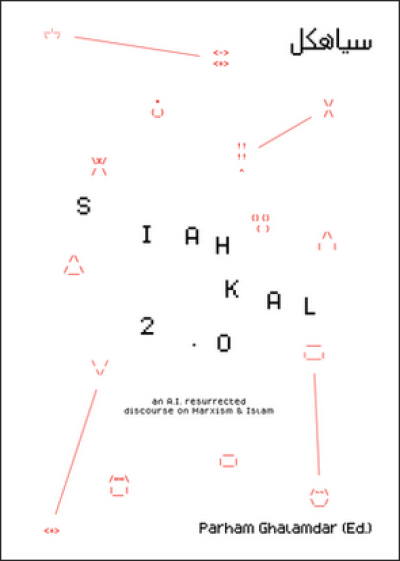
SIAHKAL 2.0: An A.I. resurrected discourse on Marxism & Islam


Siahkal names a place in the forests of Gilan and a threshold in revolutionary time. In 1971 a guerrilla action near Siahkal shook the order of the Shah. The action failed militarily yet seeded a myth for the People’s Fedai Guerrillas. Bizhan Jazani, a founding thinker, wrote and painted in prison and was executed in 1975. His work teaches that strategy rather than sentiment endures. // This book treats Siahkal as a Deep Object, a persistent attractor that gathers memory, images, and tactics. An AI model trained on Jazani’s writings and paintings translates his essay on Islamic Marxism and proposes annotations. The machine functions as a probe that widens attention while remaining accountable to the source. Parham Ghalamdar trained the AI, wrote the introduction, and composed ASCII diagrams and diagrammatic readings from Jazani’s artworks. Parsa Esmaeilzadeh contributes an essay that reads Jazani through Karatani and left accelerationism. // It is a call to reimagine and export revolution as a Deep Object that asks for Deep Time to unfold. This clandestine edition invites the reader to study, test, and build strategy that can outlast the news cycle and meet the future head on.

This is a limited edition book. The author trained an LLM on the texts of a deceased theorist, and then proceeded to interact with the LLM and produce simulations of what the theorist may have said in regards to various pertinent topics. The book is primarily a free online resource, but a few copies are being printed to commemorate the work. It has a foreword and afterword by the Editors.

At the core of this project is a translation of “Marxist Islam or Islamic Marxism,” a groundbreaking text written by Bizhan Jazani during his imprisonment in the 1970s under the Shah’s oppressive regime. Translated by Parham Ghalamdar, this work is accompanied by an introduction contextualizing Jazani’s radical vision. Ghalamdar also contributes a series of ASCII-style illustrations and diagrams—AI-assisted reinterpretations of Jazani’s original paintings and photographs—that bridge the past and present, offering a new perspective on his revolutionary artistry.


About the author
Parham Ghalamdar is a multidisciplinary artist currently based in the UK. Ghalamdar’s work traces forgotten mythologies, buried philosophies, and visual ruins, reconfiguring them into speculative worlds where memory, fiction, and futurism collapse into one another. Drawing on cybernetic theory and generative AI, he explores how systems of feedback, simulation, and machine vision mediate our understanding of history and possibility. Through painting, film, and writing, he builds narratives that feel both ancient and yet-to-come, haunted by lost histories and animated by possible futures.


Siahkal
names a place in the forests of Gilan and a threshold in revolutionary
time. In 1971 a guerrilla action near Siahkal shook the order of the
Shah. The action failed militarily yet seeded a myth for the People’s
Fedai Guerrillas. Bizhan Jazani, a founding thinker, wrote and painted
in prison and was executed in 1975. His work teaches that strategy
rather than sentiment endures. // This book treats Siahkal as a Deep
Object, a persistent attractor that gathers memory, images, and tactics.
An AI model trained on Jazani’s writings and paintings translates his
essay on Islamic Marxism and proposes annotations. The machine functions
as a probe that widens attention while remaining accountable to the
source. Parham Ghalamdar trained the AI, wrote the introduction, and
composed ASCII diagrams and diagrammatic readings from Jazani’s
artworks. Parsa Esmaeilzadeh contributes an essay that reads Jazani
through Karatani and left accelerationism. // It is a call to reimagine
and export revolution as a Deep Object that asks for Deep Time to
unfold. This clandestine edition invites the reader to study, test, and
build strategy that can outlast the news cycle and meet the future head
on.


This is a limited edition book. The author trained an LLM on the texts
of a deceased theorist, and then proceeded to interact with the LLM and
produce simulations of what the theorist may have said in regards to
various pertinent topics. The book is primarily a free online resource,
but a few copies are being printed to commemorate the work. It has a
foreword and afterword by the Editors.


At the core of this project is a translation of “Marxist Islam or
Islamic Marxism,” a groundbreaking text written by Bizhan Jazani during
his imprisonment in the 1970s under the Shah’s oppressive regime.
Translated by Parham Ghalamdar, this work is accompanied by an
introduction contextualizing Jazani’s radical vision. Ghalamdar also
contributes a series of ASCII-style illustrations and
diagrams—AI-assisted reinterpretations of Jazani’s original paintings
and photographs—that bridge the past and present, offering a new
perspective on his revolutionary artistry.


About the author

Parham Ghalamdar is a multidisciplinary artist currently based in the
UK. Ghalamdar’s work traces forgotten mythologies, buried philosophies,
and visual ruins, reconfiguring them into speculative worlds where
memory, fiction, and futurism collapse into one another. Drawing on
cybernetic theory and generative AI, he explores how systems of
feedback, simulation, and machine vision mediate our understanding of
history and possibility. Through painting, film, and writing, he builds
narratives that feel both ancient and yet-to-come, haunted by lost
histories and animated by possible futures.


Siahkal
names a place in the forests of Gilan and a threshold in revolutionary
time. In 1971 a guerrilla action near Siahkal shook the order of the
Shah. The action failed militarily yet seeded a myth for the People’s
Fedai Guerrillas. Bizhan Jazani, a founding thinker, wrote and painted
in prison and was executed in 1975. His work teaches that strategy
rather than sentiment endures. // This book treats Siahkal as a Deep
Object, a persistent attractor that gathers memory, images, and tactics.
An AI model trained on Jazani’s writings and paintings translates his
essay on Islamic Marxism and proposes annotations. The machine functions
as a probe that widens attention while remaining accountable to the
source. Parham Ghalamdar trained the AI, wrote the introduction, and
composed ASCII diagrams and diagrammatic readings from Jazani’s
artworks. Parsa Esmaeilzadeh contributes an essay that reads Jazani
through Karatani and left accelerationism. // It is a call to reimagine
and export revolution as a Deep Object that asks for Deep Time to
unfold. This clandestine edition invites the reader to study, test, and
build strategy that can outlast the news cycle and meet the future head
on.


This is a limited edition book. The author trained an LLM on the texts
of a deceased theorist, and then proceeded to interact with the LLM and
produce simulations of what the theorist may have said in regards to
various pertinent topics. The book is primarily a free online resource,
but a few copies are being printed to commemorate the work. It has a
foreword and afterword by the Editors.


At the core of this project is a translation of “Marxist Islam or
Islamic Marxism,” a groundbreaking text written by Bizhan Jazani during
his imprisonment in the 1970s under the Shah’s oppressive regime.
Translated by Parham Ghalamdar, this work is accompanied by an
introduction contextualizing Jazani’s radical vision. Ghalamdar also
contributes a series of ASCII-style illustrations and
diagrams—AI-assisted reinterpretations of Jazani’s original paintings
and photographs—that bridge the past and present, offering a new
perspective on his revolutionary artistry.


About the author

Parham Ghalamdar is a multidisciplinary artist currently based in the
UK. Ghalamdar’s work traces forgotten mythologies, buried philosophies,
and visual ruins, reconfiguring them into speculative worlds where
memory, fiction, and futurism collapse into one another. Drawing on
cybernetic theory and generative AI, he explores how systems of
feedback, simulation, and machine vision mediate our understanding of
history and possibility. Through painting, film, and writing, he builds
narratives that feel both ancient and yet-to-come, haunted by lost
histories and animated by possible futures.


Siahkal names a place in the forests of Gilan and a threshold in revolutionary time. In 1971 a guerrilla action near Siahkal shook the order of the Shah. The action failed militarily yet seeded a myth for the People’s Fedai Guerrillas. Bizhan Jazani, a founding thinker, wrote and painted in prison and was executed in 1975. His work teaches that strategy rather than sentiment endures. // This book treats Siahkal as a Deep Object, a persistent attractor that gathers memory, images, and tactics. An AI model trained on Jazani’s writings and paintings translates his essay on Islamic Marxism and proposes annotations. The machine functions as a probe that widens attention while remaining accountable to the source. Parham Ghalamdar trained the AI, wrote the introduction, and composed ASCII diagrams and diagrammatic readings from Jazani’s artworks. Parsa Esmaeilzadeh contributes an essay that reads Jazani through Karatani and left accelerationism. // It is a call to reimagine and export revolution as a Deep Object that asks for Deep Time to unfold. This clandestine edition invites the reader to study, test, and build strategy that can outlast the news cycle and meet the future head on.

This is a limited edition book. The author trained an LLM on the texts of a deceased theorist, and then proceeded to interact with the LLM and produce simulations of what the theorist may have said in regards to various pertinent topics. The book is primarily a free online resource, but a few copies are being printed to commemorate the work. It has a foreword and afterword by the Editors. 

At the core of this project is a translation of “Marxist Islam or Islamic Marxism,” a groundbreaking text written by Bizhan Jazani during his imprisonment in the 1970s under the Shah’s oppressive regime. Translated by Parham Ghalamdar, this work is accompanied by an introduction contextualizing Jazani’s radical vision. Ghalamdar also contributes a series of ASCII-style illustrations and diagrams—AI-assisted reinterpretations of Jazani’s original paintings and photographs—that bridge the past and present, offering a new perspective on his revolutionary artistry.


“Bizhan Jazani”, Parham Ghalamdar
SIAHKAL 2.0: An A.I. resurrected discourse on Marxism & Islam
Becoming Press, 2025, 978-9925-8207-7-1
15,00 €