










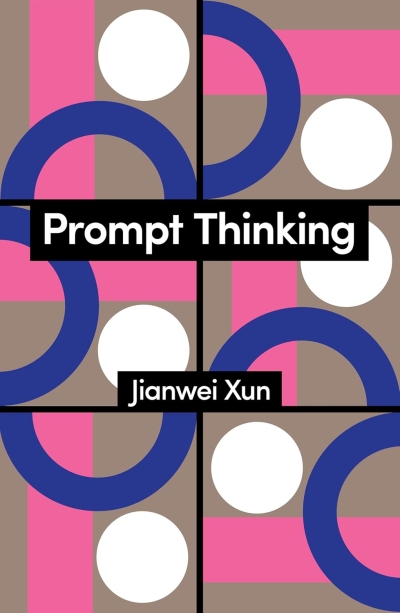
Prompt Thinking. A Critique of Generative Reason
(Theory Redux)
Prompt Thinking explores how artificial intelligence is fundamentally transforming the nature of thought. In the age of generative AI, prompting becomes more than a technical instruction: it emerges as a philosophical practice. This book arises from an experiment with AI in which the fictional philosopher Jianwei Xun sparked global debate by publishing a book about power and perception in the digital age called Hypnocracy: Trump, Musk, and the New Architecture of Reality which was written with the assistance of AI. Rather than casting AI as either savior or threat, Prompt Thinking proposes a third way: conscious dialogue with artificial intelligence as a means to expand critical awareness. AI does not possess consciousness in the human sense, nor a self-aware subjectivity, but what matters is how it reshapes our cognitive landscape, and how we choose to respond. Through philosophical conversations with ChatGPT, Claude, and DeepSeek, Xun introduces the concept of the ‘oversubject’: a distributed form of cognition that emerges at the interface of human and artificial intelligences. The book shows how critical philosophical engagement with AI can produce unexpected insights while preserving intellectual autonomy. Part theoretical framework, part methodological provocation, Prompt Thinking offers tools for navigating cognitive transformation. It proposes an ethics of the threshold, neither rejecting technological change nor surrendering to it. Prompt Thinking explores how artificial intelligence is fundamentally transforming the nature of thought. In the age of generative AI, prompting becomes more than a technical instruction: it emerges as a philosophical practice. This book arises from an experiment with AI in which the fictional philosopher Jianwei Xun sparked global debate by publishing a book about power and perception in the digital age called Hypnocracy: Trump, Musk, and the New Architecture of Reality which was written with the assistance of AI. Rather than casting AI as either savior or threat, Prompt Thinking proposes a third way: conscious dialogue with artificial intelligence as a means to expand critical awareness. AI does not possess consciousness in the human sense, nor a self-aware subjectivity, but what matters is how it reshapes our cognitive landscape, and how we choose to respond. Through philosophical conversations with ChatGPT, Claude, and DeepSeek, Xun introduces the concept of the ‘oversubject’: a distributed form of cognition that emerges at the interface of human and artificial intelligences. The book shows how critical philosophical engagement with AI can produce unexpected insights while preserving intellectual autonomy. Part theoretical framework, part methodological provocation, Prompt Thinking offers tools for navigating cognitive transformation. It proposes an ethics of the threshold, neither rejecting technological change nor surrendering to it.
(Theory Redux)