



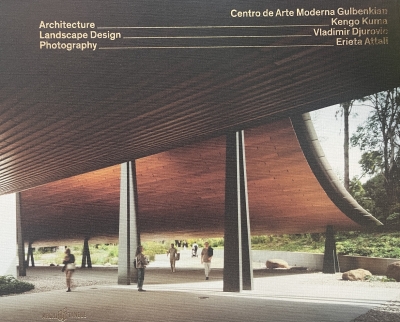
Centro de Arte Moderna Gulbenkian
Kengo Kuma, Landscape Design - Vladimir Djuovic, Photographs - Erieta Attali
This volume celebrates the latest architectural endeavor of the Gulbenkian Foundation in Lisbon: the new building of the Centro de Arte Moderna (CAM), designed by architect Kengo Kuma in collaboration with the landscape architect Vladimir Djurovic. More than a building, this project is a living dialogue between architecture, nature, and the city—transforming museum and garden into a unified public space, rooted in the Foundation’s cultural mission.
Through the lens of Erieta Attali, award-winning architectural photographer, the building and its surrounding landscape are captured in striking, atmospheric images that reveal the subtle interplay of form, light, and material. Her photographs—both precise and poetic—highlight how the building and garden create spaces for rest, interaction, and shared experience.
Accompanying Attali’s photographs are insightful texts that take the reader deeper into the story of the renewal. Attali introduces the project from her unique visual perspective, while conversations with Kuma and Djurovic reveal the close creative partnership between museum, architect, and landscape designer. An essay by architectural historian Ana Tostões anchors the project within the Gulbenkian Foundation’s legacy and evolving role as a public cultural force. Even more than a bold architectural gesture, the museum’s sculptural roof—Kuma’s poetic extension of the landscape— extends the building into the garden, dissolving boundaries and reclaiming the green space as an urban refuge. The luminous photographs by Attali bring this dialogue of form and space to life: the roof appears to breathe with the surrounding garden, capturing the serenity and generosity at the core of the design. This biodiverse oasis, created by Djurovic, is freely accessible to the public and embodies the Foundation’s commitment to sustainability, community, and cultural continuity.
The Centro de Arte Moderna stands as a testament to the Gulbenkian Foundation’s enduring legacy and forward-looking spirit—affirming a future in which architecture becomes a true catalyst for connection.
With contributions by Erieta Attali, Vladimir Djurovic, Seng Kuan, Kengo Kuma, Andres Lepik, and Ana Tostões.
Kengo Kuma, Landscape Design - Vladimir Djuovic, Photographs - Erieta Attali