
























Direkt zum Inhalt

Warenkorb

  • gerade nicht auf Lager
    Wolfram Pichler, Ralph Ubl (Hg.)

    Topologie. Falten, Knoten, Netze, Stülpungen in Kunst und…

  • gerade nicht auf Lager
    Geoff Manaugh

    The BLDG BLOG Book

  • gerade nicht auf Lager
    Neil Brenner, Stuart Elden (Hg.)

    Henri Lefebvre. State, Space, World. Selected Essays

  • gerade nicht auf Lager
    Louis Althusser, Etienne Balibar

    Reading Capital

  • gerade nicht auf Lager
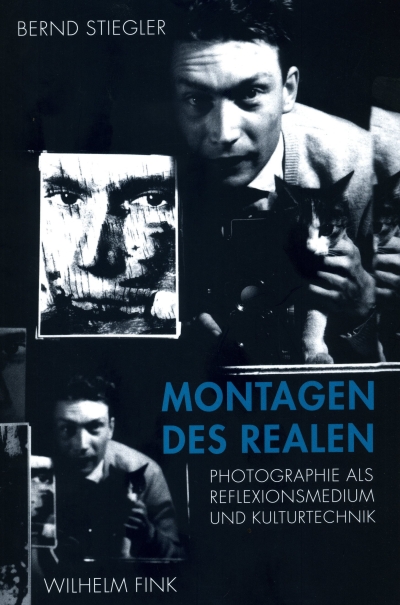
    Bernd Stiegler

    Montagen des Realen. Photographie als Reflexionsmedium und…

  • gerade nicht auf Lager
    John Robb

    The North Will Rise Again. Manchester Music City 1976-1996

  • gerade nicht auf Lager
    Hans Ulrich Obrist

    A Brief History of Curating

  • Brian Holmes

    Escape the Overcode. Activist Art in the Control Society

  • IDEA Magazine

    IDEA 332. How does graphic design CHANGE?

  • Jean-Luc Godard, Youssef Ishaghpour

    Archäologie des Kinos, Gedächtnis des Jahrhunderts

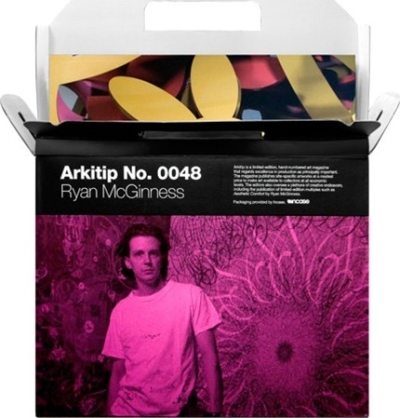
  • Arkitip No. 0048

    Ryan McGinness

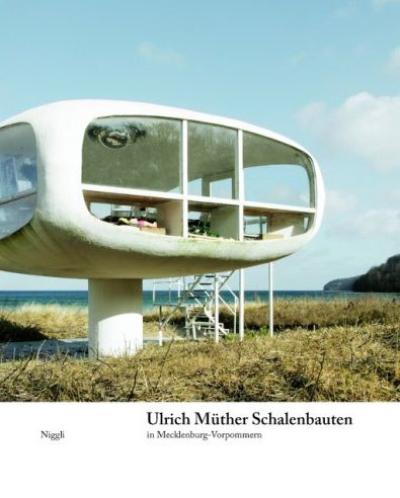
  • Rahel Lämmler, Michael Wagner

    Ulrich Müther. Schalenbauten in Mecklenburg-Vorpommern

  • Martina Löw

    Soziologie der Städte

  • gerade nicht auf Lager
    Ilka & Andreas Ruby (Hg.)

    Urban Transformations

  • gerade nicht auf Lager
    Ralph Heidenreich, Stefan Heidenreich

    Mehr Geld

  • Sven Spieker

    The Big Archive. Art From Bureaucracy

  • Thomas Meinecke

    Jungfrau

  • Grada Kilomba

    Plantation Memories. Episodes of Everyday Racism

  • Hadas A. Steiner

    Beyond Archigram. The Structure of Circulation

  • gerade nicht auf Lager
    Susanne von Falkenhausen

    KugelbauVisionen. Kulturgeschichte einer Bauform von der…

  • An Architektur

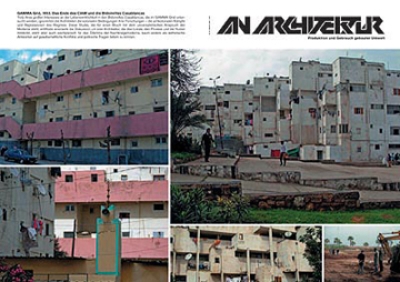
    An Architektur 22: GAMMA Grid, 1953. Das Ende des CIAM und…

  • gerade nicht auf Lager
    Felix Guattari

    The Three Ecologies

  • An Architektur

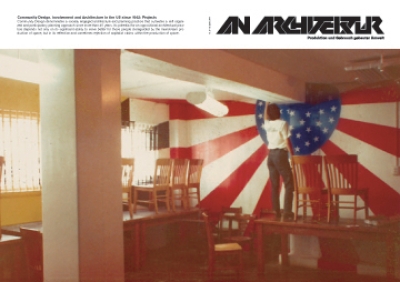
    An Architektur 19-21: Community Design. Involvement and…

  • Antonio Negri

    The Porcelain Workshop. For a New Grammar of Politics

  • Christoph Schaub, Michael Schindhelm

    Bird's Nest (DVD, 87 min.). Jacques Herzog und Pierre…

  • gerade nicht auf Lager
    Felicity D. Scott

    Architecture or Techno-Utopia. Politics after Modernism

  • gerade nicht auf Lager
    Birgit Schneider

    Textiles Prozessieren

  • Bruno Latour

    Wir sind nie modern gewesen. Versuch einer Symmetrischen…

  • gerade nicht auf Lager
    Georges Canguilhem

    Wissenschaft, Technik, Leben. Beiträge zur historischen…

  • gerade nicht auf Lager
    Stuart Elden, Elizabeth Lebas, Eleonore…

    Henri Lefebvre. Key Writings

  • Laurence A. Rickels

    Ulrike Ottinger. Eine Autobiografie

  • N. John Habraken, Arnulf Lüchinger

    Die Träger und die Menschen. Das Ende des Massenwohnungsbau…

  • gerade nicht auf Lager
    Liz Kotz

    Words to Be Looked at. Language in 1960s Art

  • Guy Debord

    Comments on the Society of the Spectacle

  • Michel de Certeau

    Kunst des Handelns

  • gerade nicht auf Lager
    Jacques Ranciere

    Ist Kunst widerständig?

  • Alain Badiou

    Wofür steht der Name Sarkozy?

  • gerade nicht auf Lager
    Donna Haraway

    Die Neuerfindung der Natur. Primaten, Cyborgs und Frauen.

  • gerade nicht auf Lager
    Stefanie Schulte Strathaus, Florian…

    Wer sagt denn, dass Beton nicht brennt, hast Du’s probiert?

  • gerade nicht auf Lager
    Henri Lefebvre

    Writings on Cities

  • gerade nicht auf Lager
    Henri Lefebvre

    The Production of Space

  • Hiromasa Shirai, André Schmidt (Hg.)

    Big Bang Beijing. Urban Change in Beijing

  • gerade nicht auf Lager
    John F. C. Turner

    Housing by People. Towards Autonomy in Building…

  • Loretta Napoleoni

    Rogue Economics. Capitalism's New Reality

  • AD

    AD 174. Vol. 75. Nr. 2. Samantha Hardingham. The 1970'…

  • An Architektur

    An Architektur 18: Camp for Oppositional Architecture:…

  • Johan Frederik Hartle

    Der geöffnete Raum. Zur Politik der ästhetischen Form

  • An Architektur

    An Architektur 16-17

  • Vera Beyer, Jutta Voorhoeve, Anselm…

    Das Bild ist der König. Repräsentation nach Louis Marin

  • An Architektur

    An Architektur 15 / FFM 11: Europäische…

  • An Architektur

    An Architektur 14: Camp for Oppositional Architecture

  • An Architektur

    An Architektur 11-13: Theorie und Praxis der Kartografie

  • An Architektur

    An Architektur 10: Gemeinschaftsräume

  • An Architektur

    An Architektur 04-09: Krieg und die Produktion von Raum

  • IDEA Magazine

    IDEA 296. Books <preposition> graphic design

  • IDEA Magazine

    IDEA 293. Stanley Donwood / Vacances. DD-DDD / Dimensions…

  • gerade nicht auf Lager
    An Architektur

    An Architektur 01-03

  • Pro qm

    Gutschein / Voucher

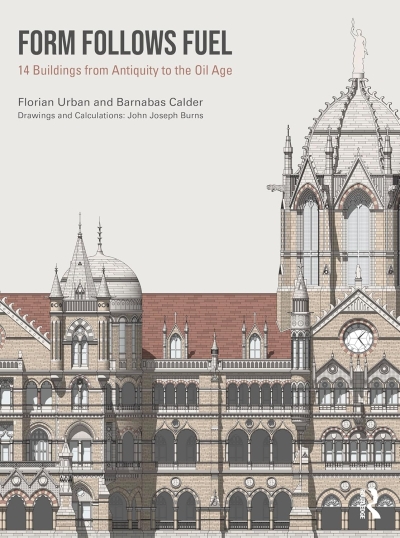
Cover Form Follows Fuel. 14 Buildings from Antiquity to the Oil Age

Form Follows Fuel. 14 Buildings from Antiquity to the Oil Age

Modernists believed that “form follows function.” Form Follows Fuel shows that in fact energy has been the biggest influence on the world’s architecture throughout the history of our species. The availability of energy under different fuel regimes – including human labour, firewood, coal, oil, gas, and renewables – shapes architecture at all scales, from what gets built to how its doors hinge.

This book is the first to quantify energy inputs for a range of buildings worldwide and across the historical record. In the process, it challenges today's architects, offers practical solutions to today's ecological crises, and highlights the aspects of today’s buildings that make architecture responsible for 37% of human climate-changing emissions. It reveals the enormously lower impacts of historical alternatives to today’s default building practices.

This book shows that the shift to modern fossil fuel use, from the seventeenth century, came to be the most consequential move in the history of architecture as well as in human history in general. This brought about remarkable wealth for the built environment and at the same time unprecedented dangers for our planet, as evidenced by the exacerbating climate emergency.

This book consists of 14 accessibly written case studies, illustrated with beautiful and revealing new measured drawings of each project by John Joseph Burns. Each chapter focuses on a single structure in a particular historical context, sometimes contrasted to similar buildings, from subsistence farming to advanced global capitalism. The chapters analyse the consumption of embodied and operational energy in these buildings, and also discuss questions of recycling and adaptive reuse. They complement precise descriptions with hard numbers on materials and construction, using robustly sourced approximations where exact figures are not available. The case studies rely on both published research and the authors’ own calculations and allow systematic comparison across different global regions and historical periods.

Cases include architectural icons such as the Great Pyramid of Giza, the Baths of Caracalla, the Mausoleum of Qin Shi Huang, the Seagram Building, and Terminal 1 of Kuala Lumpur International Airport, as well as common types such as a pre-modern stone house, a late-nineteenth-century tenement, and a modernist panel block. Examples are taken from different regions of the world, including ancient China, pre-Columbian Mexico, and modern Europe. This book is an important contribution to architectural historical research, written for students, academics and building professionals as well as for a general audience.


Florian Urban, Barnabas Calder
Form Follows Fuel. 14 Buildings from Antiquity to the Oil Age
Routledge, 2025, 9781032636542
43,90 €