























































Direkt zum Inhalt

Warenkorb

  • Martina Löw

    Soziologie der Städte

  • gerade nicht auf Lager
    Ilka & Andreas Ruby (Hg.)

    Urban Transformations

  • gerade nicht auf Lager
    Ralph Heidenreich, Stefan Heidenreich

    Mehr Geld

  • Sven Spieker

    The Big Archive. Art From Bureaucracy

  • Thomas Meinecke

    Jungfrau

  • Grada Kilomba

    Plantation Memories. Episodes of Everyday Racism

  • gerade nicht auf Lager
    Susanne von Falkenhausen

    KugelbauVisionen. Kulturgeschichte einer Bauform von der…

  • An Architektur

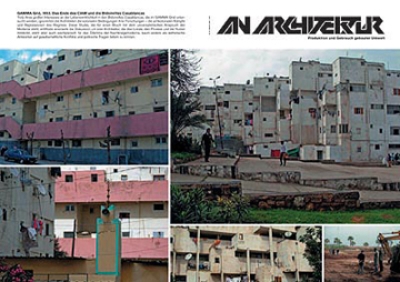
    An Architektur 22: GAMMA Grid, 1953. Das Ende des CIAM und…

  • gerade nicht auf Lager
    Felix Guattari

    The Three Ecologies

  • An Architektur

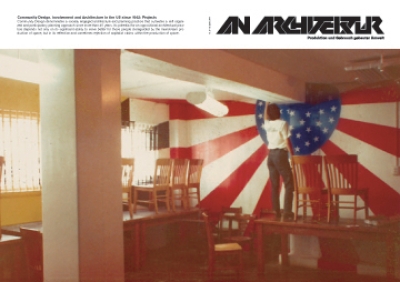
    An Architektur 19-21: Community Design. Involvement and…

  • Antonio Negri

    The Porcelain Workshop. For a New Grammar of Politics

  • Christoph Schaub, Michael Schindhelm

    Bird's Nest (DVD, 87 min.). Jacques Herzog und Pierre…

  • gerade nicht auf Lager
    Felicity D. Scott

    Architecture or Techno-Utopia. Politics after Modernism

  • gerade nicht auf Lager
    Birgit Schneider

    Textiles Prozessieren

  • gerade nicht auf Lager
    Bruno Latour

    Wir sind nie modern gewesen. Versuch einer Symmetrischen…

  • gerade nicht auf Lager
    Georges Canguilhem

    Wissenschaft, Technik, Leben. Beiträge zur historischen…

  • gerade nicht auf Lager
    Stuart Elden, Elizabeth Lebas, Eleonore…

    Henri Lefebvre. Key Writings

  • Laurence A. Rickels

    Ulrike Ottinger. Eine Autobiografie

  • N. John Habraken, Arnulf Lüchinger

    Die Träger und die Menschen. Das Ende des Massenwohnungsbau…

  • gerade nicht auf Lager
    Liz Kotz

    Words to Be Looked at. Language in 1960s Art

  • Guy Debord

    Comments on the Society of the Spectacle

  • Michel de Certeau

    Kunst des Handelns

  • gerade nicht auf Lager
    Jacques Ranciere

    Ist Kunst widerständig?

  • Alain Badiou

    Wofür steht der Name Sarkozy?

  • gerade nicht auf Lager
    Donna Haraway

    Die Neuerfindung der Natur. Primaten, Cyborgs und Frauen.

  • gerade nicht auf Lager
    Stefanie Schulte Strathaus, Florian…

    Wer sagt denn, dass Beton nicht brennt, hast Du’s probiert?

  • gerade nicht auf Lager
    Henri Lefebvre

    Writings on Cities

  • gerade nicht auf Lager
    Henri Lefebvre

    The Production of Space

  • Hiromasa Shirai, André Schmidt (Hg.)

    Big Bang Beijing. Urban Change in Beijing

  • gerade nicht auf Lager
    John F. C. Turner

    Housing by People. Towards Autonomy in Building…

  • Loretta Napoleoni

    Rogue Economics. Capitalism's New Reality

  • AD

    AD 174. Vol. 75. Nr. 2. Samantha Hardingham. The 1970'…

  • An Architektur

    An Architektur 18: Camp for Oppositional Architecture:…

  • Johan Frederik Hartle

    Der geöffnete Raum. Zur Politik der ästhetischen Form

  • An Architektur

    An Architektur 16-17

  • Vera Beyer, Jutta Voorhoeve, Anselm…

    Das Bild ist der König. Repräsentation nach Louis Marin

  • An Architektur

    An Architektur 15 / FFM 11: Europäische…

  • An Architektur

    An Architektur 14: Camp for Oppositional Architecture

  • An Architektur

    An Architektur 11-13: Theorie und Praxis der Kartografie

  • An Architektur

    An Architektur 10: Gemeinschaftsräume

  • An Architektur

    An Architektur 04-09: Krieg und die Produktion von Raum

  • IDEA Magazine

    IDEA 296. Books <preposition> graphic design

  • IDEA Magazine

    IDEA 293. Stanley Donwood / Vacances. DD-DDD / Dimensions…

  • gerade nicht auf Lager
    An Architektur

    An Architektur 01-03

  • Pro qm

    Gutschein / Voucher

  • Siegfried Kracauer

    Das Ornament der Masse. Essays

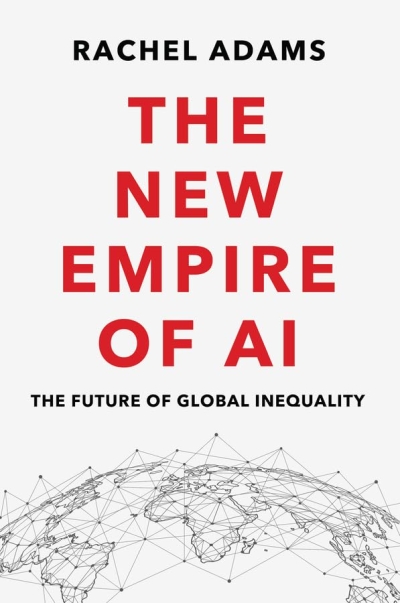
The New Empire of AI. The Future of Global Inequality

The New Empire of AI. The Future of Global Inequality

As AI takes hold across the planet and wealthy nations seek to position themselves as global leaders of this new technology, the gap is widening between those who benefit from it and those who are subjugated by it. As Rachel Adams shows in this hard-hitting book, growing inequality is the single biggest threat to the transformative potential of AI. Not only is AI built on an unequal global system of power, it stands poised to entrench existing inequities, further consolidating a new age of empire.

AI’s impact on inequality will not be experienced in poorer countries only: it will be felt everywhere. The effects will be seen in an intensification of international migration, as opportunities increasingly concentrate in the hands of wealthier nations; in heightened political instability and populist politics; and in climate-related disasters caused by an industry that is blind to its environmental impact across supply chains.

We need to act now to address these issues. Only if the current inequitable trajectory of AI is halted, the incentives changed, and the production and use of AI decentralized and decoupled from wealthier nations will AI be able to deliver on its promise to build a better world for all.


Rachel Adams
The New Empire of AI. The Future of Global Inequality
Polity Press, 2026, 9781509553105
gerade nicht auf Lager