
























Direkt zum Inhalt

Warenkorb

  • Martina Löw

    Soziologie der Städte

  • gerade nicht auf Lager
    Ilka & Andreas Ruby (Hg.)

    Urban Transformations

  • gerade nicht auf Lager
    Ralph Heidenreich, Stefan Heidenreich

    Mehr Geld

  • Sven Spieker

    The Big Archive. Art From Bureaucracy

  • Thomas Meinecke

    Jungfrau

  • Grada Kilomba

    Plantation Memories. Episodes of Everyday Racism

  • gerade nicht auf Lager
    Susanne von Falkenhausen

    KugelbauVisionen. Kulturgeschichte einer Bauform von der…

  • An Architektur

    An Architektur 22: GAMMA Grid, 1953. Das Ende des CIAM und…

  • gerade nicht auf Lager
    Felix Guattari

    The Three Ecologies

  • An Architektur

    An Architektur 19-21: Community Design. Involvement and…

  • Antonio Negri

    The Porcelain Workshop. For a New Grammar of Politics

  • Christoph Schaub, Michael Schindhelm

    Bird's Nest (DVD, 87 min.). Jacques Herzog und Pierre…

  • gerade nicht auf Lager
    Felicity D. Scott

    Architecture or Techno-Utopia. Politics after Modernism

  • gerade nicht auf Lager
    Birgit Schneider

    Textiles Prozessieren

  • gerade nicht auf Lager
    Bruno Latour

    Wir sind nie modern gewesen. Versuch einer Symmetrischen…

  • gerade nicht auf Lager
    Georges Canguilhem

    Wissenschaft, Technik, Leben. Beiträge zur historischen…

  • gerade nicht auf Lager
    Stuart Elden, Elizabeth Lebas, Eleonore…

    Henri Lefebvre. Key Writings

  • Laurence A. Rickels

    Ulrike Ottinger. Eine Autobiografie

  • N. John Habraken, Arnulf Lüchinger

    Die Träger und die Menschen. Das Ende des Massenwohnungsbau…

  • gerade nicht auf Lager
    Liz Kotz

    Words to Be Looked at. Language in 1960s Art

  • Guy Debord

    Comments on the Society of the Spectacle

  • Michel de Certeau

    Kunst des Handelns

  • gerade nicht auf Lager
    Jacques Ranciere

    Ist Kunst widerständig?

  • Alain Badiou

    Wofür steht der Name Sarkozy?

  • gerade nicht auf Lager
    Donna Haraway

    Die Neuerfindung der Natur. Primaten, Cyborgs und Frauen.

  • gerade nicht auf Lager
    Stefanie Schulte Strathaus, Florian…

    Wer sagt denn, dass Beton nicht brennt, hast Du’s probiert?

  • gerade nicht auf Lager
    Henri Lefebvre

    Writings on Cities

  • gerade nicht auf Lager
    Henri Lefebvre

    The Production of Space

  • Hiromasa Shirai, André Schmidt (Hg.)

    Big Bang Beijing. Urban Change in Beijing

  • gerade nicht auf Lager
    John F. C. Turner

    Housing by People. Towards Autonomy in Building…

  • Loretta Napoleoni

    Rogue Economics. Capitalism's New Reality

  • AD

    AD 174. Vol. 75. Nr. 2. Samantha Hardingham. The 1970'…

  • An Architektur

    An Architektur 18: Camp for Oppositional Architecture:…

  • Johan Frederik Hartle

    Der geöffnete Raum. Zur Politik der ästhetischen Form

  • An Architektur

    An Architektur 16-17

  • Vera Beyer, Jutta Voorhoeve, Anselm…

    Das Bild ist der König. Repräsentation nach Louis Marin

  • An Architektur

    An Architektur 15 / FFM 11: Europäische…

  • An Architektur

    An Architektur 14: Camp for Oppositional Architecture

  • An Architektur

    An Architektur 11-13: Theorie und Praxis der Kartografie

  • An Architektur

    An Architektur 10: Gemeinschaftsräume

  • An Architektur

    An Architektur 04-09: Krieg und die Produktion von Raum

  • IDEA Magazine

    IDEA 296. Books <preposition> graphic design

  • IDEA Magazine

    IDEA 293. Stanley Donwood / Vacances. DD-DDD / Dimensions…

  • gerade nicht auf Lager
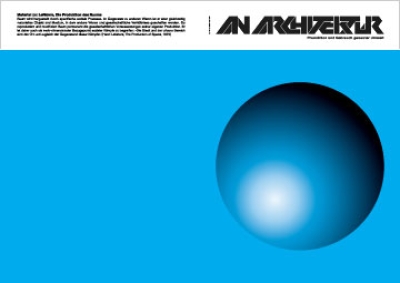
    An Architektur

    An Architektur 01-03

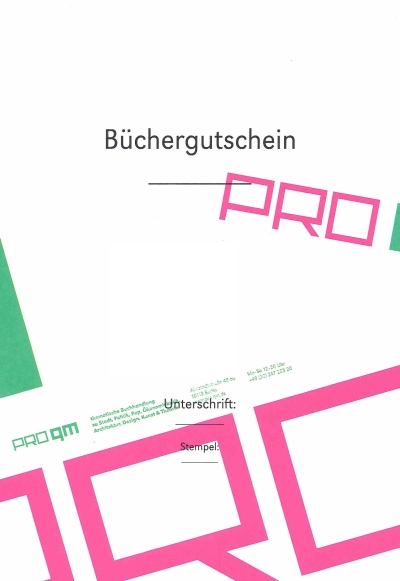
  • Pro qm

    Gutschein / Voucher

  • Siegfried Kracauer

    Das Ornament der Masse. Essays

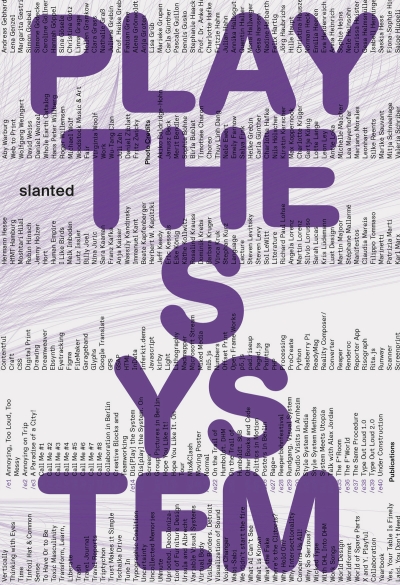
Play the System Cover

Play the System. Parametric Approaches in Graphic Design

In graphic design, the focus is rarely on the spontaneous stroke of genius—it’s rather about a process-oriented approach to design. Digital tools, algorithms, and systems increasingly shape not only the final outcome but also the process itself. As a result, the role of the designer is changing: instead of crafting every detail, they increasingly design the framework in which design emerges.

Over more than twenty years of teaching, Heike Grebin has developed an approach centered on this shift. Its main appeal lies in developing dynamic systems that both guide and inspire the design process. Design is generated by a set of specifications whose effects can be explored, varied, and used creatively—this is parametric design.

Play the System demonstrates, through selected examples from design history and academic teaching, how even minimal changes to individual parameters such as size, color, spacing, or movement—driven by input values, chance, or external influences—lead to different outcomes and open up space for variation, experimentation, and surprise.

Conversations with designers, programmers, and researchers such as Luna Maurer, Anja Groten, Frieder Nake, and Tom Bieling address key questions: How do systems foster—or limit—creativity? How do tools influence aesthetic decisions? And how can design respond to the structures of society itself?

As a hybrid publication, Play the System operates systemically itself. The website ↗ www.play-the-system.xyz  complements the book with additional content and serves as the central data source for all projects published through an automated web-to-print process.

Play the System is a reader, an introduction, and a richly illustrated archive—all in one. Bringing together theory, education, and practice, it makes system-based and parametric design accessible to readers beyond the design discipline.


Heike Grebin (Ed.)
Play the System. Parametric Approaches in Graphic Design
Slanted Publishers, 2026, 978-3-948440-97-8
37,00 €