





Direkt zum Inhalt

Warenkorb

  • gerade nicht auf Lager
    Chantal Mouffe

    Agonistik. Die Welt politisch denken

  • Natalie Czech

    I cannot repeat what I hear

  • gerade nicht auf Lager
    Shundana Yusaf

    Broadcasting Buildings. Architecture on the Wireless, 1927-…

  • Pinar Yoldas

    An Ecosystem of Excess

  • gerade nicht auf Lager
    Matthew Gandy, BJ Nilsen (Eds.)

    The Acoustic City

  • gerade nicht auf Lager
    Jan Svankmajer

    Touching and Imagining. An Introduction to Tactile Art

  • Marc Glöde

    Farbige Lichträume. Manifestationen einer Veränderung des…

  • Olaf Habelmann

    Die Trauben auf deinem Bauch bilden ein Muster

  • gerade nicht auf Lager
    Nick Aikens (Ed.)

    Too Much World. The Films of Hito Steyerl

  • Rachel Mader (Hg.)

    Radikal ambivalent. Engagement und Verantwortung in den…

  • gerade nicht auf Lager
    Adrian von Buttlar, Kerstin Wittmann-…

    Baukunst der Nachkriegsmoderne. Architekturführer Berlin…

  • gerade nicht auf Lager
    Michael Fried

    Warum Photographie als Kunst so bedeutend ist wie nie zuvor

  • gerade nicht auf Lager
    Henri Lefèbvre

    Die Revolution der Städte. La Revolution urbaine

  • Martin Pawley

    Theorie und Gestaltung im Zweiten Maschinenzeitalter

  • gerade nicht auf Lager
    Marketa Uhlirova (Ed.)

    Birds of Paradise. Costume as Cinematic Spectacle

  • Stasis. Academic Journal

    Social and Political Theory. No. 1

  • gerade nicht auf Lager
    Pavlos Lefas

    Architecture. A Historical Perspective

  • gerade nicht auf Lager
    Thomas Girst

    The Duchamp Dictionary

  • gerade nicht auf Lager
    Christopher Dell

    Das Urbane. Wohnen. Leben. Produzieren

  • gerade nicht auf Lager
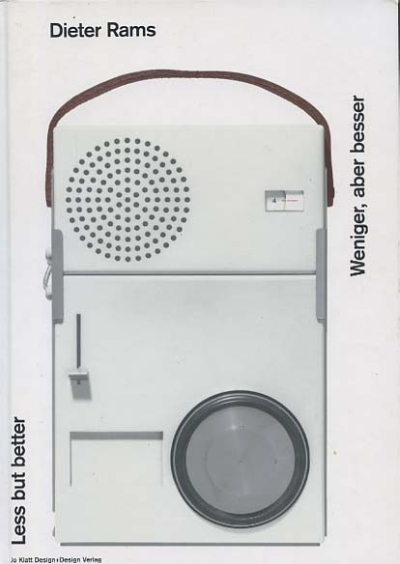
    Dieter Rams

    Less but better. Weniger, aber besser

  • gerade nicht auf Lager
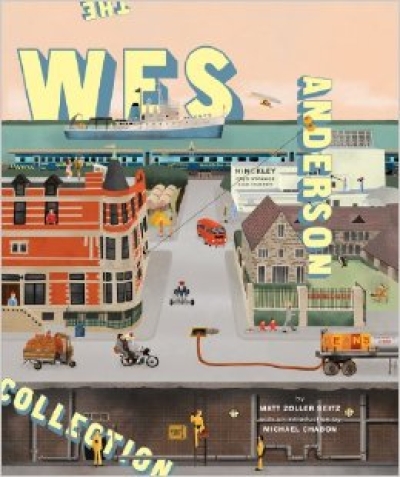
    Matt Zoller Seitz

    The Wes Anderson Collection

  • gerade nicht auf Lager
    Louis Martin (Ed.)

    On Architecture. Melvin Charney, a Critical Anthology

  • gerade nicht auf Lager
    Adaptive Actions

    Heteropolis

  • gerade nicht auf Lager
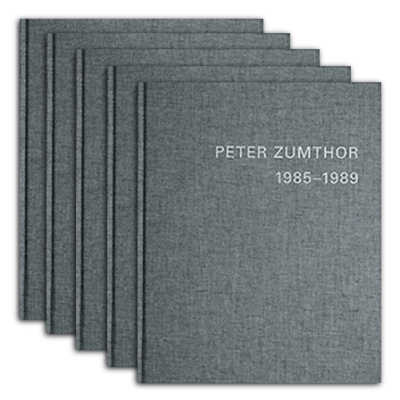
    Thomas Durisch (Hg.)

    Peter Zumthor. 1985–2013

  • Martin Conrads

    Ohne Mich

  • Gertrud Vogler

    La Défense. Métro, boulot, dodo

  • James Nisbet

    Ecologies, Environments, and Energy Systems in Art of the…

  • gerade nicht auf Lager
    October Files 16

    John Knight

  • gerade nicht auf Lager
    Paolo Belardi

    Why Architects Still Draw

  • gerade nicht auf Lager
    Forensic Architecture (Ed.)

    Forensis. The Architecture of Public Truth

  • gerade nicht auf Lager
    Clog 10

    Prisons

  • gerade nicht auf Lager
    Sylvère Lotringer, David Morris (Ed.)

    Schizo-Culture

  • Gilles Rouffineau (Ed.)

    Passing On History. Design Contribution To Knowledge…

  • Jacques Sbriglio

    Le Corbusier et la question du brutalisme. LC au J1

  • Kaja Grobe, Karin Kreuder

    Always the Same Faces. Aus dem Alltag philippinischer…

  • gerade nicht auf Lager
    Christoph Tannert (Hg.)

    Berlin Art Scene

  • gerade nicht auf Lager
    Andreas van Dühren (Hg.)

    TEXT Gespräche

  • Dario Azzellini, Marina Sitrin

    They Can't Represent Us! Reinventing Democracy from…

  • gerade nicht auf Lager
    Valentin Groebner

    Wissenschaftssprache digital. Die Zukunft von gestern

  • gerade nicht auf Lager
    Deyan Sudjic

    B is for Bauhaus. An A-Z of the Modern World

  • gerade nicht auf Lager
    Hans Ulrich Obrist

    Ways of Curating

  • gerade nicht auf Lager
    Nina Möntmann (Ed.)

    Schöne Neue Arbeit / Brave New Work. Ein Reader zu Harun…

  • gerade nicht auf Lager
    Emil Ruder

    Fundamentals

  • gerade nicht auf Lager
    Graham Cairns

    The Architecture of the Screen

  • gerade nicht auf Lager
    Andrej Holm

    Mietenwahnsinn

  • gerade nicht auf Lager
    René Pollesch

    Kill Your Darlings

  • gerade nicht auf Lager
    Helmut Lethen

    Der Schatten des Fotografen

  • gerade nicht auf Lager
    Cathy Lane, Angus Carlyle

    In the Field. The Art of Field Recording

  • gerade nicht auf Lager
    Diedrich Diederichsen

    Über Pop-Musik

  • gerade nicht auf Lager
    Helmut C. Schulitz

    Entfesselung der Architektur. Der Architekt: Baumeister…

  • gerade nicht auf Lager
    Elisabeth Roudinesco

    Lacan. In Spite Of Everything

  • gerade nicht auf Lager
    Claudia Quiring, Andreas Rothaus,…

    Neue Baukunst. Architektur der Moderne in Bild und Buch

  • gerade nicht auf Lager
    Judith Butler, Athena Athanasiou

    Die Macht der Enteigneten. Das Performative im Politischen

  • Matt Mullican

    Editions 1985-2012

  • gerade nicht auf Lager
    Ljiljana Kolešnik (Ed.)

    Socialism and Modernity. Art, Culture, Politics 1950 – 1974

  • Birkenstock, Kastner, Sonderegger (Eds.)

    Kunst und Ideologiekritik nach 1989 / Art and the Critique…

  • Yilmaz Dziewior (Ed.)

    Liebe ist kälter als das Kapital. Love is colder than…

  • gerade nicht auf Lager
    Emmett Williams

    An Anthology of Concrete Poetry

  • gerade nicht auf Lager
    Beatriz Colomina

    Manifesto Architecture. The Ghost of Mies

  • Jens Müller (Ed.)

    Rolf Müller

  • gerade nicht auf Lager
    Gill Perry

    Playing at Home. The House in Contemporary Art

  • gerade nicht auf Lager
    Jennifer A.E. Shields

    Collage and Architecture

  • gerade nicht auf Lager
    Petra Reichensperger (Ed.)

    Begriffe des Ausstellens (von A bis Z). Terms of Exhibiting…

  • gerade nicht auf Lager
    Torsten Blume, Christian Hiller (Hg.)

    Mensch - Raum – Maschine. Bühnenexperimente am Bauhaus

  • Richard Birkett (Ed.)

    and Materials and Money and Crisis

  • gerade nicht auf Lager
    Tactical Technology Collective

    Visualising Information for Advocacy

  • gerade nicht auf Lager
    Emma Lavigne

    Pierre Huyghe

  • IDEA Magazine

    IDEA 362. Poetics of Graphic Language. Contemporary…

  • gerade nicht auf Lager
    Anna Feigenbaum, Fabian Frenzel,…

    Protest Camps

  • Gianni Politi

    The Ritual of the Snake

  • gerade nicht auf Lager
    Andrew Hemingway

    The Mysticism of Money. Precisionist Painting and Machine…

  • gerade nicht auf Lager
    Karl-Siegbert Rehberg, Paul Kaiser (Hg.)

    Bilderstreit und Gesellschaftsumbruch. Die Debatte um die…

  • Neil Brenner (Ed.)

    Implosions / Explosions. Towards a Study of Planetary…

  • gerade nicht auf Lager
    Silke Langenberg (Hrsg.)

    Das Marburger Bausystem. Offenheit als Prinzip

  • gerade nicht auf Lager
    Langley, Pearce, Worth (Ed.)

    After Butler's Wharf. Essays on a Working Building

  • gerade nicht auf Lager
    Sven Völker (Ed.)

    Some Book. Graphic Expressions between Design and Art

  • gerade nicht auf Lager
    Juergen Teller

    Common Ground. In Photographs

  • gerade nicht auf Lager
    Jochen Eisenbrand

    George Nelson. Ein Designer im Kalten Krieg

  • gerade nicht auf Lager
    Joanne Finkelstein

    Fashioning Appetite. Restaurants and the Making of Modern…

  • Gunnar Hindrichs

    Die Autonomie des Klangs - Eine Philosophie der Musik

  • gerade nicht auf Lager
    Juliane Rebentisch

    Theorien der Gegenwartskunst

  • Daniel Irrgang, Clemens Jahn (Hg.)

    Forum zur Genealogie des MedienDenkens II. Siegfried…

  • Texte zur Kunst Heft 92

    Architecture / Architektur

  • Philipp Misselwitz, Eui Young Chun,…

    Gwangju Folly II

  • Aleksandra Mir

    The Space Age. Poster Book

  • Sergio B. Martins

    Constructing an Avant-Garde. Art in Brazil 1949-1979

  • Ali Nemerov, Emily Wei Rales (Eds.)

    Peter Fischli, David Weiss

  • Centrum Architektury (Ed.)

    For Example. New Polish House. A Book

  • gerade nicht auf Lager
    John Grindrod

    Concretopia. A Journey Around the Rebuilding of Postwar…

  • gerade nicht auf Lager
    Grzegorz Piątek

    AR/PS. The Architecture of Arseniusz Romanowicz and Piotr…

  • metroZones 13

    Global Prayers. Contemporary Manifestations of the…

  • gerade nicht auf Lager
    Beatriz Preciado

    Testo Junkie. Sex, Drugs, and Biopolitics in the…

  • Rajan V. Ritoe (Ed.)

    Future Times Square. Compression vs. Distribution

  • Luis Burriel Bielza

    Le Corbusier. La passion des cartes

  • gerade nicht auf Lager
    Douglas Kahn

    Earth Sound Earth Signal

  • Dietmar Offenhuber, Carlo Ratti (Hg.)

    Die Stadt entschlüsseln. Wie Echtzeitdaten den Urbanismus…

  • Dietmar Dath, Swantje Karich

    Lichtmächte. Kino – Museum – Galerie – Öffentlichkeit

  • Yael Bartana

    Wenn Ihr wollt, ist es kein Traum. If you will it, it is…

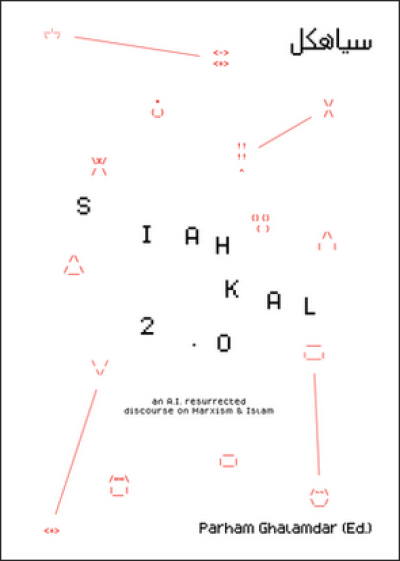
SIAHKAL 2.0: An A.I. resurrected discourse on Marxism & Islam


Siahkal names a place in the forests of Gilan and a threshold in revolutionary time. In 1971 a guerrilla action near Siahkal shook the order of the Shah. The action failed militarily yet seeded a myth for the People’s Fedai Guerrillas. Bizhan Jazani, a founding thinker, wrote and painted in prison and was executed in 1975. His work teaches that strategy rather than sentiment endures. // This book treats Siahkal as a Deep Object, a persistent attractor that gathers memory, images, and tactics. An AI model trained on Jazani’s writings and paintings translates his essay on Islamic Marxism and proposes annotations. The machine functions as a probe that widens attention while remaining accountable to the source. Parham Ghalamdar trained the AI, wrote the introduction, and composed ASCII diagrams and diagrammatic readings from Jazani’s artworks. Parsa Esmaeilzadeh contributes an essay that reads Jazani through Karatani and left accelerationism. // It is a call to reimagine and export revolution as a Deep Object that asks for Deep Time to unfold. This clandestine edition invites the reader to study, test, and build strategy that can outlast the news cycle and meet the future head on.

This is a limited edition book. The author trained an LLM on the texts of a deceased theorist, and then proceeded to interact with the LLM and produce simulations of what the theorist may have said in regards to various pertinent topics. The book is primarily a free online resource, but a few copies are being printed to commemorate the work. It has a foreword and afterword by the Editors.

At the core of this project is a translation of “Marxist Islam or Islamic Marxism,” a groundbreaking text written by Bizhan Jazani during his imprisonment in the 1970s under the Shah’s oppressive regime. Translated by Parham Ghalamdar, this work is accompanied by an introduction contextualizing Jazani’s radical vision. Ghalamdar also contributes a series of ASCII-style illustrations and diagrams—AI-assisted reinterpretations of Jazani’s original paintings and photographs—that bridge the past and present, offering a new perspective on his revolutionary artistry.


About the author
Parham Ghalamdar is a multidisciplinary artist currently based in the UK. Ghalamdar’s work traces forgotten mythologies, buried philosophies, and visual ruins, reconfiguring them into speculative worlds where memory, fiction, and futurism collapse into one another. Drawing on cybernetic theory and generative AI, he explores how systems of feedback, simulation, and machine vision mediate our understanding of history and possibility. Through painting, film, and writing, he builds narratives that feel both ancient and yet-to-come, haunted by lost histories and animated by possible futures.


Siahkal
names a place in the forests of Gilan and a threshold in revolutionary
time. In 1971 a guerrilla action near Siahkal shook the order of the
Shah. The action failed militarily yet seeded a myth for the People’s
Fedai Guerrillas. Bizhan Jazani, a founding thinker, wrote and painted
in prison and was executed in 1975. His work teaches that strategy
rather than sentiment endures. // This book treats Siahkal as a Deep
Object, a persistent attractor that gathers memory, images, and tactics.
An AI model trained on Jazani’s writings and paintings translates his
essay on Islamic Marxism and proposes annotations. The machine functions
as a probe that widens attention while remaining accountable to the
source. Parham Ghalamdar trained the AI, wrote the introduction, and
composed ASCII diagrams and diagrammatic readings from Jazani’s
artworks. Parsa Esmaeilzadeh contributes an essay that reads Jazani
through Karatani and left accelerationism. // It is a call to reimagine
and export revolution as a Deep Object that asks for Deep Time to
unfold. This clandestine edition invites the reader to study, test, and
build strategy that can outlast the news cycle and meet the future head
on.


This is a limited edition book. The author trained an LLM on the texts
of a deceased theorist, and then proceeded to interact with the LLM and
produce simulations of what the theorist may have said in regards to
various pertinent topics. The book is primarily a free online resource,
but a few copies are being printed to commemorate the work. It has a
foreword and afterword by the Editors.


At the core of this project is a translation of “Marxist Islam or
Islamic Marxism,” a groundbreaking text written by Bizhan Jazani during
his imprisonment in the 1970s under the Shah’s oppressive regime.
Translated by Parham Ghalamdar, this work is accompanied by an
introduction contextualizing Jazani’s radical vision. Ghalamdar also
contributes a series of ASCII-style illustrations and
diagrams—AI-assisted reinterpretations of Jazani’s original paintings
and photographs—that bridge the past and present, offering a new
perspective on his revolutionary artistry.


About the author

Parham Ghalamdar is a multidisciplinary artist currently based in the
UK. Ghalamdar’s work traces forgotten mythologies, buried philosophies,
and visual ruins, reconfiguring them into speculative worlds where
memory, fiction, and futurism collapse into one another. Drawing on
cybernetic theory and generative AI, he explores how systems of
feedback, simulation, and machine vision mediate our understanding of
history and possibility. Through painting, film, and writing, he builds
narratives that feel both ancient and yet-to-come, haunted by lost
histories and animated by possible futures.


Siahkal
names a place in the forests of Gilan and a threshold in revolutionary
time. In 1971 a guerrilla action near Siahkal shook the order of the
Shah. The action failed militarily yet seeded a myth for the People’s
Fedai Guerrillas. Bizhan Jazani, a founding thinker, wrote and painted
in prison and was executed in 1975. His work teaches that strategy
rather than sentiment endures. // This book treats Siahkal as a Deep
Object, a persistent attractor that gathers memory, images, and tactics.
An AI model trained on Jazani’s writings and paintings translates his
essay on Islamic Marxism and proposes annotations. The machine functions
as a probe that widens attention while remaining accountable to the
source. Parham Ghalamdar trained the AI, wrote the introduction, and
composed ASCII diagrams and diagrammatic readings from Jazani’s
artworks. Parsa Esmaeilzadeh contributes an essay that reads Jazani
through Karatani and left accelerationism. // It is a call to reimagine
and export revolution as a Deep Object that asks for Deep Time to
unfold. This clandestine edition invites the reader to study, test, and
build strategy that can outlast the news cycle and meet the future head
on.


This is a limited edition book. The author trained an LLM on the texts
of a deceased theorist, and then proceeded to interact with the LLM and
produce simulations of what the theorist may have said in regards to
various pertinent topics. The book is primarily a free online resource,
but a few copies are being printed to commemorate the work. It has a
foreword and afterword by the Editors.


At the core of this project is a translation of “Marxist Islam or
Islamic Marxism,” a groundbreaking text written by Bizhan Jazani during
his imprisonment in the 1970s under the Shah’s oppressive regime.
Translated by Parham Ghalamdar, this work is accompanied by an
introduction contextualizing Jazani’s radical vision. Ghalamdar also
contributes a series of ASCII-style illustrations and
diagrams—AI-assisted reinterpretations of Jazani’s original paintings
and photographs—that bridge the past and present, offering a new
perspective on his revolutionary artistry.


About the author

Parham Ghalamdar is a multidisciplinary artist currently based in the
UK. Ghalamdar’s work traces forgotten mythologies, buried philosophies,
and visual ruins, reconfiguring them into speculative worlds where
memory, fiction, and futurism collapse into one another. Drawing on
cybernetic theory and generative AI, he explores how systems of
feedback, simulation, and machine vision mediate our understanding of
history and possibility. Through painting, film, and writing, he builds
narratives that feel both ancient and yet-to-come, haunted by lost
histories and animated by possible futures.


Siahkal names a place in the forests of Gilan and a threshold in revolutionary time. In 1971 a guerrilla action near Siahkal shook the order of the Shah. The action failed militarily yet seeded a myth for the People’s Fedai Guerrillas. Bizhan Jazani, a founding thinker, wrote and painted in prison and was executed in 1975. His work teaches that strategy rather than sentiment endures. // This book treats Siahkal as a Deep Object, a persistent attractor that gathers memory, images, and tactics. An AI model trained on Jazani’s writings and paintings translates his essay on Islamic Marxism and proposes annotations. The machine functions as a probe that widens attention while remaining accountable to the source. Parham Ghalamdar trained the AI, wrote the introduction, and composed ASCII diagrams and diagrammatic readings from Jazani’s artworks. Parsa Esmaeilzadeh contributes an essay that reads Jazani through Karatani and left accelerationism. // It is a call to reimagine and export revolution as a Deep Object that asks for Deep Time to unfold. This clandestine edition invites the reader to study, test, and build strategy that can outlast the news cycle and meet the future head on.

This is a limited edition book. The author trained an LLM on the texts of a deceased theorist, and then proceeded to interact with the LLM and produce simulations of what the theorist may have said in regards to various pertinent topics. The book is primarily a free online resource, but a few copies are being printed to commemorate the work. It has a foreword and afterword by the Editors. 

At the core of this project is a translation of “Marxist Islam or Islamic Marxism,” a groundbreaking text written by Bizhan Jazani during his imprisonment in the 1970s under the Shah’s oppressive regime. Translated by Parham Ghalamdar, this work is accompanied by an introduction contextualizing Jazani’s radical vision. Ghalamdar also contributes a series of ASCII-style illustrations and diagrams—AI-assisted reinterpretations of Jazani’s original paintings and photographs—that bridge the past and present, offering a new perspective on his revolutionary artistry.


“Bizhan Jazani”, Parham Ghalamdar
SIAHKAL 2.0: An A.I. resurrected discourse on Marxism & Islam
Becoming Press, 2025, 978-9925-8207-7-1
15,00 €