






Direkt zum Inhalt

Warenkorb

  • gerade nicht auf Lager
    Marin Kosut

    Art Monster. On the Possibility of New York

  • gerade nicht auf Lager
    Michael Taussig

    And the Garden is You. Essays on Fieldwork, Writingwork,…

  • gerade nicht auf Lager
    Gavin Steingo

    Interspecies Communication. Sound and Music beyond Humanity

  • Cache

    Shadow of the Tree. Cache 03

  • Robert Leucht

    Der Ingenieur. Grammatik eines Hoffnungsträgers

  • Eyal Weizman, Ines Weizman

    Vorher & Nachher. Die Architektur der Katastrophe

  • Stefan Wolski

    Die Berliner Reklame Gesellschaft.

  • gerade nicht auf Lager
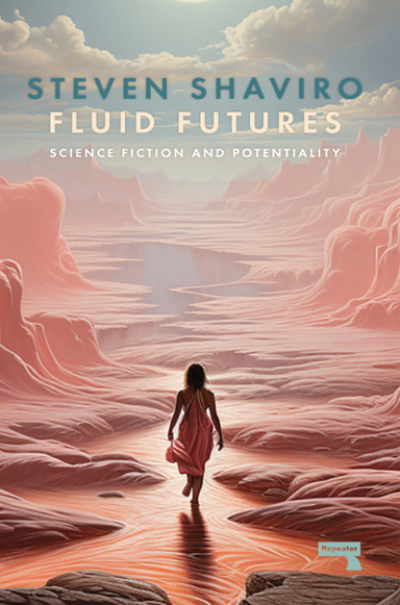
    Steven Shaviro

    Fluid Futures. Science Fiction and Potentiality

  • gerade nicht auf Lager
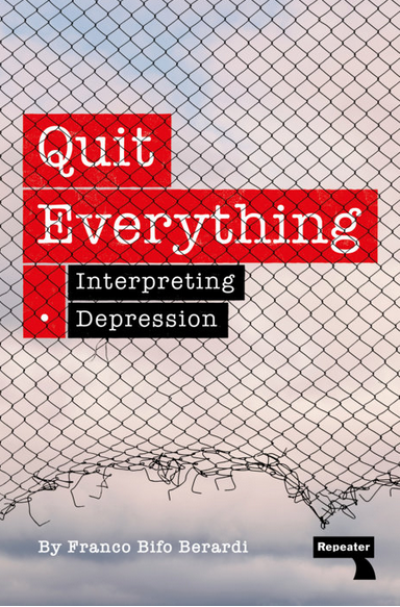
    Franco Berardi

    Quit Everything. Interpreting Depression

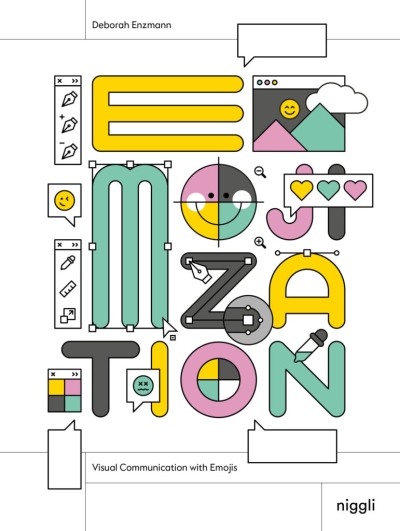
  • Deborah Enzmann

    Emojization. Visual Communication with Emojis

  • Adam Kraft

    Key Notes on the Unruly City. Social, Material, and Spatial…

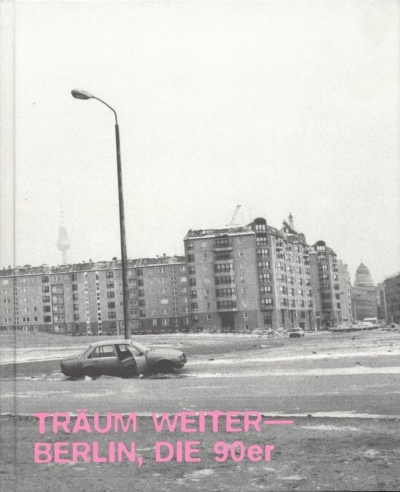
  • Boaz Levin, C/O Berlin Foundation,…

    Träum Weiter - Berlin, die 90er

  • gerade nicht auf Lager
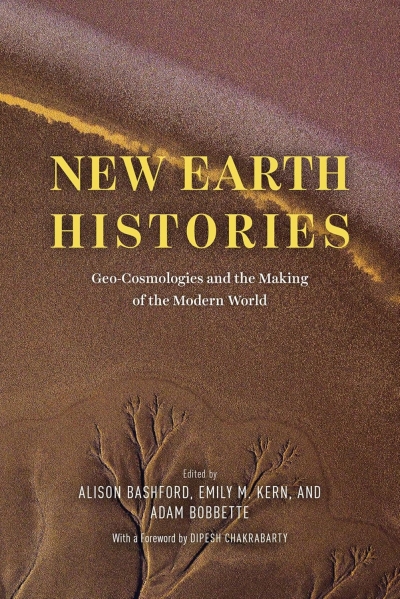
    Alison Bashford, Emily M. Kern, Adam…

    New Earth Histories. Geo-Cosmologies and the Making of the…

  • gerade nicht auf Lager
    Timothy Morton

    Hell. In Search of a Christian Ecology

  • gerade nicht auf Lager
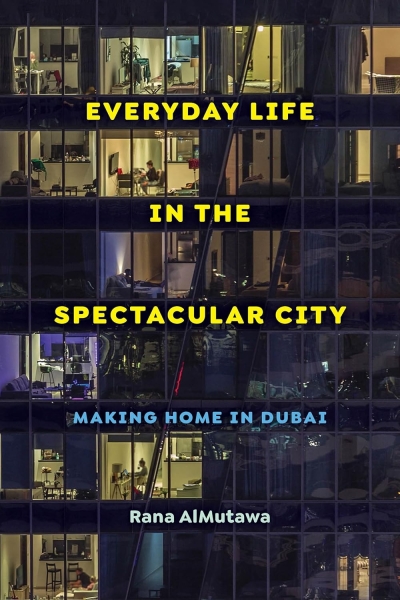
    Rana AlMutawa

    Everyday Life in the Spectacular City. Making Home in Dubai

  • gerade nicht auf Lager
    Liliana Doganova

    Discounting the Future: The Ascendancy of a Political…

  • Richard E. Ocejo

    Sixty Miles Upriver. Gentrification and Race in a Small…

  • gerade nicht auf Lager
    Angus Carlyle, Cathy Lane

    On Listening

  • Jacobin

    Jacobin #17. Künstliche Intelligenz

  • Tom Holert (Hg.)

    Pierre Bourdieu. Fragen zur Kunst für und mit Studierenden…

  • Lauren Wager, Sophia Naureen Ahmad

    Fashion Palettes. Color Inspiration, Meaning & Mood

  • gerade nicht auf Lager
    Stavros Stavrides

    The Politics of Urban Potentiality. Spatial Patterns of…

  • gerade nicht auf Lager
    Ilya Zdanevich

    Ilya Zdanevich - Iliazd. Berlin Khaltura 1922

  • gerade nicht auf Lager
    Dominique Gauzin-Müller, Anna Heringer

    Anna Heringer. Form Follows Love. Intuitiv bauen - von…

  • Dennis Brzek, Junia Thiede

    In Medias Res #1: Histories Read Across

  • Dennis Brzek, Junia Thiede, Julian…

    In Medias Res #2: Architecture in Motion

  • Dennis Brzek, Junia Thiede

    In Medias Res #3: Postproductions

  • Angela McRobbie (Ed.)

    Ulrike Ottinger. Film, Art and the Ethnographic Imagination

  • gerade nicht auf Lager
    Ulysses Voelker, Michael Schmitz

    Was Kommunikationsdesign kann. Prinzipien, Inspirationen,…

  • Ultra Studio

    Landscape Goes Domestic. Ultra Studio

  • e-flux

    e-flux Index #2

  • gerade nicht auf Lager
    Matteo Pasquinelli

    Das Auge des Meisters. Eine Sozialgeschichte Künstlicher…

  • Kathryn Yusoff

    Geologic Life. Inhuman Intimacies and the Geophysics of Race

  • Nuraini Juliastuti

    Commons Museums. Pedagogies for Taking Ownership of What is…

  • Adam Greenfield

    Lifehouse. Taking Care of Ourselves in a World on Fire

  • gerade nicht auf Lager
    Moises Puente (Ed.)

    Classroom, a teenage view

  • Ulrich Bröckling, Susanne Krasmann und…

    Glossar der Gegenwart 2.0

  • gerade nicht auf Lager
    Jean-Baptiste Fressoz

    Happy Apocalypse. A History of Technological Risk

  • gerade nicht auf Lager
    Tim Anstey

    Things That Move. A Hinterland in Architectural History

  • Christophe Van Gerrewey

    Something Completely Different. Architecture in Belgium

  • Alma d'Aigle

    Ein Garten

  • Jens Balzer

    After Woke

  • gerade nicht auf Lager
    Gustav Magnusson

    Keynote Conversations. 100 Interviews for Reinventing the…

  • gerade nicht auf Lager
    DEMOGO studio di architettura

    DEMOGO. Architecture and projects in complex contexts.

  • gerade nicht auf Lager
    Susan Buck-Morss, Kevin McCaughey, Adam…

    Seeing <—> Making. Room for Thought

  • Maurice Nio

    The Suspense of Architecture. The Necessity to Shine

  • gerade nicht auf Lager
    Labor für die alltägliche Stadt,…

    TOUCH.01 Tactics of Urban Change.01 | Kollaboratives Wohnen

  • gerade nicht auf Lager
    Reinhold Martin, Claire Zimmerman (eds…

    Architecture against Democracy. Histories of the…

  • gerade nicht auf Lager
    Anna Lowenhaupt Tsing, Jennifer Deger…

    Field Guide to the Patchy Anthropocene. The New Nature

  • Marouane Ben Belfort, WIP Office

    Nuykuln. Berlin's quarter and its Arab and Turkish…

  • Laurenz Berger, Barbara Weber

    Zukunft Bestand. Ökosoziale Transformation von…

  • Nitin Bathla (Ed.)

    Researching Otherwise. Pluriversal Methodologies for…

  • Carolin Genz, Olaf Schnur, Jürgen Aring…

    WohnWissen. 100 Begriffe des Wohnens

  • gerade nicht auf Lager
    Richard Evans

    Listening to the Music the Machines Make. Inventing…

  • Anna Beckers, Gunther Teubner

    Digitale Aktanten, Hybride, Schwärme. Drei Haftungsregime…

  • gerade nicht auf Lager
    Justine Blau

    Justine Blau. Veil of Nature

  • Eduarda Neves

    Minor Bestiary. Time and Labyrinth in Contemporary Art

  • gerade nicht auf Lager
    Kirsten Angermann, Hans-Rudolf Meier,…

    Denkmal Postmoderne. Bestände einer (un)geliebten Epoche

  • Arch+ Zeitschrift für Architektur und…

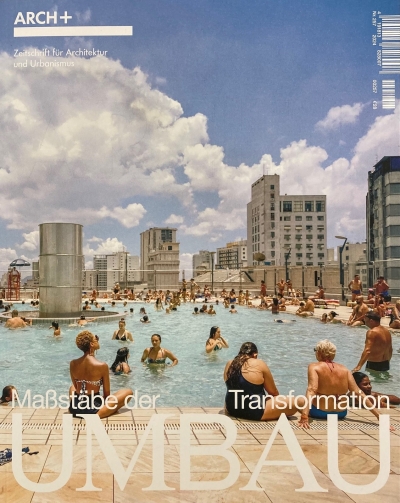
    Arch+ 256. Umbau. Ansätze der Transformation

  • Martino Gamper

    100 Chairs in 100 Days and its 100 Ways

  • gerade nicht auf Lager
    Olivia Broome

    Brutalist Plants

  • gerade nicht auf Lager
    Lucy Lippard

    I See / You Mean. A Novel

  • Ruth Catlow, Penny Rafferty (eds.)

    Radical Friends. Decentralised Autonomous Organisations and…

  • Loretta Napoleoni

    Technocapitalism. The Rise of the New Robber Barons and the…

  • Ruth Buchanan, Fiona McGovern

    Scores for Transformation (A conversation). Ruth Buchanan,…

  • Carey Jewitt, Sara Price

    Digital Touch

  • Mark Coeckelbergh

    Why AI Undermines Democracy and What To Do About It

  • gerade nicht auf Lager
    Peter Godfrey-Smith

    Metazoa. Die Geburt des Geistes aus dem Leben der Tiere

  • Fanny Chiarello

    Basta Now. Women, Trans & Non-binary in Experimental…

  • gerade nicht auf Lager
    &beyond collective for Theatrum…

    Sonic Urbanism: Listening to Non-Human Life

  • gerade nicht auf Lager
    Croatian Architects' Association

    Designing in Coexistence - Reflections on Systemic Change

  • gerade nicht auf Lager
    Anastasia Khodyreva, Elina Suoyrjö

    Aquatic Encounters. A Glossary of Hydrofeminisms

  • gerade nicht auf Lager
    Yancey Strickler, The Dark Forest…

    The Dark Forest Anthology of the Internet

  • Alexander Kluge

    Der Konjunktiv der Bilder. Meine Virtuelle Kamera (K.I.)

  • gerade nicht auf Lager
    Sara Zeller, Evelyn Steiner (Hg.)

    Design für Alle? Inklusive Gestaltung heute

  • Arturo Escobar, Michal Osterweil, Kriti…

    Relationality. An Emergent Politics of Life Beyond the Human

  • gerade nicht auf Lager
    Kim Dovey et. al.

    Atlas of Informal Settlement. Understanding Self-Organized…

  • gerade nicht auf Lager
    Claire Bishop

    Disordered Attention. How We Look at Art and Performance…

  • gerade nicht auf Lager
    Philip Widmann

    Film Undone – Elements of a Latent Cinema

  • McKenzie Wark

    Raven

  • gerade nicht auf Lager
    Aruna D’Souza

    Imperfect Solidarities

  • gerade nicht auf Lager
    Gerry Leonidas (Ed.)

    Designing type revivals. Handbook for a historical approach…

  • Jochen Becker, Anna Schäffler, Simon…

    Glossar Urbane Praxis. Auf dem Weg zu einem Mannifest /…

  • gerade nicht auf Lager
    Cyril Béghin (Ed.)

    Chantal Akerman. Oeuvre écrite et parlée

  • Hansjörg Gadient

    Spielraum. Kindergerechte Freiräume planen und bauen

  • Diamond Schmitt Architects

    Set Pieces. Architecture for the Performing Arts in Fifteen…

  • Roberto Gargiani, ed.

    Simple Architecture: Villa Baizeau in Carthage by Le…

  • gerade nicht auf Lager
    Leonhard Laupichler, Sophia Brinkgerd (…

    New Aesthetic 1. A Collection of Experimental and…

  • gerade nicht auf Lager
    Martin Mosch

    Die typografische Komposition

  • Vera Egbers, Christa Kamleithner, Özge…

    Architectures of Colonialism

  • Anna-Maria Meister, Teresa Fankhänel,…

    Are You a Model? On an Architectural Medium of Spatial…

  • Gilbert Simondon, Emmanuel Alloa (Hg.)

    Imagination und Invention

  • Philipp Schönthaler

    Wie rationale Maschinen romantisch wurden

  • Artemy Magun

    The Temptation of Non-Being: Negativity in Aesthetics

  • Nicolas Uphaus

    Frei. Selbstständig arbeiten als Designer (2. überarb.…

  • Anne Querrien, Brigitta Kuster (Hg.)

    Maschinen | Gefüge | Karten

  • Sabine Nuss

    Wessen Freiheit, welche Gleichheit? Das Versprechen einer…

  • gerade nicht auf Lager
    Legacy Russell

    Black Meme. A History of The Images That Make Us

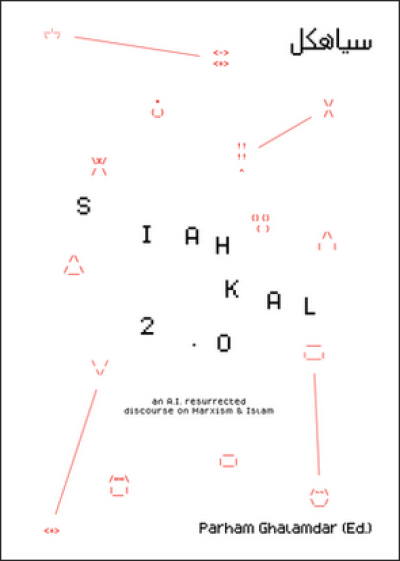
SIAHKAL 2.0: An A.I. resurrected discourse on Marxism & Islam


Siahkal names a place in the forests of Gilan and a threshold in revolutionary time. In 1971 a guerrilla action near Siahkal shook the order of the Shah. The action failed militarily yet seeded a myth for the People’s Fedai Guerrillas. Bizhan Jazani, a founding thinker, wrote and painted in prison and was executed in 1975. His work teaches that strategy rather than sentiment endures. // This book treats Siahkal as a Deep Object, a persistent attractor that gathers memory, images, and tactics. An AI model trained on Jazani’s writings and paintings translates his essay on Islamic Marxism and proposes annotations. The machine functions as a probe that widens attention while remaining accountable to the source. Parham Ghalamdar trained the AI, wrote the introduction, and composed ASCII diagrams and diagrammatic readings from Jazani’s artworks. Parsa Esmaeilzadeh contributes an essay that reads Jazani through Karatani and left accelerationism. // It is a call to reimagine and export revolution as a Deep Object that asks for Deep Time to unfold. This clandestine edition invites the reader to study, test, and build strategy that can outlast the news cycle and meet the future head on.

This is a limited edition book. The author trained an LLM on the texts of a deceased theorist, and then proceeded to interact with the LLM and produce simulations of what the theorist may have said in regards to various pertinent topics. The book is primarily a free online resource, but a few copies are being printed to commemorate the work. It has a foreword and afterword by the Editors.

At the core of this project is a translation of “Marxist Islam or Islamic Marxism,” a groundbreaking text written by Bizhan Jazani during his imprisonment in the 1970s under the Shah’s oppressive regime. Translated by Parham Ghalamdar, this work is accompanied by an introduction contextualizing Jazani’s radical vision. Ghalamdar also contributes a series of ASCII-style illustrations and diagrams—AI-assisted reinterpretations of Jazani’s original paintings and photographs—that bridge the past and present, offering a new perspective on his revolutionary artistry.


About the author
Parham Ghalamdar is a multidisciplinary artist currently based in the UK. Ghalamdar’s work traces forgotten mythologies, buried philosophies, and visual ruins, reconfiguring them into speculative worlds where memory, fiction, and futurism collapse into one another. Drawing on cybernetic theory and generative AI, he explores how systems of feedback, simulation, and machine vision mediate our understanding of history and possibility. Through painting, film, and writing, he builds narratives that feel both ancient and yet-to-come, haunted by lost histories and animated by possible futures.


Siahkal
names a place in the forests of Gilan and a threshold in revolutionary
time. In 1971 a guerrilla action near Siahkal shook the order of the
Shah. The action failed militarily yet seeded a myth for the People’s
Fedai Guerrillas. Bizhan Jazani, a founding thinker, wrote and painted
in prison and was executed in 1975. His work teaches that strategy
rather than sentiment endures. // This book treats Siahkal as a Deep
Object, a persistent attractor that gathers memory, images, and tactics.
An AI model trained on Jazani’s writings and paintings translates his
essay on Islamic Marxism and proposes annotations. The machine functions
as a probe that widens attention while remaining accountable to the
source. Parham Ghalamdar trained the AI, wrote the introduction, and
composed ASCII diagrams and diagrammatic readings from Jazani’s
artworks. Parsa Esmaeilzadeh contributes an essay that reads Jazani
through Karatani and left accelerationism. // It is a call to reimagine
and export revolution as a Deep Object that asks for Deep Time to
unfold. This clandestine edition invites the reader to study, test, and
build strategy that can outlast the news cycle and meet the future head
on.


This is a limited edition book. The author trained an LLM on the texts
of a deceased theorist, and then proceeded to interact with the LLM and
produce simulations of what the theorist may have said in regards to
various pertinent topics. The book is primarily a free online resource,
but a few copies are being printed to commemorate the work. It has a
foreword and afterword by the Editors.


At the core of this project is a translation of “Marxist Islam or
Islamic Marxism,” a groundbreaking text written by Bizhan Jazani during
his imprisonment in the 1970s under the Shah’s oppressive regime.
Translated by Parham Ghalamdar, this work is accompanied by an
introduction contextualizing Jazani’s radical vision. Ghalamdar also
contributes a series of ASCII-style illustrations and
diagrams—AI-assisted reinterpretations of Jazani’s original paintings
and photographs—that bridge the past and present, offering a new
perspective on his revolutionary artistry.


About the author

Parham Ghalamdar is a multidisciplinary artist currently based in the
UK. Ghalamdar’s work traces forgotten mythologies, buried philosophies,
and visual ruins, reconfiguring them into speculative worlds where
memory, fiction, and futurism collapse into one another. Drawing on
cybernetic theory and generative AI, he explores how systems of
feedback, simulation, and machine vision mediate our understanding of
history and possibility. Through painting, film, and writing, he builds
narratives that feel both ancient and yet-to-come, haunted by lost
histories and animated by possible futures.


Siahkal
names a place in the forests of Gilan and a threshold in revolutionary
time. In 1971 a guerrilla action near Siahkal shook the order of the
Shah. The action failed militarily yet seeded a myth for the People’s
Fedai Guerrillas. Bizhan Jazani, a founding thinker, wrote and painted
in prison and was executed in 1975. His work teaches that strategy
rather than sentiment endures. // This book treats Siahkal as a Deep
Object, a persistent attractor that gathers memory, images, and tactics.
An AI model trained on Jazani’s writings and paintings translates his
essay on Islamic Marxism and proposes annotations. The machine functions
as a probe that widens attention while remaining accountable to the
source. Parham Ghalamdar trained the AI, wrote the introduction, and
composed ASCII diagrams and diagrammatic readings from Jazani’s
artworks. Parsa Esmaeilzadeh contributes an essay that reads Jazani
through Karatani and left accelerationism. // It is a call to reimagine
and export revolution as a Deep Object that asks for Deep Time to
unfold. This clandestine edition invites the reader to study, test, and
build strategy that can outlast the news cycle and meet the future head
on.


This is a limited edition book. The author trained an LLM on the texts
of a deceased theorist, and then proceeded to interact with the LLM and
produce simulations of what the theorist may have said in regards to
various pertinent topics. The book is primarily a free online resource,
but a few copies are being printed to commemorate the work. It has a
foreword and afterword by the Editors.


At the core of this project is a translation of “Marxist Islam or
Islamic Marxism,” a groundbreaking text written by Bizhan Jazani during
his imprisonment in the 1970s under the Shah’s oppressive regime.
Translated by Parham Ghalamdar, this work is accompanied by an
introduction contextualizing Jazani’s radical vision. Ghalamdar also
contributes a series of ASCII-style illustrations and
diagrams—AI-assisted reinterpretations of Jazani’s original paintings
and photographs—that bridge the past and present, offering a new
perspective on his revolutionary artistry.


About the author

Parham Ghalamdar is a multidisciplinary artist currently based in the
UK. Ghalamdar’s work traces forgotten mythologies, buried philosophies,
and visual ruins, reconfiguring them into speculative worlds where
memory, fiction, and futurism collapse into one another. Drawing on
cybernetic theory and generative AI, he explores how systems of
feedback, simulation, and machine vision mediate our understanding of
history and possibility. Through painting, film, and writing, he builds
narratives that feel both ancient and yet-to-come, haunted by lost
histories and animated by possible futures.


Siahkal names a place in the forests of Gilan and a threshold in revolutionary time. In 1971 a guerrilla action near Siahkal shook the order of the Shah. The action failed militarily yet seeded a myth for the People’s Fedai Guerrillas. Bizhan Jazani, a founding thinker, wrote and painted in prison and was executed in 1975. His work teaches that strategy rather than sentiment endures. // This book treats Siahkal as a Deep Object, a persistent attractor that gathers memory, images, and tactics. An AI model trained on Jazani’s writings and paintings translates his essay on Islamic Marxism and proposes annotations. The machine functions as a probe that widens attention while remaining accountable to the source. Parham Ghalamdar trained the AI, wrote the introduction, and composed ASCII diagrams and diagrammatic readings from Jazani’s artworks. Parsa Esmaeilzadeh contributes an essay that reads Jazani through Karatani and left accelerationism. // It is a call to reimagine and export revolution as a Deep Object that asks for Deep Time to unfold. This clandestine edition invites the reader to study, test, and build strategy that can outlast the news cycle and meet the future head on.

This is a limited edition book. The author trained an LLM on the texts of a deceased theorist, and then proceeded to interact with the LLM and produce simulations of what the theorist may have said in regards to various pertinent topics. The book is primarily a free online resource, but a few copies are being printed to commemorate the work. It has a foreword and afterword by the Editors. 

At the core of this project is a translation of “Marxist Islam or Islamic Marxism,” a groundbreaking text written by Bizhan Jazani during his imprisonment in the 1970s under the Shah’s oppressive regime. Translated by Parham Ghalamdar, this work is accompanied by an introduction contextualizing Jazani’s radical vision. Ghalamdar also contributes a series of ASCII-style illustrations and diagrams—AI-assisted reinterpretations of Jazani’s original paintings and photographs—that bridge the past and present, offering a new perspective on his revolutionary artistry.


“Bizhan Jazani”, Parham Ghalamdar
SIAHKAL 2.0: An A.I. resurrected discourse on Marxism & Islam
Becoming Press, 2025, 978-9925-8207-7-1
15,00 €