Direkt zum Inhalt

Warenkorb

  • Arch+ Zeitschrift für Architektur und…

    Arch+ 253. The Great Repair. Praktiken der Reparatur / A…

  • dérive

    dérive N° 92/93, Urban Commons (Okt-Dez 2023)
  • Deborah Enzmann

    Emojisierung. Eine historische und semiotische Studie zu…

  • Nina Möntmann

    Decentring the Museum: Contemporary Art Institutions and…

  • gerade nicht auf Lager
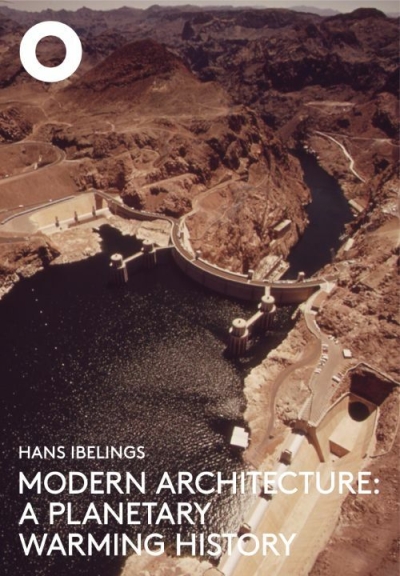
    Hans Ibelings

    Modern Architecture: A Planetary Warming History

  • Monique Wittig

    Das straighte Denken

  • gerade nicht auf Lager
    Amber Husain

    Meat Love. An Ideology of the Flesh

  • Moritz Gleich, Christa Kamleithner (Hg.)

    Medium unter Medien. Architektur und die Produktion…

  • gerade nicht auf Lager
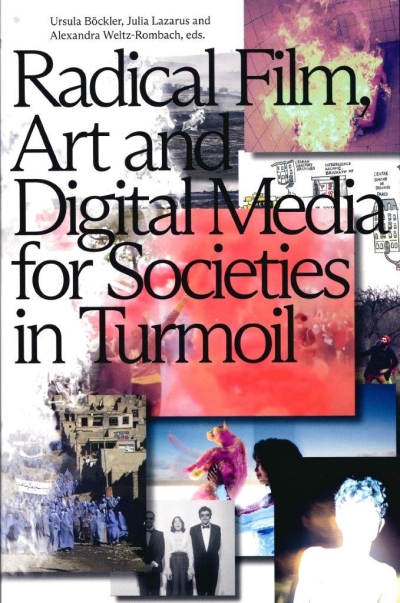
    Ursula Böckler, Julia Lazarus &…

    Radical Film, Art and Digital Media for Societies in Turmoil

  • gerade nicht auf Lager
    Kuukuwa Manful, Emmanuel Ofori-Sarpong…

    Building African Futures. 10 Manifestos for Transformative…

  • Fareed Armaly

    The (re)Orient

  • Valerio Calavetta, Peter Hoffmann

    Sortenrein Bauen - Methode, Material, Konstruktion

  • Umut Yıldırım (ed)

    War-torn Ecologies, An-Archic Fragments. Reflections from…

  • gerade nicht auf Lager
    Chang Wen-Hsuan

    Xsport On Paper. Samplings of Publishing Practices from the…

  • gerade nicht auf Lager
    Rich Pell

    This is not an Artifact. Selections from the Center of…

  • Armen Avanessian

    Flüchtigkeitsmanagement

  • gerade nicht auf Lager
    Florian Strob, Karoline Lemke, Uli…

    Ludwig Hilberseimer: Die neue Stadt. Prinzipien der Planung

  • gerade nicht auf Lager
    Jae Kyung Kim, Anna Schanowski (eds)

    How to Book in Berlin

  • Keith Tan Kay Hin, Nurul Alia Ahamad (…

    Kedah: A History In Drawings

  • Suffian Shahabuddin

    61X Appeal to Read Between the Sheets

  • gerade nicht auf Lager
    Camelia Kusumo, Lee Sze-Ee

    Kaki Lima Stories.

  • Clarissa Lim Kye Lee (ed)

    Small Practices : In Conversation with Malaysian and…

  • Nazmi Anuar

    Background, Frame, Platform

  • gerade nicht auf Lager
    Louis Rogers (Hg)

    Upper Lawn, Solar Pavilion. Alison & Peter Smithson

  • Bojana Kunst

    Das Leben der Kunst. Transversale Linien der Sorge

  • gerade nicht auf Lager
    Jule Govrin

    Begehrenswert. Erotisches Kapital und Authentizität als Ware

  • gerade nicht auf Lager
    Isabell Otto

    TikTok (Digitale Bildkulturen)

  • Eran Schaerf

    Gesammeltes Deutsch

  • El Croquis 222. David Chipperfield (2015 - 2023) Selected…

  • gerade nicht auf Lager
    Tom Holert, Doreen Mende (Hg)

    Navigation Beyond Vision. e-flux journal

  • gerade nicht auf Lager
    Nils Bubandt, Astrid Oberborbeck…

    Rubber Boots Methods for the Anthropocene: Doing Fieldwork…

  • Antonio Castore, Federico Dal Bo (eds.)

    Untying the Mother Tongue

  • Carsten Lisecki

    Carsten Lisecki. Urbane Handlungsspielräume

  • gerade nicht auf Lager
    Elizabeth Duval

    Nach Trans. Sex, Gender und die Linke

  • gerade nicht auf Lager
    Lydia Zinovieva-Annibal

    Thirty-Three Monsters

  • Oliver Elser, Anna-Maria Mayerhofer,…

    Protestarchitektur. Barrikaden, Camps, raumgreifende…

  • Laura Gardner, Daphne Mohajer va…

    Radical Fashion Exercises. A Workbook of Modes and Methods

  • gerade nicht auf Lager
    IDEA Magazine

    IDEA 403. Typeface design for the voice of the world: The…

  • Lorenzo De Chiffre, Benni Eder, Theresa…

    Hollein Calling. Architectural Dialogues

  • Masure, Anthony

    Manifestes 5. Artificial Design: Creation Versus Machine…

  • gerade nicht auf Lager
    Ahmed Abdullah

    A Strange Celestial Road: My Time in the Sun Ra Arkestra

  • Mike Laufenberg, Ben Trott (Hg)

    Queer Studies. Schlüsseltexte

  • gerade nicht auf Lager
    Josef Albers (Autor), Heinz Liesbrock (…

    Josef Albers. Interaction of Color. Grundlegung einer…

  • gerade nicht auf Lager
    Paperside Editorial Culture

    Bookshop Guide. Independent Publishing Culture Spots

  • Nigel Cottier

    Letterform Variations. Playful Study into Letterform…

  • gerade nicht auf Lager
    Sven Lütticken

    Objections. Forms of Abstraction, Volume 1

  • Christoph Brunner, Grit Marti Lange,…

    Technopolitiken der Sorge

  • Jean-Louis Cohen

    Building a new New World. Amerikanizm in Russian…

  • gerade nicht auf Lager
    Gerda Breuer

    HerStories in Graphic Design

  • Tanja C. Vollmer, Andres Lepik (Hg.)

    Das Kranke(n)haus. Wie Architektur heilen hilft

  • gerade nicht auf Lager
    Marc Bonner

    Offene-Welt-Strukturen. Architektur, Stadt- und…

  • Matthew Beaumont

    The Walker. Die Stadt, die Moderne und ihre Fußgänger

  • gerade nicht auf Lager
    Harald Kisiedu and George E. Lewis (Hg.)

    Composing While Black

  • Dynamische Akustische Forschung

    Walking in Cinematic Close-Ups

  • gerade nicht auf Lager
    Alec Leach

    The World Is On Fire But We’re Still Buying Shoes

  • Eckhardt Ribbeck

    Stadtläufer. Reiseerinnerungen 1970 - 2010

  • gerade nicht auf Lager
    Yves Dreier, Eik Frenzel (Hg.)

    Social Loft. Auf der Suche nach neuen Wohnformen / En quete…

  • Stiftung Bauhaus Dessau (Hg)

    Doors of Learning. Microcosms of a Future South Africa.…

  • Dorothee Richter

    Curating: Politics of Display, Politics of Site, Politics…

  • Ciarán Finlayson

    Perpetual Slavery. Ciarán Finlayson

  • gerade nicht auf Lager
    Marie-France Rafael

    Raphaela Vogel. Outside Form

  • Irma Leinauer

    Magistrale der Moderne. Das Wohngebiet an der Karl-Marx-…

  • gerade nicht auf Lager
    Moisés Puente (Hg)

    2G 89. BAST

  • Kenya Hara (Ed.)

    Cleaning

  • Graphicabulary - MAKERMAKER

    Closing Ceremony. Hilton Seoul 1983 - 2022

  • Sunny Kerr (ed.)

    Drift. Art and Dark Matter

  • gerade nicht auf Lager
    Helen Hester, Nick Srnicek

    After Work: A History of the Home and the Fight for Free…

  • Claudia Kromrei

    Postmodern Non-Residential Berlin

  • Hanne Eide, Krisitian Wikborg Wiese,…

    Formafantasma: Oltre Terra. Why Wool Matters

  • gerade nicht auf Lager
    Moises Puent (Ed.)

    Flores & Prats. Drawing without Erasing and Other Essays

  • Gerrie van Noord, Paul O'Neill,…

    Kathrin Böhm. Art on the Scale of Life

  • gerade nicht auf Lager
    Philipp Dietachmair, Pascal Gielen,…

    Sensing Earth. Cultural Quests across a Heated Globe

  • gerade nicht auf Lager
    Bas Hendrikx (Ed.)

    Queer Exhibition Histories

  • Simon Reynolds

    Futuromania. Elektronische Träume von der Zukunft

  • Brianne Cohen

    Don't Look Away. Art, Nonviolence, and Preventive…

  • Christopher Dell

    Raum und Handlung. Raumtheorien des Städtischen

  • Sebastián Eduardo Dávila, Rebecca Hanna…

    On Withdrawal

  • Carine Zaayman

    Anarchival Practices. The Clanwilliam Arts Project as Re-…

  • gerade nicht auf Lager
    Michael Obrist, Antonietta Putzu (Eds)

    The Last Grand Tour. Contemporary Phenomena and Strategies…

  • dérive

    dérive N° 91, Tech Urbanismus (Jul-Sept/2023)

  • Thomas Kissling (Hg.)

    Lucius Burckhardt. Anthologie Landschaft

  • gerade nicht auf Lager
    Gary Tomlinson

    The Machines of Evolution and the Scope of Meaning

  • gerade nicht auf Lager
    David Joselit

    Art's Properties

  • gerade nicht auf Lager
    Enzo Traverso

    Singular Pasts. The "I" in Historiography

  • Felix Dreesen, Stephan Thierbach

    Treibgut

  • gerade nicht auf Lager
    Andres Kurg, Mari Laanemets

    Forecast and Fantasy. Architecture without Border, 1960s -…

  • gerade nicht auf Lager
    Anna Kostreva

    Seeing Fire - Seeing Meadows

  • Matthew Allen

    Flowcharting. From Abstractionism to Algorithmics in Art…

  • gerade nicht auf Lager
    Kerry O'Brien, William Robin (Eds…

    On Minimalism. Documenting a Musical Movement

  • Nicolas Nova & Disnovation.org

    Ein Bestiarium des Anthropozäns. Über hybride Mineralien,…

  • gerade nicht auf Lager
    Larne Abse Gogarty

    What We Do Is Secret. Contemporary Art and the Antinomies…

  • Pia Pol, Astrid Vorstermans (Eds.)

    Future Book(s). Sharing Ideas on Books and (Art) Publishing

  • gerade nicht auf Lager
    René Boer

    Smooth City. Against Urban Perfection, Towards Collective…

  • gerade nicht auf Lager
    Malcom Ferdinand

    Decolonial Ecology. Thinking from the Caribbean World

  • gerade nicht auf Lager
    Elizabeth A. Wilson

    Psychosomatik

  • Dima Dayoub, Ruba Kasmo, Anne…

    A Culture of Building: Courtyard Houses in the Old City of…

  • Camille Henrot

    Camille Henrot. Milkyways

  • gerade nicht auf Lager
    Anja Cronberg

    Vestoj No 11 On Everyday Life

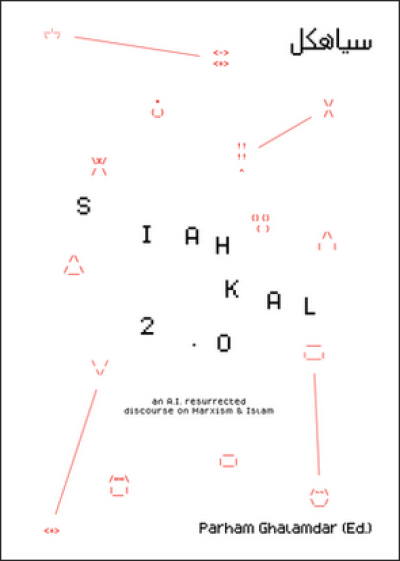
SIAHKAL 2.0: An A.I. resurrected discourse on Marxism & Islam


Siahkal names a place in the forests of Gilan and a threshold in revolutionary time. In 1971 a guerrilla action near Siahkal shook the order of the Shah. The action failed militarily yet seeded a myth for the People’s Fedai Guerrillas. Bizhan Jazani, a founding thinker, wrote and painted in prison and was executed in 1975. His work teaches that strategy rather than sentiment endures. // This book treats Siahkal as a Deep Object, a persistent attractor that gathers memory, images, and tactics. An AI model trained on Jazani’s writings and paintings translates his essay on Islamic Marxism and proposes annotations. The machine functions as a probe that widens attention while remaining accountable to the source. Parham Ghalamdar trained the AI, wrote the introduction, and composed ASCII diagrams and diagrammatic readings from Jazani’s artworks. Parsa Esmaeilzadeh contributes an essay that reads Jazani through Karatani and left accelerationism. // It is a call to reimagine and export revolution as a Deep Object that asks for Deep Time to unfold. This clandestine edition invites the reader to study, test, and build strategy that can outlast the news cycle and meet the future head on.

This is a limited edition book. The author trained an LLM on the texts of a deceased theorist, and then proceeded to interact with the LLM and produce simulations of what the theorist may have said in regards to various pertinent topics. The book is primarily a free online resource, but a few copies are being printed to commemorate the work. It has a foreword and afterword by the Editors.

At the core of this project is a translation of “Marxist Islam or Islamic Marxism,” a groundbreaking text written by Bizhan Jazani during his imprisonment in the 1970s under the Shah’s oppressive regime. Translated by Parham Ghalamdar, this work is accompanied by an introduction contextualizing Jazani’s radical vision. Ghalamdar also contributes a series of ASCII-style illustrations and diagrams—AI-assisted reinterpretations of Jazani’s original paintings and photographs—that bridge the past and present, offering a new perspective on his revolutionary artistry.


About the author
Parham Ghalamdar is a multidisciplinary artist currently based in the UK. Ghalamdar’s work traces forgotten mythologies, buried philosophies, and visual ruins, reconfiguring them into speculative worlds where memory, fiction, and futurism collapse into one another. Drawing on cybernetic theory and generative AI, he explores how systems of feedback, simulation, and machine vision mediate our understanding of history and possibility. Through painting, film, and writing, he builds narratives that feel both ancient and yet-to-come, haunted by lost histories and animated by possible futures.


Siahkal
names a place in the forests of Gilan and a threshold in revolutionary
time. In 1971 a guerrilla action near Siahkal shook the order of the
Shah. The action failed militarily yet seeded a myth for the People’s
Fedai Guerrillas. Bizhan Jazani, a founding thinker, wrote and painted
in prison and was executed in 1975. His work teaches that strategy
rather than sentiment endures. // This book treats Siahkal as a Deep
Object, a persistent attractor that gathers memory, images, and tactics.
An AI model trained on Jazani’s writings and paintings translates his
essay on Islamic Marxism and proposes annotations. The machine functions
as a probe that widens attention while remaining accountable to the
source. Parham Ghalamdar trained the AI, wrote the introduction, and
composed ASCII diagrams and diagrammatic readings from Jazani’s
artworks. Parsa Esmaeilzadeh contributes an essay that reads Jazani
through Karatani and left accelerationism. // It is a call to reimagine
and export revolution as a Deep Object that asks for Deep Time to
unfold. This clandestine edition invites the reader to study, test, and
build strategy that can outlast the news cycle and meet the future head
on.


This is a limited edition book. The author trained an LLM on the texts
of a deceased theorist, and then proceeded to interact with the LLM and
produce simulations of what the theorist may have said in regards to
various pertinent topics. The book is primarily a free online resource,
but a few copies are being printed to commemorate the work. It has a
foreword and afterword by the Editors.


At the core of this project is a translation of “Marxist Islam or
Islamic Marxism,” a groundbreaking text written by Bizhan Jazani during
his imprisonment in the 1970s under the Shah’s oppressive regime.
Translated by Parham Ghalamdar, this work is accompanied by an
introduction contextualizing Jazani’s radical vision. Ghalamdar also
contributes a series of ASCII-style illustrations and
diagrams—AI-assisted reinterpretations of Jazani’s original paintings
and photographs—that bridge the past and present, offering a new
perspective on his revolutionary artistry.


About the author

Parham Ghalamdar is a multidisciplinary artist currently based in the
UK. Ghalamdar’s work traces forgotten mythologies, buried philosophies,
and visual ruins, reconfiguring them into speculative worlds where
memory, fiction, and futurism collapse into one another. Drawing on
cybernetic theory and generative AI, he explores how systems of
feedback, simulation, and machine vision mediate our understanding of
history and possibility. Through painting, film, and writing, he builds
narratives that feel both ancient and yet-to-come, haunted by lost
histories and animated by possible futures.


Siahkal
names a place in the forests of Gilan and a threshold in revolutionary
time. In 1971 a guerrilla action near Siahkal shook the order of the
Shah. The action failed militarily yet seeded a myth for the People’s
Fedai Guerrillas. Bizhan Jazani, a founding thinker, wrote and painted
in prison and was executed in 1975. His work teaches that strategy
rather than sentiment endures. // This book treats Siahkal as a Deep
Object, a persistent attractor that gathers memory, images, and tactics.
An AI model trained on Jazani’s writings and paintings translates his
essay on Islamic Marxism and proposes annotations. The machine functions
as a probe that widens attention while remaining accountable to the
source. Parham Ghalamdar trained the AI, wrote the introduction, and
composed ASCII diagrams and diagrammatic readings from Jazani’s
artworks. Parsa Esmaeilzadeh contributes an essay that reads Jazani
through Karatani and left accelerationism. // It is a call to reimagine
and export revolution as a Deep Object that asks for Deep Time to
unfold. This clandestine edition invites the reader to study, test, and
build strategy that can outlast the news cycle and meet the future head
on.


This is a limited edition book. The author trained an LLM on the texts
of a deceased theorist, and then proceeded to interact with the LLM and
produce simulations of what the theorist may have said in regards to
various pertinent topics. The book is primarily a free online resource,
but a few copies are being printed to commemorate the work. It has a
foreword and afterword by the Editors.


At the core of this project is a translation of “Marxist Islam or
Islamic Marxism,” a groundbreaking text written by Bizhan Jazani during
his imprisonment in the 1970s under the Shah’s oppressive regime.
Translated by Parham Ghalamdar, this work is accompanied by an
introduction contextualizing Jazani’s radical vision. Ghalamdar also
contributes a series of ASCII-style illustrations and
diagrams—AI-assisted reinterpretations of Jazani’s original paintings
and photographs—that bridge the past and present, offering a new
perspective on his revolutionary artistry.


About the author

Parham Ghalamdar is a multidisciplinary artist currently based in the
UK. Ghalamdar’s work traces forgotten mythologies, buried philosophies,
and visual ruins, reconfiguring them into speculative worlds where
memory, fiction, and futurism collapse into one another. Drawing on
cybernetic theory and generative AI, he explores how systems of
feedback, simulation, and machine vision mediate our understanding of
history and possibility. Through painting, film, and writing, he builds
narratives that feel both ancient and yet-to-come, haunted by lost
histories and animated by possible futures.


Siahkal names a place in the forests of Gilan and a threshold in revolutionary time. In 1971 a guerrilla action near Siahkal shook the order of the Shah. The action failed militarily yet seeded a myth for the People’s Fedai Guerrillas. Bizhan Jazani, a founding thinker, wrote and painted in prison and was executed in 1975. His work teaches that strategy rather than sentiment endures. // This book treats Siahkal as a Deep Object, a persistent attractor that gathers memory, images, and tactics. An AI model trained on Jazani’s writings and paintings translates his essay on Islamic Marxism and proposes annotations. The machine functions as a probe that widens attention while remaining accountable to the source. Parham Ghalamdar trained the AI, wrote the introduction, and composed ASCII diagrams and diagrammatic readings from Jazani’s artworks. Parsa Esmaeilzadeh contributes an essay that reads Jazani through Karatani and left accelerationism. // It is a call to reimagine and export revolution as a Deep Object that asks for Deep Time to unfold. This clandestine edition invites the reader to study, test, and build strategy that can outlast the news cycle and meet the future head on.

This is a limited edition book. The author trained an LLM on the texts of a deceased theorist, and then proceeded to interact with the LLM and produce simulations of what the theorist may have said in regards to various pertinent topics. The book is primarily a free online resource, but a few copies are being printed to commemorate the work. It has a foreword and afterword by the Editors. 

At the core of this project is a translation of “Marxist Islam or Islamic Marxism,” a groundbreaking text written by Bizhan Jazani during his imprisonment in the 1970s under the Shah’s oppressive regime. Translated by Parham Ghalamdar, this work is accompanied by an introduction contextualizing Jazani’s radical vision. Ghalamdar also contributes a series of ASCII-style illustrations and diagrams—AI-assisted reinterpretations of Jazani’s original paintings and photographs—that bridge the past and present, offering a new perspective on his revolutionary artistry.


“Bizhan Jazani”, Parham Ghalamdar
SIAHKAL 2.0: An A.I. resurrected discourse on Marxism & Islam
Becoming Press, 2025, 978-9925-8207-7-1
15,00 €