


Direkt zum Inhalt

Warenkorb

  • Spike

    Spike Art Magazine Issue 86 Salad Days

  • Benze De Ream

    The Blue Flower Syndrome. Multithread 01. Benze de Ream

  • Nora O'Murchú, Janez Fakin Janša

    Are You a Software Update? Reader with Wassim Z. Alsindi,…

  • Kenneth Hujer

    »All das passierte in diesem irrsinnigen Milieu Frankfurt…

  • Valentina Tanni

    Exit Reality. Vaporwave, Backrooms, Weirdcore, and Other…

  • Alexander Schröder, Dominic Eichler,…

    MD72. Door Slamming Festival (2007 - 2018)

  • Marek Poliks & Roberto Alonso…

    Exocapitalism. Economies with absolutely no limits

  • Diedrich Diederichsen, hg. von Carolin…

    Ästhetik im Planetarischen Zeitalter

  • Christoph Liepach (Hg)

    Gera ostmodern

  • Christoph Liepach, Irina Schultheiß (Hg)

    In Lusan geht die Sonne auf

  • Elena Malzew, Lisa Klosterkötter (Ed.)

    Über Brücken - Bridging

  • Birgitta Heid

    Faszination Sichtbeton. Werke des Architekten Bernhard Heid

  • dérive

    dérive N° 102, Spekulation (Jan - Mar 2026)

  • gerade nicht auf Lager
    Kayoung Kim, Lisa Marie Zander, Marius…

    Versammlung der Mikropolitiken

  • Jiyoung Yoon, Kirenia Martinez Acosta

    Invisible Tapestry Vol. 2.

  • TAT.

    TAT.1 - Wand / Wall

  • Ita Dreyfus

    Niche Design. A Magazine exploring where design flourishes…

  • Christoph Liepach (Hg)

    Max braucht Gesellschaft. Der Kulturpalast des VEB Maxhütte…

  • gerade nicht auf Lager
    Melissa Bruntlett, Chris Bruntlett

    Women Changing Cities. Global stories of urban…

  • Louis Möckel

    Sonic Footprints. Ecology of Technophony

  • Sarah Robinson

    Architecture of Resonance. From Objects to Interactions

  • Anna Pollmann, Christopher Möllmann (Hg)

    Schlüsselbegriffe gesellschaftlichen Zusammenhalts. Ein…

  • gerade nicht auf Lager
    Nick Newman

    Protest Architecture. Structures of civil resistance

  • Bailey Bestul

    Reuse of Architectural Components

  • Florian Urban, Barnabas Calder

    Form Follows Fuel. 14 Buildings from Antiquity to the Oil…

  • Market Cafe

    Market Cafe Magazine Issue 9 Invisible Data

  • “Bizhan Jazani”, Parham Ghalamdar

    SIAHKAL 2.0: An A.I. resurrected discourse on Marxism…

  • Chris Kraus

    The Four Spent the Day Together

  • Nick Srnicek

    Silicon Empires. The Fight for the Future of AI

  • Palais Sinclaire, Achim Szepanski (Hg)

    Ultrablack of Music. Volume 2

  • Christian Dehli, Andrea Grolimund (Eds.)

    Kazuo Shinohara. Residential Architecture

  • Sofia Lemos (Hg)

    Reluctant Gardener

  • Britt Müller, Winnes Rademächers

    Don't Sleep. The Graphic Language of Vinyl Labels

  • Judith Siegmund

    Künstlerisches Handeln in digitalen und postkolonialen…

  • Francisco Gallardo & Audrey Samson…

    EURO—VISION. Undergrounding the Critical Mineral

  • Michaela Büsse (Hg)

    Granular Configurations. Sand, Materiality, and Planetary…

  • Arch+

    ARCH+ 262. African Spatial Thinking / Denkraum Afrika

  • Matthias Sauerbruch, Louisa Hutton, mit…

    Draw Love Build. Sauerbruch Hutton Tracing Modernities

  • Mark Griffiths

    Checkpoint 300. Colonial Space in Palestine

  • Katharina Weinstock

    Post-Readymade

  • Philip Ursprung

    Values and Surfaces. Art, Economy, Architecture

  • Hg. von Benedikt Boucsein, Matthias…

    Raumpilot*in. Gendergerechter Städtebau. Handbuch für…

  • Ott Kagovere, Hanan Mahbouba, Jaroslav…

    A Week On An Island With Trojan Horse. The Summer School…

  • IDEA Magazine

    Idea 412. Tomoyuki Arima: Design Evolving from Relationships

  • Barbara Herschel, Kaspar Jamme, Felix…

    Troubled! Architecture of Ruinous Landscapes

  • David Wojnarowicz

    Waterfront Journals

  • Anaïs Auprêtre de Lagenest, Andreas…

    Wohnen fürs Wohnen. Schweizer Wohnbaugenossenschaften als…

  • Ayoung Kim

    Synthetic Storyteller

  • Magda Danysz

    Street Art. An Anthology

  • Karen van den Berg

    Große Kunst. Hyperwachstum in der Studiopraxis

  • Chris Hables Gray

    Virus is a Language. AI, QAnon, COVID-19 and the New…

  • Jan Schwochow

    InGraphics 2026 Edition

  • David Reinfurt

    A *Co-* Program for Graphic Design

  • Felix Torkar

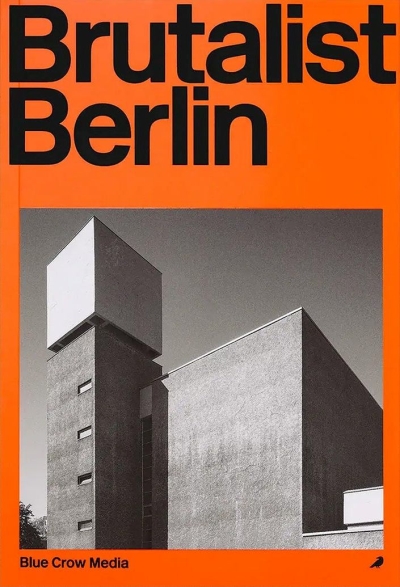
    Brutalist Berlin. An Architect's Guide to Brutalist…

  • Patrik Hübner

    The Generative Mind. A New Approach to Creative Thinking

  • Charlie Singer-Fischer

    Between the Lines. KI - schöne neue Zukunft?

  • Peter Swinnen, Anne Judong (eds.)

    Willy Van Der Meeren. Mass

  • Shirley Surya, Li Hua (Eds.) Canadian…

    How Modern. Biographies of Architecture in China 1949–1979

  • Marta Ceccarelli

    Postscriptum 53. Internet's Dark Forests: Subcultural…

  • Sophie Publig

    The Postscriptum 54: Swiping Right on God

  • Dave Randall

    Sound System. The Political Power of Music

  • Mikkel Bolt Rasmussen

    The Refusalist International. A Theory of the New Protest…

  • gerade nicht auf Lager
    Esra Akcan

    Architecture and the Right to Heal. Resettler Nationalism…

  • Kerstin Decker (Autorin), Ute Müller-…

    Das Graue Kloster von Berlin. Biografie eines…

  • Okwui Enwezor, Terry Smith (Ed.)

    Okwui Enwezor. Selected Writings. Volume 2. Curating the…

  • Okwui Enwezor, Terry Smith (Ed.)

    Okwui Enwezor. Selected Writings. Volume 1. Toward a New…

  • Benedikt Boucsein, Elettra Carnelli,…

    Die Macht der Bedingungen. Architektur zwischen…

  • Giulia Boller, Matthias Beckh, Rainer…

    Heinz Isler. Built Experiments – Entrepreneurial Networks

  • Carolyn F. Strauss (ed.)

    Slow Technology Reader

  • gerade nicht auf Lager
    Geert Lovink

    Platform Brutality. Closing Down Internet Toxicity

  • Javier Mozas, Aurora Fernández Per

    Housing Loops. Opulence, Precarity, Dignity, Prosperity and…

  • gerade nicht auf Lager
    Marijke Goeting & Maaike van Neck (…

    Algorithmic Imaginations. Critical Reflections on AI in Art…

  • Riccarda Cappeller

    Cooperative Architecture. Urban Transformation as Process,…

  • Michelle Teran, Marc Herbst, Vivian Sky…

    Promiscuous Infrastructures. Practising Care

  • Camille Belmin (Ed)

    Ecoslay – An Anthology

  • Meltdown Your Books

    Empires Over Skin. How we Fashioned our World

  • Claus Krieger

    111 Architekturbaukästen

  • Basile Baudez, Victoria Bergbauer (Hg.)

    Carceral Architecture

  • Charlotte Laubard

    Manifestes 8. Changing Art from the Outside in

  • Philippe Rahm

    Manifestes 6. The Anthropocene Style

  • Iracema Dulley, Marlon Miguel (eds.)

    Stella do Patrocínio. Falatório/Chatter

  • Christoph Ramisch (ed.)

    Daidalos 24-25

  • Mick Wilson

    On Discourse and the Curatorial

  • gerade nicht auf Lager
    Bjørn Hegardt (Ed.)

    FUKT #23 – The Sound Issue

  • pinamagazine.com

    Pina Issue 2

  • Brandon LaBelle (Ed.)

    The Listening Biennial Reader - Vol 2: Infralistening

  • Erik Göngrich, Aurelia Markwalder,…

    Alles Allen

  • Eva Bentcheva, Annie Jael Kwan, Ming…

    Thinking Collectives / Collective Thinking

  • Christoph F. E. Holzhey, Marietta…

    Breaking and Making Models

  • Beatriz Colomina, Mark Wigley

    We the Bacteria. Notes Toward Biotic Architecture

  • Thomas Aguilera, Francesca Artioli,…

    Housing Under Platform Capitalism. The Contentious…

  • Christoph Brunner, Kathrin Busch, Knut…

    Permeationen. Durchdringungen von künstlerischer Forschung…

  • gerade nicht auf Lager
    Maxime Le Calvé

    Golden Pudel-Ethnographie. Atmosphäre, Netzwerke und…

  • gerade nicht auf Lager
    Bogna Konior

    The Dark Forest Theory of the Internet

  • gerade nicht auf Lager
    Martin Lorenz

    Flexible Visual Systems. The FVS Atlas

  • gerade nicht auf Lager
    Alexander Alberro

    Interstices. Negotiations at Contemporary Art’s Boundaries

  • gerade nicht auf Lager
    Neil Brenner, Swarnabh Ghosh, Nikos…

    Environments of Planetary Urbanization

  • gerade nicht auf Lager
    Eline Benjaminsen, Dayna Casey

    Collapsed Mythologies. A Geofinancial Atlas

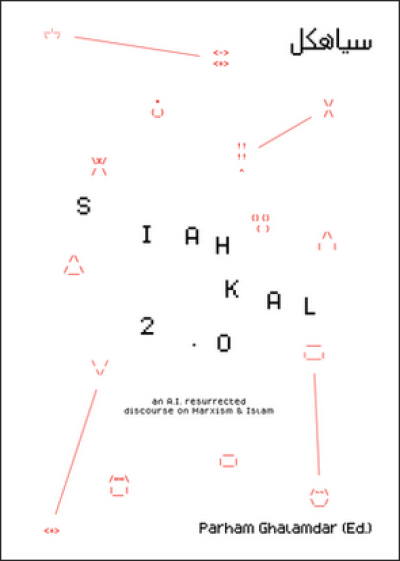
SIAHKAL 2.0: An A.I. resurrected discourse on Marxism & Islam


Siahkal names a place in the forests of Gilan and a threshold in revolutionary time. In 1971 a guerrilla action near Siahkal shook the order of the Shah. The action failed militarily yet seeded a myth for the People’s Fedai Guerrillas. Bizhan Jazani, a founding thinker, wrote and painted in prison and was executed in 1975. His work teaches that strategy rather than sentiment endures. // This book treats Siahkal as a Deep Object, a persistent attractor that gathers memory, images, and tactics. An AI model trained on Jazani’s writings and paintings translates his essay on Islamic Marxism and proposes annotations. The machine functions as a probe that widens attention while remaining accountable to the source. Parham Ghalamdar trained the AI, wrote the introduction, and composed ASCII diagrams and diagrammatic readings from Jazani’s artworks. Parsa Esmaeilzadeh contributes an essay that reads Jazani through Karatani and left accelerationism. // It is a call to reimagine and export revolution as a Deep Object that asks for Deep Time to unfold. This clandestine edition invites the reader to study, test, and build strategy that can outlast the news cycle and meet the future head on.

This is a limited edition book. The author trained an LLM on the texts of a deceased theorist, and then proceeded to interact with the LLM and produce simulations of what the theorist may have said in regards to various pertinent topics. The book is primarily a free online resource, but a few copies are being printed to commemorate the work. It has a foreword and afterword by the Editors.

At the core of this project is a translation of “Marxist Islam or Islamic Marxism,” a groundbreaking text written by Bizhan Jazani during his imprisonment in the 1970s under the Shah’s oppressive regime. Translated by Parham Ghalamdar, this work is accompanied by an introduction contextualizing Jazani’s radical vision. Ghalamdar also contributes a series of ASCII-style illustrations and diagrams—AI-assisted reinterpretations of Jazani’s original paintings and photographs—that bridge the past and present, offering a new perspective on his revolutionary artistry.


About the author
Parham Ghalamdar is a multidisciplinary artist currently based in the UK. Ghalamdar’s work traces forgotten mythologies, buried philosophies, and visual ruins, reconfiguring them into speculative worlds where memory, fiction, and futurism collapse into one another. Drawing on cybernetic theory and generative AI, he explores how systems of feedback, simulation, and machine vision mediate our understanding of history and possibility. Through painting, film, and writing, he builds narratives that feel both ancient and yet-to-come, haunted by lost histories and animated by possible futures.


Siahkal
names a place in the forests of Gilan and a threshold in revolutionary
time. In 1971 a guerrilla action near Siahkal shook the order of the
Shah. The action failed militarily yet seeded a myth for the People’s
Fedai Guerrillas. Bizhan Jazani, a founding thinker, wrote and painted
in prison and was executed in 1975. His work teaches that strategy
rather than sentiment endures. // This book treats Siahkal as a Deep
Object, a persistent attractor that gathers memory, images, and tactics.
An AI model trained on Jazani’s writings and paintings translates his
essay on Islamic Marxism and proposes annotations. The machine functions
as a probe that widens attention while remaining accountable to the
source. Parham Ghalamdar trained the AI, wrote the introduction, and
composed ASCII diagrams and diagrammatic readings from Jazani’s
artworks. Parsa Esmaeilzadeh contributes an essay that reads Jazani
through Karatani and left accelerationism. // It is a call to reimagine
and export revolution as a Deep Object that asks for Deep Time to
unfold. This clandestine edition invites the reader to study, test, and
build strategy that can outlast the news cycle and meet the future head
on.


This is a limited edition book. The author trained an LLM on the texts
of a deceased theorist, and then proceeded to interact with the LLM and
produce simulations of what the theorist may have said in regards to
various pertinent topics. The book is primarily a free online resource,
but a few copies are being printed to commemorate the work. It has a
foreword and afterword by the Editors.


At the core of this project is a translation of “Marxist Islam or
Islamic Marxism,” a groundbreaking text written by Bizhan Jazani during
his imprisonment in the 1970s under the Shah’s oppressive regime.
Translated by Parham Ghalamdar, this work is accompanied by an
introduction contextualizing Jazani’s radical vision. Ghalamdar also
contributes a series of ASCII-style illustrations and
diagrams—AI-assisted reinterpretations of Jazani’s original paintings
and photographs—that bridge the past and present, offering a new
perspective on his revolutionary artistry.


About the author

Parham Ghalamdar is a multidisciplinary artist currently based in the
UK. Ghalamdar’s work traces forgotten mythologies, buried philosophies,
and visual ruins, reconfiguring them into speculative worlds where
memory, fiction, and futurism collapse into one another. Drawing on
cybernetic theory and generative AI, he explores how systems of
feedback, simulation, and machine vision mediate our understanding of
history and possibility. Through painting, film, and writing, he builds
narratives that feel both ancient and yet-to-come, haunted by lost
histories and animated by possible futures.


Siahkal
names a place in the forests of Gilan and a threshold in revolutionary
time. In 1971 a guerrilla action near Siahkal shook the order of the
Shah. The action failed militarily yet seeded a myth for the People’s
Fedai Guerrillas. Bizhan Jazani, a founding thinker, wrote and painted
in prison and was executed in 1975. His work teaches that strategy
rather than sentiment endures. // This book treats Siahkal as a Deep
Object, a persistent attractor that gathers memory, images, and tactics.
An AI model trained on Jazani’s writings and paintings translates his
essay on Islamic Marxism and proposes annotations. The machine functions
as a probe that widens attention while remaining accountable to the
source. Parham Ghalamdar trained the AI, wrote the introduction, and
composed ASCII diagrams and diagrammatic readings from Jazani’s
artworks. Parsa Esmaeilzadeh contributes an essay that reads Jazani
through Karatani and left accelerationism. // It is a call to reimagine
and export revolution as a Deep Object that asks for Deep Time to
unfold. This clandestine edition invites the reader to study, test, and
build strategy that can outlast the news cycle and meet the future head
on.


This is a limited edition book. The author trained an LLM on the texts
of a deceased theorist, and then proceeded to interact with the LLM and
produce simulations of what the theorist may have said in regards to
various pertinent topics. The book is primarily a free online resource,
but a few copies are being printed to commemorate the work. It has a
foreword and afterword by the Editors.


At the core of this project is a translation of “Marxist Islam or
Islamic Marxism,” a groundbreaking text written by Bizhan Jazani during
his imprisonment in the 1970s under the Shah’s oppressive regime.
Translated by Parham Ghalamdar, this work is accompanied by an
introduction contextualizing Jazani’s radical vision. Ghalamdar also
contributes a series of ASCII-style illustrations and
diagrams—AI-assisted reinterpretations of Jazani’s original paintings
and photographs—that bridge the past and present, offering a new
perspective on his revolutionary artistry.


About the author

Parham Ghalamdar is a multidisciplinary artist currently based in the
UK. Ghalamdar’s work traces forgotten mythologies, buried philosophies,
and visual ruins, reconfiguring them into speculative worlds where
memory, fiction, and futurism collapse into one another. Drawing on
cybernetic theory and generative AI, he explores how systems of
feedback, simulation, and machine vision mediate our understanding of
history and possibility. Through painting, film, and writing, he builds
narratives that feel both ancient and yet-to-come, haunted by lost
histories and animated by possible futures.


Siahkal names a place in the forests of Gilan and a threshold in revolutionary time. In 1971 a guerrilla action near Siahkal shook the order of the Shah. The action failed militarily yet seeded a myth for the People’s Fedai Guerrillas. Bizhan Jazani, a founding thinker, wrote and painted in prison and was executed in 1975. His work teaches that strategy rather than sentiment endures. // This book treats Siahkal as a Deep Object, a persistent attractor that gathers memory, images, and tactics. An AI model trained on Jazani’s writings and paintings translates his essay on Islamic Marxism and proposes annotations. The machine functions as a probe that widens attention while remaining accountable to the source. Parham Ghalamdar trained the AI, wrote the introduction, and composed ASCII diagrams and diagrammatic readings from Jazani’s artworks. Parsa Esmaeilzadeh contributes an essay that reads Jazani through Karatani and left accelerationism. // It is a call to reimagine and export revolution as a Deep Object that asks for Deep Time to unfold. This clandestine edition invites the reader to study, test, and build strategy that can outlast the news cycle and meet the future head on.

This is a limited edition book. The author trained an LLM on the texts of a deceased theorist, and then proceeded to interact with the LLM and produce simulations of what the theorist may have said in regards to various pertinent topics. The book is primarily a free online resource, but a few copies are being printed to commemorate the work. It has a foreword and afterword by the Editors. 

At the core of this project is a translation of “Marxist Islam or Islamic Marxism,” a groundbreaking text written by Bizhan Jazani during his imprisonment in the 1970s under the Shah’s oppressive regime. Translated by Parham Ghalamdar, this work is accompanied by an introduction contextualizing Jazani’s radical vision. Ghalamdar also contributes a series of ASCII-style illustrations and diagrams—AI-assisted reinterpretations of Jazani’s original paintings and photographs—that bridge the past and present, offering a new perspective on his revolutionary artistry.


“Bizhan Jazani”, Parham Ghalamdar
SIAHKAL 2.0: An A.I. resurrected discourse on Marxism & Islam
Becoming Press, 2025, 978-9925-8207-7-1
15,00 €