














Direkt zum Inhalt

Warenkorb

  • gerade nicht auf Lager
    Laurie Penny

    Sexuelle Revolution. Rechter Backlash und feministische…

  • bell hooks

    Männer, Männlichkeit und Liebe

  • Angela Million, Christian Haid, Ignacio…

    Spatial Transformations. Kaleidoscopic Perspectives on the…

  • gerade nicht auf Lager
    Simone Forti

    Simone Forti. Handbook in Motion. An Account of an Ongoing…

  • gerade nicht auf Lager
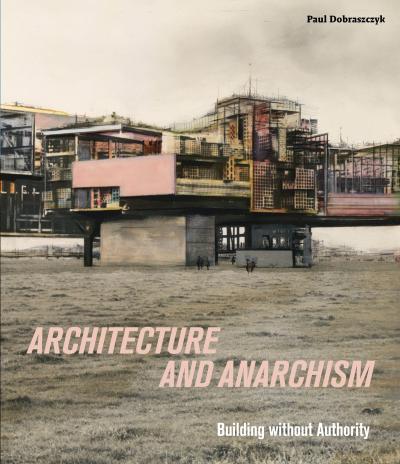
    Paul Dobraszcyk

    Architecture and Anarchism. Building without Authority

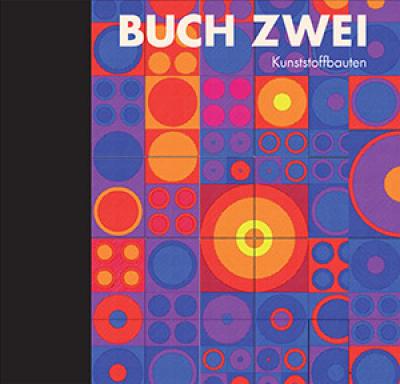
  • Elke Genzel, Pamela Voigt

    BUCH ZWEI. Leben in Kunststoffbauten

  • Marie-Luise Angerer

    Nichtbewusst. Affektive Kurzschlüsse zwischen Psyche und…

  • Martin Eberle

    Hi Schatz!

  • Ernesto Laclau

    Die populistische Vernunft

  • gerade nicht auf Lager
    Desiree Förster

    Aesthetic Experience of Metabolic Processes

  • Brandon LaBelle

    Dreamtime X

  • Israel Martínez

    Dead People Whispering to Us

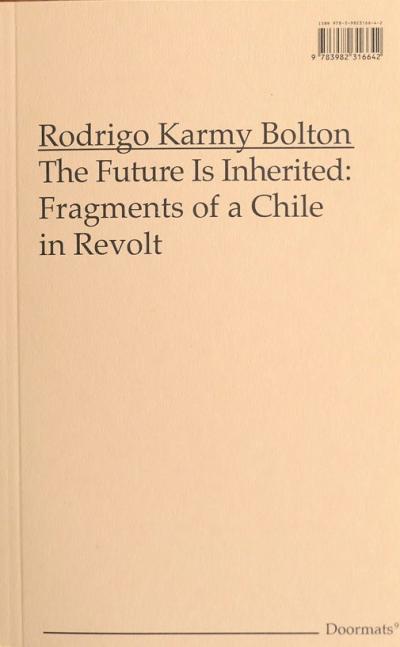
  • Rodrigo Karmy Bolton

    The Future Is Inherited: Fragments of a Chile in Revolt

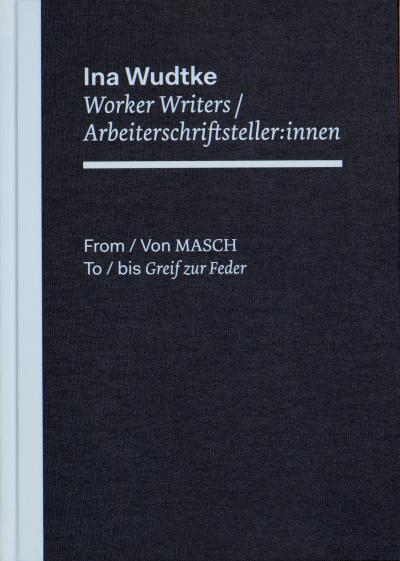
  • Ina Wudtke

    Worker Writers / Arbeiterschriftsteller:innen

  • gerade nicht auf Lager
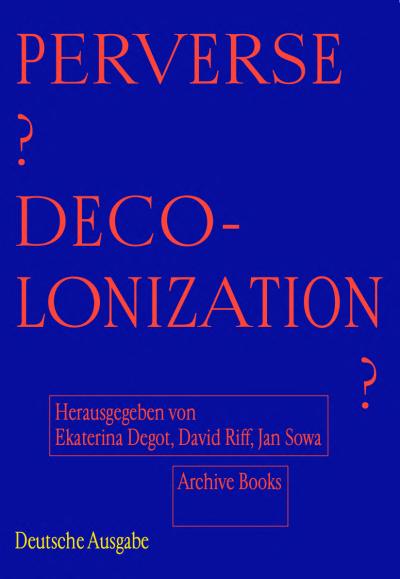
    Ekaterina Degot, David Riff, Jan Sowa (…

    Perverse decolonisation? (Deutsche Ausg.)

  • gerade nicht auf Lager
    The Otolith Group, Megs Morley (Hg)

    Xenogenesis. The Otolith Group (Anjalika Sagar, Kodwo Eshun)

  • gerade nicht auf Lager
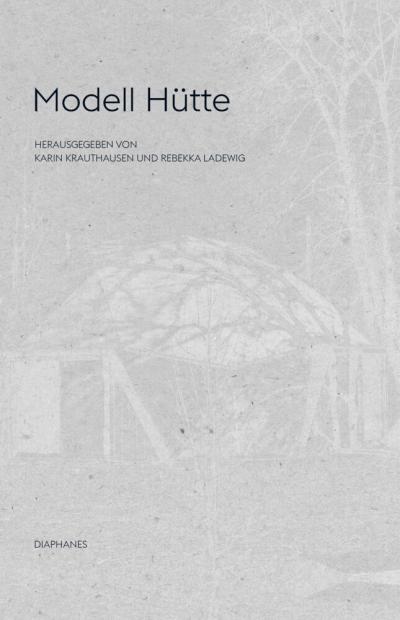
    Karin Krauthausen, Rebekka Ladewig (Hg.)

    Modell Hütte. Von emergenten Strukturen, schützender Haut…

  • Edited by Michèle Leloup, Cyrille…

    The Wood That Makes Our City

  • Lars Henrik Gass (Hg.)

    Hellmuth Costard. Das Wirkliche war zum Modell geworden

  • Peter Swinnen, Nikolaus Hirsch

    A.J. Lode Janssens 1,47 mbar

  • Juliane Rebentisch

    Der Streit um Pluralität. Auseinandersetzungen mit Hannah…

  • Helke Sander

    I like chaos, but I don’t know, whether chaos likes me

  • gerade nicht auf Lager
    Viction Workshop (Hg.)

    More Is More: Designing Bigger, Bolder, Brighter

  • Cristina Baldacci, Clio Nicastro,…

    Over and Over and Over Again Reenactment Strategies in…

  • Pauline Agustoni, Satomi Minoshima

    Craft Portrait: Dorozome

  • gerade nicht auf Lager
    Nick Axel, Nicholas Korody (eds)

    Babyn Yar. Past, Present, Future

  • gerade nicht auf Lager
    Brian Massumi

    Couplets. Travels in Speculative Pragmatism

  • gerade nicht auf Lager
    Justin Joquue

    Revolutionary Mathematics. Artificial Intelligence,…

  • gerade nicht auf Lager
    Melissa Anderson

    Inland Empire

  • Arch+ Zeitschrift für Architektur und…

    Arch+ 246. Zeitgenössische feministische Raumpraxis

  • gerade nicht auf Lager
    Alexander Galloway

    Uncomputable. Play and Politics in the Long Digital Age

  • gerade nicht auf Lager
    Friedrich Balke, Bernhard Siegert,…

    Kleine Formen – Archiv für Mediengeschichte, Bd. 19

  • gerade nicht auf Lager
    Ekaterina Degot, David Riff, Jan Sowa (…

    Perverse decolonisation? (English Ed.)

  • Hanka van der Voet, Johannes Reponen (…

    Warehouse Review 002, A Review of Reviews

  • Elizabeth Wilson

    Eingeweide, Pillen, Feminismus

  • Christiane Paul (Hg)

    A Companion to Digital Art (Blackwell Companions to Art…

  • gerade nicht auf Lager
    Mariana Pestana, Sumitra Upham, Billie…

    Empathy Revisited. Designs for more than one

  • gerade nicht auf Lager
    McKenzie Wark

    Philosophy for Spiders. On the Low Theory of Kathy Acker

  • gerade nicht auf Lager
    Olivia Horsfall Turner, Simona…

    An Alphabet of Architectural Models

  • gerade nicht auf Lager
    David Graeber, David Wengrow

    Anfänge. Eine neue Geschichte der Menschheit

  • gerade nicht auf Lager
    Natasha Ginwala, Gal Kirn, Niloufar…

    Nights of the Dispossessed: Riots Unbound

  • Patrick Syme, Abraham Gottlob Werner

    Werners Nomenklatur der Farben. Angepasst an Zoologie,…

  • gerade nicht auf Lager
    Carla Lonzi, Allison Grimaldi Donahue

    Carla Lonzi. Self-Portrait

  • Oda Pälmke

    Repertoire 7, Oda Pälmke

  • Kolja Möller (Hg)

    Populismus. Ein Reader

  • Alexander Kluge

    Das Buch der Kommentare. Unruhiger Garten der Seele

  • Alexander Kluge

    Zirkus / Kommentar

  • gerade nicht auf Lager
    Natalie Donat-Cattin

    Collective Processes. Counterpractices in European…

  • Marie Rotkopf, Marcus Steinweg

    Fetzen. Für eine Philosophie der Entschleierung

  • Alan Licht

    Common Tones. Selected Interviews with Artists and…

  • gerade nicht auf Lager
    Barbara Penner, Adrian Forty, Olivia…

    Extinct. A Compendium of Obsolete Objects

  • gerade nicht auf Lager
    Stephan Geene

    Freiheit 71. Ricky Shayne, Musik und die Materialität des…

  • Stephan Gregory

    Die kühle Kamera. Witz und Melancholie der seriellen…

  • gerade nicht auf Lager
    Philipp Ekardt

    Benjamin on Fashion

  • dérive

    dérive N° 86, Kunst und Peripherie (Jan-Mar 2022)

  • gerade nicht auf Lager
    Laurie Cluitmans (Ed.)

    On The Necessity Of Gardening. An Abc Of Art, Botany And…

  • Aljosa Dekleva (Ed.)

    AA nanotourism Visiting School: Vienna, Austria 2020

  • Helen Westgeest & Kitty Zijlmans (…

    Mix & Stir. New Outlooks on Contemporary Art from…

  • gerade nicht auf Lager
    Martin Barner

    Tools for Men-with-Feminist-Ambitions

  • Astrid Deuber-Mankowsky, Philipp Hanke…

    Queeres Kino / Queere Ästhetiken als Dokumentationen des…

  • gerade nicht auf Lager
    Moisés Puente (Ed.)

    2G 83. Smiljan Radic

  • gerade nicht auf Lager
    Florian Malzacher, Jonas Staal (Eds.)

    Training for the Future. Handbook

  • Andrej Holm

    Objekt der Rendite. Zur Wohnungsfrage und was Engels noch…

  • gerade nicht auf Lager
    Vanessa Grossman, Ciro Miguel (Hg)

    Everyday Matters. Contemporary Approaches to Architecture

  • Karin Berkemann (Hg.)

    Das Ende der Moderne? Unterwegs zu einer…

  • IDEA Magazine

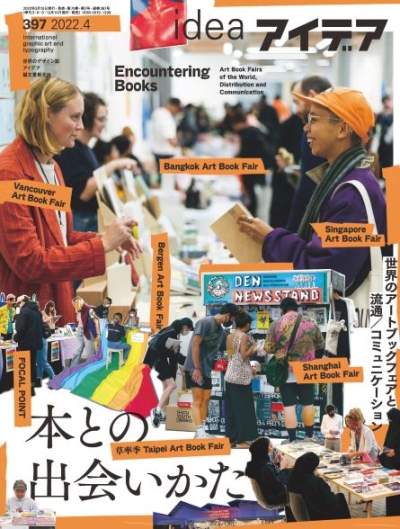
    IDEA 396. Explore Color Design. Digital Color and the…

  • Lisa Beißwanger

    Performance on Display. Zur Geschichte lebendiger Kunst im…

  • gerade nicht auf Lager
    Janne Gärtner, Anne Waak

    Aus einem Land vor unserer Zeit. Die Kinder von Kleinwelka

  • Sven Quadflieg

    Mit erhobener Faust. Die Ästhetik des Protests und die…

  • gerade nicht auf Lager
    Rosi Braidotti

    Posthuman Feminism

  • gerade nicht auf Lager
    -archaicstudio, Anja Dotter

    image [im-ij] \ ˈim-ij \

  • gerade nicht auf Lager
    Jens Müller

    A5/10: Collecting Graphic Design – Die Archivierung des…

  • Judith Butler

    Sinn und Sinnlichkeit des Subjekts

  • gerade nicht auf Lager
    Andrew Herscher, Daniel Bertrand Monk

    The Global Shelter Imaginary: IKEA Humanitarianism and…

  • gerade nicht auf Lager
    Matthew Hockenberry, Nicole…

    Assembly Codes. The Logistics of Media

  • gerade nicht auf Lager
    Elizabeth A. Povinelli

    Between Gaia and Ground: Four Axioms of Existence and the…

  • Rosa Barba

    On the Anarchic Organization of Cinematic Spaces

  • gerade nicht auf Lager
    Marcus Quent

    Gegenwartskunst. Konstruktionen der Zeit

  • gerade nicht auf Lager
    Napoleone Ferrari, Michelangelo Sabatino

    Carlo Mollino. Architect and Storyteller

  • Stefan Jung / Marcus Stiglegger (Hrsg.)

    Berlin Visionen. Filmische Stadtbilder seit 1980

  • Saâdane Afif

    Morceaux choisis – A Monograph

  • Birgit Schlieps, Hanne Loreck (Hg)

    Aktau. Bildphänomene einer Plattenbaustadt in der…

  • gerade nicht auf Lager
    Anne König (Ed.)

    Jonas Mekas. I Seem to Live. The New York Diaries. Vol 2.…

  • gerade nicht auf Lager
    John Robinson

    Famous for Fifteen People. The Songs of Momus 1982-1995

  • Linda Peake, Elsa Koleth, Gokboru Sarp…

    A Feminist Urban Theory for Our Time. Rethinking Social…

  • Caren Irr (Hg)

    Life in Plastic. Artistic Responses to Petromodernity

  • gerade nicht auf Lager
    Stephan Lanz

    Das Regieren der Favela. Gewaltherrschaft, Populärkultur…

  • Tom Avermaete, Janina Gosseye

    Urban Design in the 20th Century. A History

  • gerade nicht auf Lager
    Moisés Puente (Ed.)

    Lacaton & Vassal. Free space, transformation, habiter

  • Anselm Franke, Heinz Emigholz, HKW (Eds…

    Counter Gravity - Die Filme von Heinz Emigholz

  • gerade nicht auf Lager
    Maryam Jafri, Nina Tabassomi

    Maryam Jafri. Independence Days

  • Adam Pendleton, Alec Mapes-Frances (Eds…

    Adam Pendleton. Pasts, Futures, and Aftermaths: Revisiting…

  • Georg W. Bertram, Stefan Deines, Daniel…

    Die Kunst und die Künste. Ein Kompendium zur Kunsttheorie…

  • Wolfgang Fuhrmann, Claus-Steffen…

    Perspektiven der Musikphilosophie

  • Judith Butler

    Marx ökologisch. Pariser Marxlektüren

  • Beate Bartel, Gudrun Gut, Bettina…

    M_Dokumente. Mania D., Malaria!, Matador

  • gerade nicht auf Lager
    Matthias Brunner, Maren Harnack,…

    Transformative Partizipation. Strategien für den…

  • gerade nicht auf Lager
    Franco “Bifo” Berardi

    The Third Unconscious The Psychosphere in the Viral Age

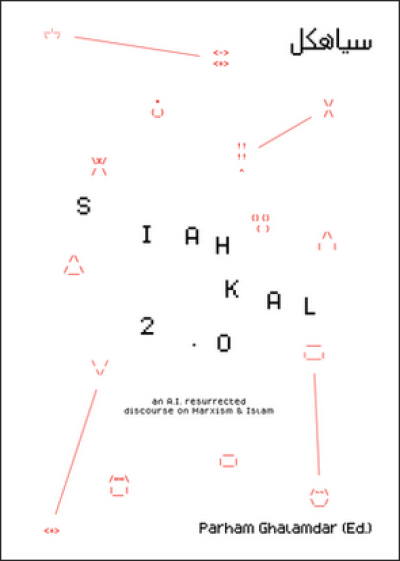
SIAHKAL 2.0: An A.I. resurrected discourse on Marxism & Islam


Siahkal names a place in the forests of Gilan and a threshold in revolutionary time. In 1971 a guerrilla action near Siahkal shook the order of the Shah. The action failed militarily yet seeded a myth for the People’s Fedai Guerrillas. Bizhan Jazani, a founding thinker, wrote and painted in prison and was executed in 1975. His work teaches that strategy rather than sentiment endures. // This book treats Siahkal as a Deep Object, a persistent attractor that gathers memory, images, and tactics. An AI model trained on Jazani’s writings and paintings translates his essay on Islamic Marxism and proposes annotations. The machine functions as a probe that widens attention while remaining accountable to the source. Parham Ghalamdar trained the AI, wrote the introduction, and composed ASCII diagrams and diagrammatic readings from Jazani’s artworks. Parsa Esmaeilzadeh contributes an essay that reads Jazani through Karatani and left accelerationism. // It is a call to reimagine and export revolution as a Deep Object that asks for Deep Time to unfold. This clandestine edition invites the reader to study, test, and build strategy that can outlast the news cycle and meet the future head on.

This is a limited edition book. The author trained an LLM on the texts of a deceased theorist, and then proceeded to interact with the LLM and produce simulations of what the theorist may have said in regards to various pertinent topics. The book is primarily a free online resource, but a few copies are being printed to commemorate the work. It has a foreword and afterword by the Editors.

At the core of this project is a translation of “Marxist Islam or Islamic Marxism,” a groundbreaking text written by Bizhan Jazani during his imprisonment in the 1970s under the Shah’s oppressive regime. Translated by Parham Ghalamdar, this work is accompanied by an introduction contextualizing Jazani’s radical vision. Ghalamdar also contributes a series of ASCII-style illustrations and diagrams—AI-assisted reinterpretations of Jazani’s original paintings and photographs—that bridge the past and present, offering a new perspective on his revolutionary artistry.


About the author
Parham Ghalamdar is a multidisciplinary artist currently based in the UK. Ghalamdar’s work traces forgotten mythologies, buried philosophies, and visual ruins, reconfiguring them into speculative worlds where memory, fiction, and futurism collapse into one another. Drawing on cybernetic theory and generative AI, he explores how systems of feedback, simulation, and machine vision mediate our understanding of history and possibility. Through painting, film, and writing, he builds narratives that feel both ancient and yet-to-come, haunted by lost histories and animated by possible futures.


Siahkal
names a place in the forests of Gilan and a threshold in revolutionary
time. In 1971 a guerrilla action near Siahkal shook the order of the
Shah. The action failed militarily yet seeded a myth for the People’s
Fedai Guerrillas. Bizhan Jazani, a founding thinker, wrote and painted
in prison and was executed in 1975. His work teaches that strategy
rather than sentiment endures. // This book treats Siahkal as a Deep
Object, a persistent attractor that gathers memory, images, and tactics.
An AI model trained on Jazani’s writings and paintings translates his
essay on Islamic Marxism and proposes annotations. The machine functions
as a probe that widens attention while remaining accountable to the
source. Parham Ghalamdar trained the AI, wrote the introduction, and
composed ASCII diagrams and diagrammatic readings from Jazani’s
artworks. Parsa Esmaeilzadeh contributes an essay that reads Jazani
through Karatani and left accelerationism. // It is a call to reimagine
and export revolution as a Deep Object that asks for Deep Time to
unfold. This clandestine edition invites the reader to study, test, and
build strategy that can outlast the news cycle and meet the future head
on.


This is a limited edition book. The author trained an LLM on the texts
of a deceased theorist, and then proceeded to interact with the LLM and
produce simulations of what the theorist may have said in regards to
various pertinent topics. The book is primarily a free online resource,
but a few copies are being printed to commemorate the work. It has a
foreword and afterword by the Editors.


At the core of this project is a translation of “Marxist Islam or
Islamic Marxism,” a groundbreaking text written by Bizhan Jazani during
his imprisonment in the 1970s under the Shah’s oppressive regime.
Translated by Parham Ghalamdar, this work is accompanied by an
introduction contextualizing Jazani’s radical vision. Ghalamdar also
contributes a series of ASCII-style illustrations and
diagrams—AI-assisted reinterpretations of Jazani’s original paintings
and photographs—that bridge the past and present, offering a new
perspective on his revolutionary artistry.


About the author

Parham Ghalamdar is a multidisciplinary artist currently based in the
UK. Ghalamdar’s work traces forgotten mythologies, buried philosophies,
and visual ruins, reconfiguring them into speculative worlds where
memory, fiction, and futurism collapse into one another. Drawing on
cybernetic theory and generative AI, he explores how systems of
feedback, simulation, and machine vision mediate our understanding of
history and possibility. Through painting, film, and writing, he builds
narratives that feel both ancient and yet-to-come, haunted by lost
histories and animated by possible futures.


Siahkal
names a place in the forests of Gilan and a threshold in revolutionary
time. In 1971 a guerrilla action near Siahkal shook the order of the
Shah. The action failed militarily yet seeded a myth for the People’s
Fedai Guerrillas. Bizhan Jazani, a founding thinker, wrote and painted
in prison and was executed in 1975. His work teaches that strategy
rather than sentiment endures. // This book treats Siahkal as a Deep
Object, a persistent attractor that gathers memory, images, and tactics.
An AI model trained on Jazani’s writings and paintings translates his
essay on Islamic Marxism and proposes annotations. The machine functions
as a probe that widens attention while remaining accountable to the
source. Parham Ghalamdar trained the AI, wrote the introduction, and
composed ASCII diagrams and diagrammatic readings from Jazani’s
artworks. Parsa Esmaeilzadeh contributes an essay that reads Jazani
through Karatani and left accelerationism. // It is a call to reimagine
and export revolution as a Deep Object that asks for Deep Time to
unfold. This clandestine edition invites the reader to study, test, and
build strategy that can outlast the news cycle and meet the future head
on.


This is a limited edition book. The author trained an LLM on the texts
of a deceased theorist, and then proceeded to interact with the LLM and
produce simulations of what the theorist may have said in regards to
various pertinent topics. The book is primarily a free online resource,
but a few copies are being printed to commemorate the work. It has a
foreword and afterword by the Editors.


At the core of this project is a translation of “Marxist Islam or
Islamic Marxism,” a groundbreaking text written by Bizhan Jazani during
his imprisonment in the 1970s under the Shah’s oppressive regime.
Translated by Parham Ghalamdar, this work is accompanied by an
introduction contextualizing Jazani’s radical vision. Ghalamdar also
contributes a series of ASCII-style illustrations and
diagrams—AI-assisted reinterpretations of Jazani’s original paintings
and photographs—that bridge the past and present, offering a new
perspective on his revolutionary artistry.


About the author

Parham Ghalamdar is a multidisciplinary artist currently based in the
UK. Ghalamdar’s work traces forgotten mythologies, buried philosophies,
and visual ruins, reconfiguring them into speculative worlds where
memory, fiction, and futurism collapse into one another. Drawing on
cybernetic theory and generative AI, he explores how systems of
feedback, simulation, and machine vision mediate our understanding of
history and possibility. Through painting, film, and writing, he builds
narratives that feel both ancient and yet-to-come, haunted by lost
histories and animated by possible futures.


Siahkal names a place in the forests of Gilan and a threshold in revolutionary time. In 1971 a guerrilla action near Siahkal shook the order of the Shah. The action failed militarily yet seeded a myth for the People’s Fedai Guerrillas. Bizhan Jazani, a founding thinker, wrote and painted in prison and was executed in 1975. His work teaches that strategy rather than sentiment endures. // This book treats Siahkal as a Deep Object, a persistent attractor that gathers memory, images, and tactics. An AI model trained on Jazani’s writings and paintings translates his essay on Islamic Marxism and proposes annotations. The machine functions as a probe that widens attention while remaining accountable to the source. Parham Ghalamdar trained the AI, wrote the introduction, and composed ASCII diagrams and diagrammatic readings from Jazani’s artworks. Parsa Esmaeilzadeh contributes an essay that reads Jazani through Karatani and left accelerationism. // It is a call to reimagine and export revolution as a Deep Object that asks for Deep Time to unfold. This clandestine edition invites the reader to study, test, and build strategy that can outlast the news cycle and meet the future head on.

This is a limited edition book. The author trained an LLM on the texts of a deceased theorist, and then proceeded to interact with the LLM and produce simulations of what the theorist may have said in regards to various pertinent topics. The book is primarily a free online resource, but a few copies are being printed to commemorate the work. It has a foreword and afterword by the Editors. 

At the core of this project is a translation of “Marxist Islam or Islamic Marxism,” a groundbreaking text written by Bizhan Jazani during his imprisonment in the 1970s under the Shah’s oppressive regime. Translated by Parham Ghalamdar, this work is accompanied by an introduction contextualizing Jazani’s radical vision. Ghalamdar also contributes a series of ASCII-style illustrations and diagrams—AI-assisted reinterpretations of Jazani’s original paintings and photographs—that bridge the past and present, offering a new perspective on his revolutionary artistry.


“Bizhan Jazani”, Parham Ghalamdar
SIAHKAL 2.0: An A.I. resurrected discourse on Marxism & Islam
Becoming Press, 2025, 978-9925-8207-7-1
15,00 €