











Direkt zum Inhalt

Warenkorb

  • gerade nicht auf Lager
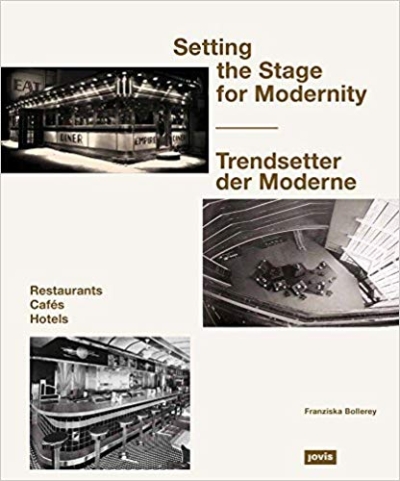
    Franziska Bollerey

    Setting the Stage for Modernity. Trendsetter der Moderne:…

  • gerade nicht auf Lager
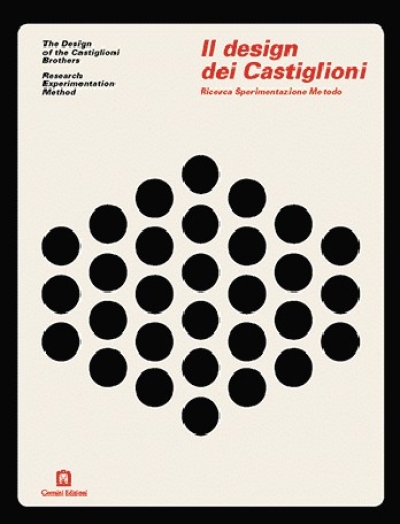
    Dario Scodeller (Ed.)

    The Design of the Castiglioni Brothers. Research…

  • gerade nicht auf Lager
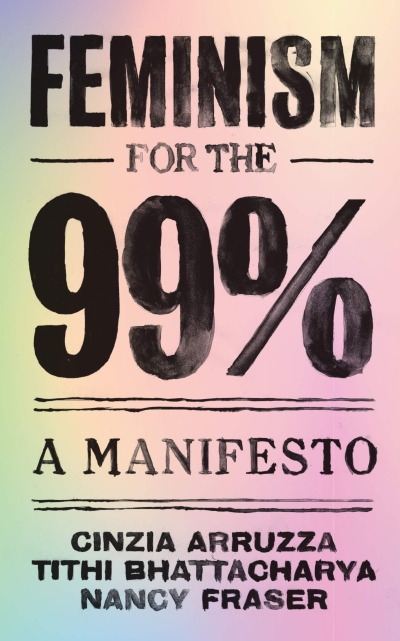
    Cinzia Arruzza, Tithi Bhattacharya,…

    Feminism for the 99%. A Manifesto

  • gerade nicht auf Lager
    Raquel Rolnik

    Urban Warfare. Housing under the Empire of Finance

  • Alexander Eisenschmidt

    The Good Metropolis: From Urban Formlessness to…

  • Marion von Osten, Grant Watson (Hg.)

    Bauhaus Imaginista. Die globale Rezeption bis heute

  • gerade nicht auf Lager
    Davide Giannella, Massimo Torrigiani (…

    Salento Moderno. An Inventory of Private Houses in Southern…

  • gerade nicht auf Lager
    Deboleena Roy

    Molecular Feminisms: Biology, Becomings, and Life in the Lab

  • gerade nicht auf Lager
    Peter Rehberg

    Hipster Porn: Queere Männlichkeiten, affektive Sexualitäten…

  • Daniel Falb

    Geospekulationen: Metaphysik für die Erde im Anthropozän

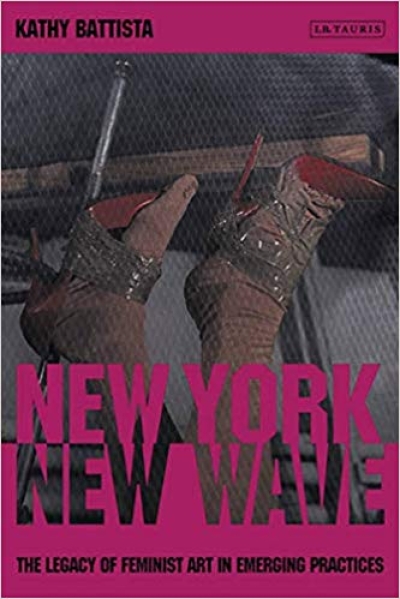
  • Kathy Battista

    New York, New Wave: The Legacy of Feminist Artists in…

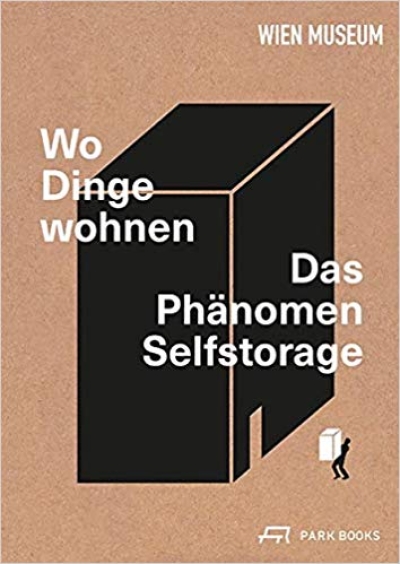
  • Martina Nußbaumer, Peter Stuiber

    Wo Dinge wohnen: Das Phänomen Selfstorage

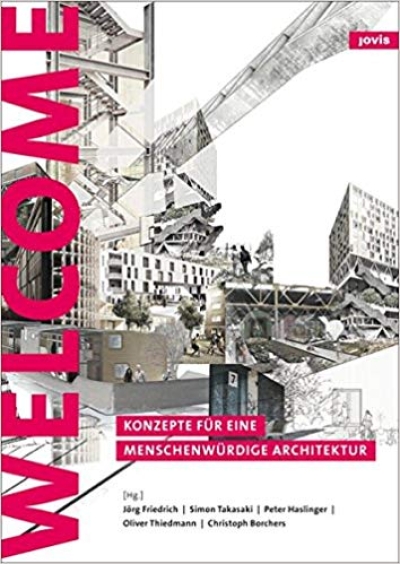
  • Jörg Friedrich (Hg.)

    Refugees Welcome: Konzepte für eine menschenwürdige…

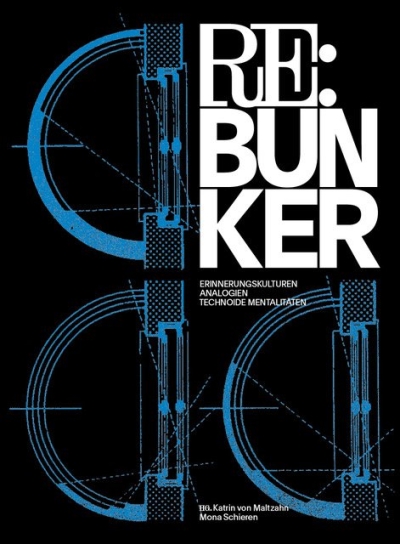
  • Katrin von Maltzahn, Mona Schieren (Hg)

    RE:BUNKER. Erinnerungskulturen, Analogien, Technoide…

  • gerade nicht auf Lager
    Kathryn Yusoff

    A Billion Black Anthropocenes or None

  • gerade nicht auf Lager
    Franco ‘Bifo’ Berardi

    The Second Coming

  • Lisson Gallery London

    John Latham Films 1960 - 1971

  • Luca Lo Pinto, Olaf Nicolai

    La Boule de Voyante: A Narration Performed in 10 Episodes

  • Allan Kaprow

    Rates of Exchange

  • gerade nicht auf Lager
    Teal Triggs, Leslie Atzmon

    The Graphic Design Reader

  • gerade nicht auf Lager
    Jeff Weber

    An Attempt At A Personal Epistemology

  • Andreas Lechner

    Entwurf einer architektonischen Gebäudelehre

  • gerade nicht auf Lager
    Otto, Barnstone, Rossler (Hg.)

    Bauhaus Bodies: Gender, Sexuality, and Body Culture in…

  • Kees Christiaanse

    Kees Christiaanse Textbook. Collected Texts on the Built…

  • gerade nicht auf Lager
    T. Flierl, P. Oswalt

    Hannes Meyer und das Bauhaus. Im Streit der Deutungen

  • gerade nicht auf Lager
    Peter Chadwick, Ben Weaver (Eds.)

    The Town of Tomorrow: 50 years of Thamesmead

  • gerade nicht auf Lager
    M. Miessen, Z. Ritts (Hg)

    Para-Platforms On the Spatial Politics of Right-Wing…

  • Robin Waart

    Part One

  • gerade nicht auf Lager
    Juliana Huxtable

    Mucus in My Pineal Gland

  • Architizer (Ed.)

    Architizer: The World's Best Architecture

  • gerade nicht auf Lager
    Jinyoun Na (Ed.)

    Brick, Brick What Do You Want To Be?

  • gerade nicht auf Lager
    Dirk Van Den Heuvel (Ed.)

    Jaap Bakema And The Open Society

  • gerade nicht auf Lager
    A. Suominen, T. Pusa (Hg)

    Feminism and Queer in Art Education

  • gerade nicht auf Lager
    Ekim Tan

    Play the City: Games Informing the Urban Development

  • gerade nicht auf Lager
    Cours de Poetique

    The Listening Reader

  • gerade nicht auf Lager
    Annette Menting, Walter Prigge (Hg)

    Modernes Sachsen. Gestaltung in der experimentellen…

  • Friedrich von Borries

    Politics of Design. Design of Politics

  • gerade nicht auf Lager
    Christine Göttler, Peter J. Schneemann…

    Reading Room. Re-Lektüren des Innenraums

  • gerade nicht auf Lager
    T'ai Smith, Ruby Hoette

    Modus: A Platform for Expanded Fashion Practice

  • gerade nicht auf Lager
    CLOG 22

    Artificial Intelligence

  • gerade nicht auf Lager
    Sibilla Calzolari

    Wait - Smoke - Sleep

  • gerade nicht auf Lager
    Karambeigi, Ostertag, Rossol, Schwarzer…

    En Plein Air: Enthnographies of the Digital

  • gerade nicht auf Lager
    Philipp Oswalt (Hg)

    Hannes Meyers neue Bauhauslehre. Von Dessau bis Mexiko. (…

  • Matt Keegan (Ed.)

    North Drive Press. NDP Nr. 2

  • Schultz, Wiedemann-Tokarz, Herrmann (Hg…

    Farbe räumlich denken: Positionen, Projekte, Potenziale

  • gerade nicht auf Lager
    Volland, Rebick, Grenville (eds.)

    Grand Hotel. Redesigning Modern Life

  • gerade nicht auf Lager
    Liz Wells (Ed.)

    The Photography Reader: History and Theory (2nd Ed.)

  • gerade nicht auf Lager
    Zheng Guogu

    Jumping out of Three Dimensions, Staying outside Five…

  • John Weber Gallery

    Giovanni Anselmo

  • gerade nicht auf Lager
    Hubert Fichte

    The Black City. Glosses

  • Eija-Liisa Ahtila

    Anne, Aki i Déu

  • Kim Trogal, Irene Baumann, Ranald…

    Architecture & Resilience. Interdisciplinary Dialogues

  • Kader Attia

    Architektur der Erinnerung / Architecture of Memory

  • Henrik Plenge Jakobsen

    Organisation Faust (LP)

  • gerade nicht auf Lager
    Gem Barton

    Don't Get Job ... Make a Job: How to make it as a…

  • gerade nicht auf Lager
    Marc Angélil, Cary Siress

    Mirroring Effects. Tales of Territory

  • gerade nicht auf Lager
    Hito Steyerl

    Duty Free Art: Kunst in Zeiten des globalen Bürgerkriegs

  • Mathias Burke, Eleonore Harmel, Leon…

    Ländliche Verheissung. Arbeits- und Lebensprojekte rund um…

  • gerade nicht auf Lager
    Julian Raxworthy

    Overgrown: practices between landscape architecture and…

  • gerade nicht auf Lager
    Irenee Scalbert

    A Real Living Contact with the Thing Themselves

  • Jesko Fezer, Martin Schmitz

    Lucius Burckhardt: Wer plant die Planung? Architektur,…

  • Ines Kleesattel, Pablo Müller (Hg.)

    The Future Is Unwritten: Position und Politik…

  • Thorsten Bürklin

    Palladio, der Bildermacher

  • Christine Shaw & Etienne Turpin (…

    The Work of Wind: Land

  • Anina Falasca, Annette Maechtel, Heimo…

    Wiedersehen in TUNIX!

  • gerade nicht auf Lager
    Helmut Höge

    Pollerforschung

  • gerade nicht auf Lager
    Ryuji Fujimura

    The Form Of Knowledge, The Prototype Of Architectural…

  • gerade nicht auf Lager
    Metahaven

    PSYOP. An Anthology

  • Boris Buden, Lina Dokuzovic (Eds.)

    They'll Never Walk Alone. The Life and Afterlife of…

  • gerade nicht auf Lager
    G. Basilico, A. Video

    Incompiuto. The Birth of a Style / La Nascita di uno Style

  • Niels Lehmann, Christoph Rauhaut (Hg)

    Fragments of Metropolis - East | Osten. Poland, Slovakia,…

  • Sandra Hofmeister (Hg)

    Wohnungsbau. Kostengünstige Modelle für die Zukunft

  • Hintergrund 56

    Your Guide to Downtown Denise Scott Brown

  • gerade nicht auf Lager
    Martin Kippenberger

    Window Shopping

  • gerade nicht auf Lager
    Nynke Tromp, Paul Hekkert

    Designing for Society. Products and Services for a Better…

  • Zvi Efrat

    The Object of Zionism. The Architecture of Israel

  • gerade nicht auf Lager
    Margaret van Eyck

    Renaming an Institution, a Case Study (Volume One: Research…

  • Simon Phipps

    Concrete Poetry. Post-War Modernist Public Art

  • Lea Ouardi

    Everyday Urban Design 3. Zwölf Apfelbäume. Selbstbau in der…

  • Gago, Aguilar, Draper, Diaz (Hg.)

    8M - Der große feministische Streik: Konstellationen des 8…

  • gerade nicht auf Lager
    Alla Carta 9

    The Palermo Issue

  • Khurana, Quadflieg, Raimondi,…

    Negativität: Kunst, Recht, Politik

  • gerade nicht auf Lager
    Anne-Marie Willis (Hg.)

    The Design Philosophy Reader

  • gerade nicht auf Lager
    Paul Stella

    Red. Architecture in Monochrome

  • gerade nicht auf Lager
    Koch, Tribble, Siegmand, Rost, Werner (…

    New Urban Professions: A Journey through Practice and Theory

  • gerade nicht auf Lager
    Martin Kohout

    Night Shifter

  • gerade nicht auf Lager
    B. Brown, N. Atkinson, J. Solomon

    Dimensions of Citizenship

  • Ina Wudtke

    The Fine Art of Living

  • Gianni Pettena

    The Curious Mr. Pettena: Rambling around the USA 1971-73

  • gerade nicht auf Lager
    Johannes Binotto

    Film / Architektur. Perspektiven des Kinos auf den Raum

  • gerade nicht auf Lager
    Kurt W. Forster

    Aby Warburgs Kulturwissenschaft: Ein Blick in die Abgründe…

  • gerade nicht auf Lager
    Gianni Pettena

    Non-Conscious Architecture

  • Barbara Preisig

    Mobil, autonom, vernetzt. Kritik und ökonomische Innovation…

  • gerade nicht auf Lager
    Avanessian, Bauwens, De Raeve, Haddad,…

    Perhaps It Is High Time for a Xeno-architecture to Match

  • Lucie Kolb

    Study, Not Critique

  • Jordan Kauffman

    Drawing on Architecture: The Object of Lines, 1970-1990

  • gerade nicht auf Lager
    Brian Massumi

    99 Theses on the Revaluation of Value: A Postcapitalist…

  • gerade nicht auf Lager
    Stefan Sagmeister, Jesica Walsh

    Sagmeister & Walsh: Beauty. Schönheit = Wahrheit /…

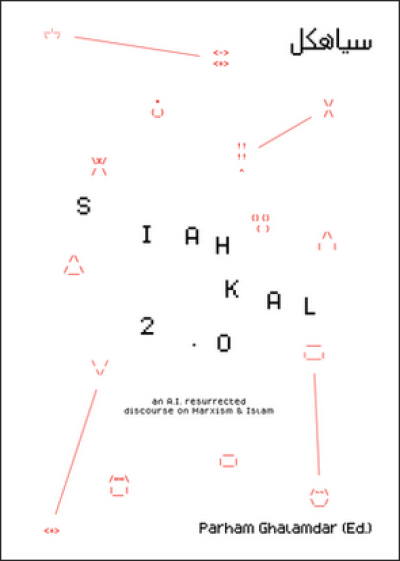
SIAHKAL 2.0: An A.I. resurrected discourse on Marxism & Islam


Siahkal names a place in the forests of Gilan and a threshold in revolutionary time. In 1971 a guerrilla action near Siahkal shook the order of the Shah. The action failed militarily yet seeded a myth for the People’s Fedai Guerrillas. Bizhan Jazani, a founding thinker, wrote and painted in prison and was executed in 1975. His work teaches that strategy rather than sentiment endures. // This book treats Siahkal as a Deep Object, a persistent attractor that gathers memory, images, and tactics. An AI model trained on Jazani’s writings and paintings translates his essay on Islamic Marxism and proposes annotations. The machine functions as a probe that widens attention while remaining accountable to the source. Parham Ghalamdar trained the AI, wrote the introduction, and composed ASCII diagrams and diagrammatic readings from Jazani’s artworks. Parsa Esmaeilzadeh contributes an essay that reads Jazani through Karatani and left accelerationism. // It is a call to reimagine and export revolution as a Deep Object that asks for Deep Time to unfold. This clandestine edition invites the reader to study, test, and build strategy that can outlast the news cycle and meet the future head on.

This is a limited edition book. The author trained an LLM on the texts of a deceased theorist, and then proceeded to interact with the LLM and produce simulations of what the theorist may have said in regards to various pertinent topics. The book is primarily a free online resource, but a few copies are being printed to commemorate the work. It has a foreword and afterword by the Editors.

At the core of this project is a translation of “Marxist Islam or Islamic Marxism,” a groundbreaking text written by Bizhan Jazani during his imprisonment in the 1970s under the Shah’s oppressive regime. Translated by Parham Ghalamdar, this work is accompanied by an introduction contextualizing Jazani’s radical vision. Ghalamdar also contributes a series of ASCII-style illustrations and diagrams—AI-assisted reinterpretations of Jazani’s original paintings and photographs—that bridge the past and present, offering a new perspective on his revolutionary artistry.


About the author
Parham Ghalamdar is a multidisciplinary artist currently based in the UK. Ghalamdar’s work traces forgotten mythologies, buried philosophies, and visual ruins, reconfiguring them into speculative worlds where memory, fiction, and futurism collapse into one another. Drawing on cybernetic theory and generative AI, he explores how systems of feedback, simulation, and machine vision mediate our understanding of history and possibility. Through painting, film, and writing, he builds narratives that feel both ancient and yet-to-come, haunted by lost histories and animated by possible futures.


Siahkal
names a place in the forests of Gilan and a threshold in revolutionary
time. In 1971 a guerrilla action near Siahkal shook the order of the
Shah. The action failed militarily yet seeded a myth for the People’s
Fedai Guerrillas. Bizhan Jazani, a founding thinker, wrote and painted
in prison and was executed in 1975. His work teaches that strategy
rather than sentiment endures. // This book treats Siahkal as a Deep
Object, a persistent attractor that gathers memory, images, and tactics.
An AI model trained on Jazani’s writings and paintings translates his
essay on Islamic Marxism and proposes annotations. The machine functions
as a probe that widens attention while remaining accountable to the
source. Parham Ghalamdar trained the AI, wrote the introduction, and
composed ASCII diagrams and diagrammatic readings from Jazani’s
artworks. Parsa Esmaeilzadeh contributes an essay that reads Jazani
through Karatani and left accelerationism. // It is a call to reimagine
and export revolution as a Deep Object that asks for Deep Time to
unfold. This clandestine edition invites the reader to study, test, and
build strategy that can outlast the news cycle and meet the future head
on.


This is a limited edition book. The author trained an LLM on the texts
of a deceased theorist, and then proceeded to interact with the LLM and
produce simulations of what the theorist may have said in regards to
various pertinent topics. The book is primarily a free online resource,
but a few copies are being printed to commemorate the work. It has a
foreword and afterword by the Editors.


At the core of this project is a translation of “Marxist Islam or
Islamic Marxism,” a groundbreaking text written by Bizhan Jazani during
his imprisonment in the 1970s under the Shah’s oppressive regime.
Translated by Parham Ghalamdar, this work is accompanied by an
introduction contextualizing Jazani’s radical vision. Ghalamdar also
contributes a series of ASCII-style illustrations and
diagrams—AI-assisted reinterpretations of Jazani’s original paintings
and photographs—that bridge the past and present, offering a new
perspective on his revolutionary artistry.


About the author

Parham Ghalamdar is a multidisciplinary artist currently based in the
UK. Ghalamdar’s work traces forgotten mythologies, buried philosophies,
and visual ruins, reconfiguring them into speculative worlds where
memory, fiction, and futurism collapse into one another. Drawing on
cybernetic theory and generative AI, he explores how systems of
feedback, simulation, and machine vision mediate our understanding of
history and possibility. Through painting, film, and writing, he builds
narratives that feel both ancient and yet-to-come, haunted by lost
histories and animated by possible futures.


Siahkal
names a place in the forests of Gilan and a threshold in revolutionary
time. In 1971 a guerrilla action near Siahkal shook the order of the
Shah. The action failed militarily yet seeded a myth for the People’s
Fedai Guerrillas. Bizhan Jazani, a founding thinker, wrote and painted
in prison and was executed in 1975. His work teaches that strategy
rather than sentiment endures. // This book treats Siahkal as a Deep
Object, a persistent attractor that gathers memory, images, and tactics.
An AI model trained on Jazani’s writings and paintings translates his
essay on Islamic Marxism and proposes annotations. The machine functions
as a probe that widens attention while remaining accountable to the
source. Parham Ghalamdar trained the AI, wrote the introduction, and
composed ASCII diagrams and diagrammatic readings from Jazani’s
artworks. Parsa Esmaeilzadeh contributes an essay that reads Jazani
through Karatani and left accelerationism. // It is a call to reimagine
and export revolution as a Deep Object that asks for Deep Time to
unfold. This clandestine edition invites the reader to study, test, and
build strategy that can outlast the news cycle and meet the future head
on.


This is a limited edition book. The author trained an LLM on the texts
of a deceased theorist, and then proceeded to interact with the LLM and
produce simulations of what the theorist may have said in regards to
various pertinent topics. The book is primarily a free online resource,
but a few copies are being printed to commemorate the work. It has a
foreword and afterword by the Editors.


At the core of this project is a translation of “Marxist Islam or
Islamic Marxism,” a groundbreaking text written by Bizhan Jazani during
his imprisonment in the 1970s under the Shah’s oppressive regime.
Translated by Parham Ghalamdar, this work is accompanied by an
introduction contextualizing Jazani’s radical vision. Ghalamdar also
contributes a series of ASCII-style illustrations and
diagrams—AI-assisted reinterpretations of Jazani’s original paintings
and photographs—that bridge the past and present, offering a new
perspective on his revolutionary artistry.


About the author

Parham Ghalamdar is a multidisciplinary artist currently based in the
UK. Ghalamdar’s work traces forgotten mythologies, buried philosophies,
and visual ruins, reconfiguring them into speculative worlds where
memory, fiction, and futurism collapse into one another. Drawing on
cybernetic theory and generative AI, he explores how systems of
feedback, simulation, and machine vision mediate our understanding of
history and possibility. Through painting, film, and writing, he builds
narratives that feel both ancient and yet-to-come, haunted by lost
histories and animated by possible futures.


Siahkal names a place in the forests of Gilan and a threshold in revolutionary time. In 1971 a guerrilla action near Siahkal shook the order of the Shah. The action failed militarily yet seeded a myth for the People’s Fedai Guerrillas. Bizhan Jazani, a founding thinker, wrote and painted in prison and was executed in 1975. His work teaches that strategy rather than sentiment endures. // This book treats Siahkal as a Deep Object, a persistent attractor that gathers memory, images, and tactics. An AI model trained on Jazani’s writings and paintings translates his essay on Islamic Marxism and proposes annotations. The machine functions as a probe that widens attention while remaining accountable to the source. Parham Ghalamdar trained the AI, wrote the introduction, and composed ASCII diagrams and diagrammatic readings from Jazani’s artworks. Parsa Esmaeilzadeh contributes an essay that reads Jazani through Karatani and left accelerationism. // It is a call to reimagine and export revolution as a Deep Object that asks for Deep Time to unfold. This clandestine edition invites the reader to study, test, and build strategy that can outlast the news cycle and meet the future head on.

This is a limited edition book. The author trained an LLM on the texts of a deceased theorist, and then proceeded to interact with the LLM and produce simulations of what the theorist may have said in regards to various pertinent topics. The book is primarily a free online resource, but a few copies are being printed to commemorate the work. It has a foreword and afterword by the Editors. 

At the core of this project is a translation of “Marxist Islam or Islamic Marxism,” a groundbreaking text written by Bizhan Jazani during his imprisonment in the 1970s under the Shah’s oppressive regime. Translated by Parham Ghalamdar, this work is accompanied by an introduction contextualizing Jazani’s radical vision. Ghalamdar also contributes a series of ASCII-style illustrations and diagrams—AI-assisted reinterpretations of Jazani’s original paintings and photographs—that bridge the past and present, offering a new perspective on his revolutionary artistry.


“Bizhan Jazani”, Parham Ghalamdar
SIAHKAL 2.0: An A.I. resurrected discourse on Marxism & Islam
Becoming Press, 2025, 978-9925-8207-7-1
15,00 €