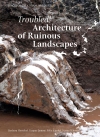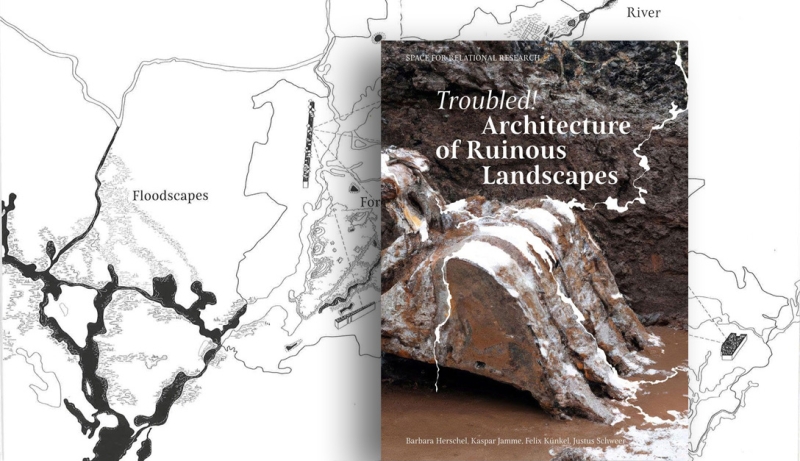
Troubled! Architecture of Ruinous Landscapes
Book launch and discussion with Barbara Herschel, Kaspar Jamme, Felix Künkel, Justus Schweer (Space for Relational Research) and Sandra Bartoli (Büros für Konstruktivismus)
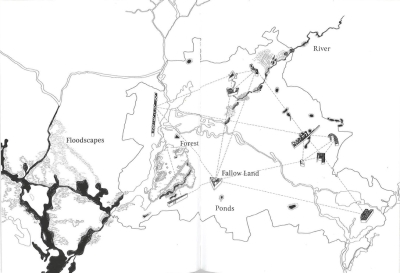
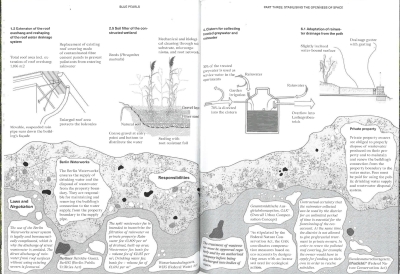
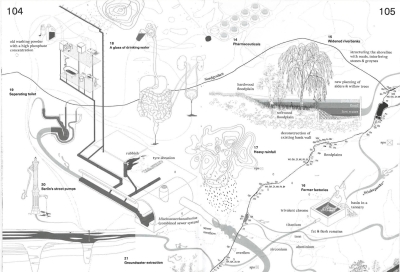
The landscapes we inhabit are ruinous. Dominant forms of spatial planning that have contributed to the destruction of our environments are in crisis. Building on a critical analysis of ecological simplification as a driving force of capitalist spatial planning deeply rooted in architecture, this book aims to grasp space in its relational complexity to join a more-than-human search for sustainable spatial practices. The authors both question prevailing forms of spatial planning and explore other ways of reading, representing, and constructing space that can help us sustain our shared environments as socio- and biodiverse spaces.
Barbara Herschel, Kaspar Jamme, Felix Künkel, and Justus Schweer (together they form "space for relational research") combine experience in spatial practices such as architecture, landscape architecture, urban planning, academic teaching, collaboration with civil society actors, and public administration. They understand relational research as a way of exploring space as a network of relationships, dynamics, and processes. With the founding of space for relational research, they seek to establish a critical research practice that traces connections in space, challenges the boundaries of architecture, and proposes new fields of work and collaborations.
Space for Relational Research is a spatial practice interested in aestheticising, politicising and transforming spatial relations. Barbara Herschel, Kaspar Jamme, Felix Künkel, and Justus Schweer studied architecture at the Bauhaus University in Weimar and the University of the Arts Berlin. For them, relational research is based on an understanding of space as a network of relationships between different actors, materials, and processes, which produce space in interaction with one another. Creating space for relational research means critically examining the conditions of spatial production, blurring the disciplinary boundaries of architecture, and establishing new forms of cooperation and transformation. A central aspect of this work involves developing transdisciplinary working methods that mediate between perspectives from architecture, urban planning, ecology, civil society, and public administration.